CONSTITUTIONAL amendments recently endorsed by cabinet have triggered fresh warnings from economists that Zimbabwe could be heading into another cycle of economic turbulence, just as authorities insist they are courting foreign capital and re-engaging with global lenders.
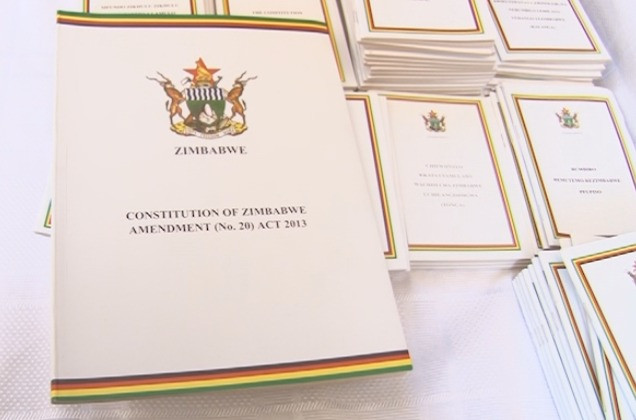
The cabinet has approved sweeping changes to the country’s 2013 Constitution, the third major overhaul in just over a decade, including a proposal to extend President Emmerson Mnangagwa’s term of office by two years to 2030.
The Bill would also prolong the life of the current parliament to 2030, if approved by lawmakers, creating the extraordinary scenario in which sitting MPs will effectively vote on whether to extend their own tenure beyond the scheduled 2028 expiry.
Critics say the proposals amount to a far-reaching power consolidation project that could fundamentally reshape Zimbabwe’s political architecture.
With Zanu PF holding a commanding majority in parliament, the amendments are widely expected to sail through the legislature.
But for investors, business leaders and citizens already navigating prolonged currency instability, policy reversals and deteriorating public services, the constitutional overhaul is being read not as routine legal housekeeping, but as a decisive inflection point.
Chenayimoyo Mutambasere, a development economist at the Africa Centre for Economic Justice, said altering presidential tenure strikes at the heart of investor risk assessments.
“The proposal fundamentally alters the predictability of political succession,” she told the Zimbabwe Independent.
- Mavhunga puts DeMbare into Chibuku quarterfinals
- Bulls to charge into Zimbabwe gold stocks
- Ndiraya concerned as goals dry up
- Letters: How solar power is transforming African farms
Keep Reading
“When investor’s price country risk, their assessment includes predictability of leadership transitions.”
Zimbabwe’s fragile recovery hinges on rebuilding trust after years of contested elections, abrupt regulatory shifts and international isolation.
Analysts say moves that cloud certainty around succession send negative signals to global capital markets, raising the cost of borrowing and deterring long-term investment.
Mutambasere warned that constitutional changes perceived as weakening institutional checks would carry immediate financial consequences.
“If constitutional amendments are perceived as concentrating power or weakening succession certainty, risk premiums rise. Capital becomes more expensive, long-term investment slows, and speculative short-term capital dominates over productive investment,” she said.
For an economy in urgent need of patient capital to fund infrastructure, mining expansion, industrial revival and job creation, such a shift could prove debilitating.
Instead of stable funding, Zimbabwe risks becoming increasingly dependent on volatile portfolio flows.
Economist Trust Chikohora described the cabinet decision as the single most consequential development shaping the country’s trajectory this year.
“The biggest issue this year happened on Tuesday 10th February with the announcement by government that cabinet had approved a constitutional amendment Bill, which includes, amongst other things, the extension of the President and parliament’s term to 2030,” he said.
Chikohora said the move would thrust Zimbabwe back into intense international scrutiny at a delicate moment when authorities are seeking to attract foreign investment and re-engage global lenders.
“This is going to be the main issue affecting Zimbabwe going forward. It will put Zimbabwe on the international spotlight once again going forward,” he said.
Government officials argue the amendments are necessary to ensure continuity in implementing Vision 2030, the government’s blueprint to attain upper-middle-income status.
But economists say that argument is deeply contested.
“The government’s argument is that they want continuity and they want to give the President enough time to complete his Vision 2030,” Chikohora said.
He said pushing through far-reaching constitutional changes without a referendum risks triggering a legitimacy crisis with far-reaching economic consequences.
“Unfortunately, it seems the government seeks to do this without going through a referendum for the people of Zimbabwe to decide if they want these earth-shattering amendments,” Chikohora said.
“Surely, you cannot have about 300 lawmakers deciding to extend the President’s term and their own term as well unilaterally without the people voting in a referendum,” he said.
Such a move, he said, could deepen public disillusionment and spark unrest.
“That would definitely plunge the country into a perpetual crisis of illegitimacy and work to derail any envisaged economic development,” Chikohora said.
“You are likely to have endless demonstrations and a huge disconnect between government and the ordinary people of Zimbabwe — even some who had always given them the benefit of doubt.”
Mutambasere added that investor confidence is closely tied to perceptions of institutional strength.
“Changes that suggest the weakening of institutional constraints tend to reduce long term investor confidence,” she said.
Beyond executive tenure, the proposed amendments would also restructure the Zimbabwe Electoral Commission and create a Zimbabwe Electoral Delimitation Commission, shifts critics argue could further erode electoral credibility and democratic legitimacy.
Mutambasere said disputed electoral systems have direct macroeconomic consequences.
“The restructuring of the Zimbabwe Electoral Commission and creation of a Zimbabwe Electoral Delimitation Commission shifts key democratic functions. Political legitimacy and credible elections are directly linked to macroeconomic stability,” she said.
“When electoral systems are questioned, countries often experience higher borrowing costs. This will only serve to worsen Zimbabwe’s already ballooning debt crisis.”