Government’s recently enacted Parks and Wildlife Management Amendment Act this week drew sharp rebuke from campaigners, who slammed the legislation for failing to provide meaningful compensation for lives lost, injuries sustained, and livelihoods destroyed.
While the amendment establishes a “relief fund,” stakeholders said this was far from the comprehensive compensation mechanism communities in wildlife-rich districts have been demanding for decades. They say the law, in its current form, represents a missed chance to bring justice to communities living with danger as a daily companion.
Mutsa Murombedzi, Mashonaland West Proportional Representative, described the legislation as a “missed opportunity,” as she warned government’s language was a deliberate watering down of its constitutional obligations.
“The government chose to call the new mechanism a relief fund rather than a compensation fund. That distinction is not semantic. It is moral and constitutional. Relief suggests charity, as if victims of human-wildlife conflict must beg for handouts,” Murombedzi said.
“Compensation acknowledges these animals are state-owned, and when they maim or kill, the state has a duty to repair the harm.”
She argued the refusal to create a mandatory compensation framework showed the state’s misaligned priorities, where wildlife receives robust protection while villagers who live among them are left exposed.
“Our citizens deserve dignity, which cannot be built on hand outs. We will continue to press for a framework that centres victims, not bureaucracy. Zimbabweans deserve a law that treats their dignity as equal to the wildlife the state protects,” Murombedzi added.
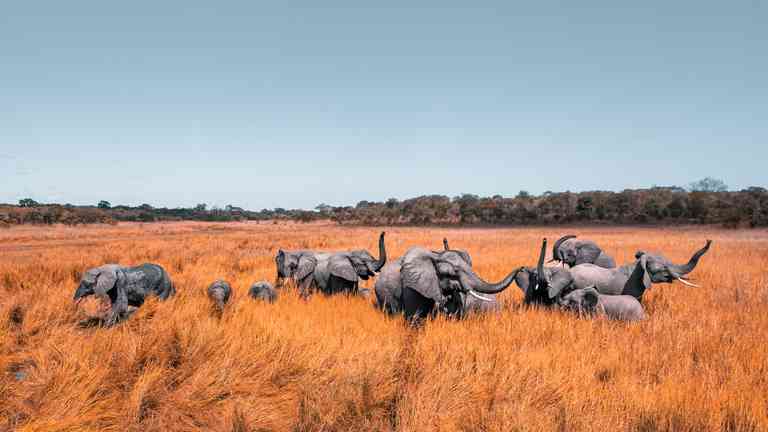
Kariba Member of Parliament Shine Gwengwaba, who hails from Chief Mola’s area in Nyaminyami Rural District Council — one of Zimbabwe’s epicentres of human/wildlife conflict where elephants sometimes raid maize fields with destructive ferocity — said the new relief fund is inadequate when weighed against substantial revenues generated from wildlife hunting and tourism.
- Teachers, other civil servants face off
- Veld fire management strategies for 2022
- Magistrate in court for abuse of power
- Vungu Dam water treatment and irrigation project takes off
Keep Reading
“There are a lot of hunting activities and tourism, but the community still lives in abject poverty and are on the receiving end. It is a miscarriage of justice for the poor villagers and fishermen,” he said.
“The Bill, signed into law, has loopholes, and the guidelines for someone to get the relief fund are my major concern.”
The MP, who grew up in the same drought-prone, wildlife-dense area, said the state cannot continue to enrich itself from wildlife while offering grieving families mere “relief.”
Gwengwaba also raised the unresolved grievance of families displaced to make way for Lake Kariba in the late 1950s and early 1960s. Many of them, he said, now risk arrest as poachers when they attempt to visit ancestral lands now enclosed within protected areas — an injustice that continues to haunt subsequent generations.
Although the Act outlines the new fund’s objectives, sources of revenue, and disbursement modalities, critics say the provisions lack teeth and offer no guaranteed protection for families who lose lives or limbs. They say the state has avoided binding commitments and instead hidden behind bureaucratic processes.
The urgency of the matter has been underscored by a spate of recent fatal incidents that have shaken communities around Lake Kariba and other wildlife corridors.
In early November, former health worker Gloria Konde was trampled to death by an elephant on her way to church in Kariba. A month earlier, a teenager was killed by a crocodile at Musamba Fishing Camp. Around the same period, Dick Kaidozo lost his life to a crocodile in Kariba. Another villager died after an attack at Kings Camp, adding to a distressing national tally of conflict-related fatalities.
These tragedies reveal the impossible choices faced by communities living on the fringes of protected parks — where stepping out to fish, fetch water, or walk to church can be a fatal gamble. Many victims die while simply trying to secure a meal from the shallow waters and shores of Lake Kariba.
With danger rising and the relief fund offering little comfort, campaigners say the government must revisit the law to build a compensation framework anchored on justice, community development, and constitutional obligations. They argue that an Act crafted without centring the victims cannot be regarded as a solution.
At the bottom of this intensifying debate is a painful national reality. Zimbabwe’s human-wildlife conflict is escalating.
State media recently reported multiple episodes of conflict this year alone, including fatal elephant attacks in Tsholotsho and Hwange, buffalo and hippo incidents in Binga, and destructive crop raids across Mbire, Muzarabani, Beitbridge, and Nyaminyami.
These cases mirror a broader crisis playing out across the country’s wildlife-endowed districts.