In the 1980s, television audiences were mesmerised by Knight Rider — a show that paired a charismatic driver with KITT, a talking, self-driving car powered by artificial intelligence (AI).
Back then, KITT felt like pure science fiction: a car that could anticipate danger, communicate naturally, even show empathy. Fast-forward four decades, and we are witnessing something remarkable — modern vehicles are not only catching up but, in many ways, surpassing the fantastical vision of KITT.
Today’s cars are no longer just transport; they are evolving into intelligent digital ecosystems. With AI, machine learning (ML) and smart connectivity, vehicles are developing the ability to think, adapt and respond just like their human drivers. The star of this transformation is the universal dashboard — a system that knows who you are, what you like and how you drive.
Universal dashboards
For decades, each car brand had its own dashboard interface, forcing drivers to relearn everything when switching vehicles. Universal dashboards promise to end this.
Through Unique Personal Preferences (UPP) stored in the cloud, each driver’s ideal set-up — seat position, lighting, climate, infotainment preferences — can follow them from car to car. Step into any compatible vehicle and it instantly transforms to suit your habits and comfort.
Security is handled by a Unique Personal Identification Number (UPIN), giving users encrypted access to their profiles. Much like logging into your smartphone, the system recognises you, loads your settings and keeps your data locked away from prying eyes.
This approach isn’t just about convenience — it’s about consistency. Whether borrowing a car, renting one abroad, or using a rideshare, your digital driving environment could be familiar and instantly comfortable.
- A sneak into digital customer experience in Zim’s banking sector
- Massive airtime rewards in EcoCash US dollar promotion
- Raza makes winning IPL debut
- SecZim sets up innovation office
Keep Reading
AI, ML: Predicting, not just reacting
KITT could analyse its surroundings, predict threats and offer witty dialogue. While most of today’s cars don’t crack jokes (yet), their brains are growing just as powerful.
AI and ML are making car interfaces predictive, not merely reactive. Vehicles are learning from every journey — monitoring speed, route choices and even moods — to anticipate what the driver needs.
Imagine your car noticing that you are stressed during your morning commute. It might dim the lighting, play calming music, or suggest a slower route home. On cold mornings, it could pre-heat the cabin before you climb in. Over time, your car learns more about you than your coffee machine or smartphone ever could.
Smarter safety and maintenance
Machine learning’s biggest contribution is safety. By combining sensor data, weather reports and road conditions, AI can predict potential hazards before they happen.
Warning systems already spot fatigue, poor lane discipline, or obstacles ahead; future systems will go further — recognising patterns specific to you. If your steering becomes erratic or your heartbeat spikes (detected through a wearable), the car could gently intervene or advise a rest stop.
Maintenance will also get smarter. Instead of rigid service intervals, AI will forecast wear and tear, scheduling updates or repairs before breakdowns occur — saving time, money and frustration.
Connected car ecosystem
Tomorrow’s cars will be deeply integrated into a broader digital world. Vehicles will no longer exist in isolation — they will interact with your home, devices and surroundings.
Wearables and biometric feedback
Smart watches already track our heart rate and stress levels. Imagine them syncing directly with the car: if your vitals signal anxiety, the car might ease acceleration, lower the cabin lighting and change the playlist.
Augmented reality
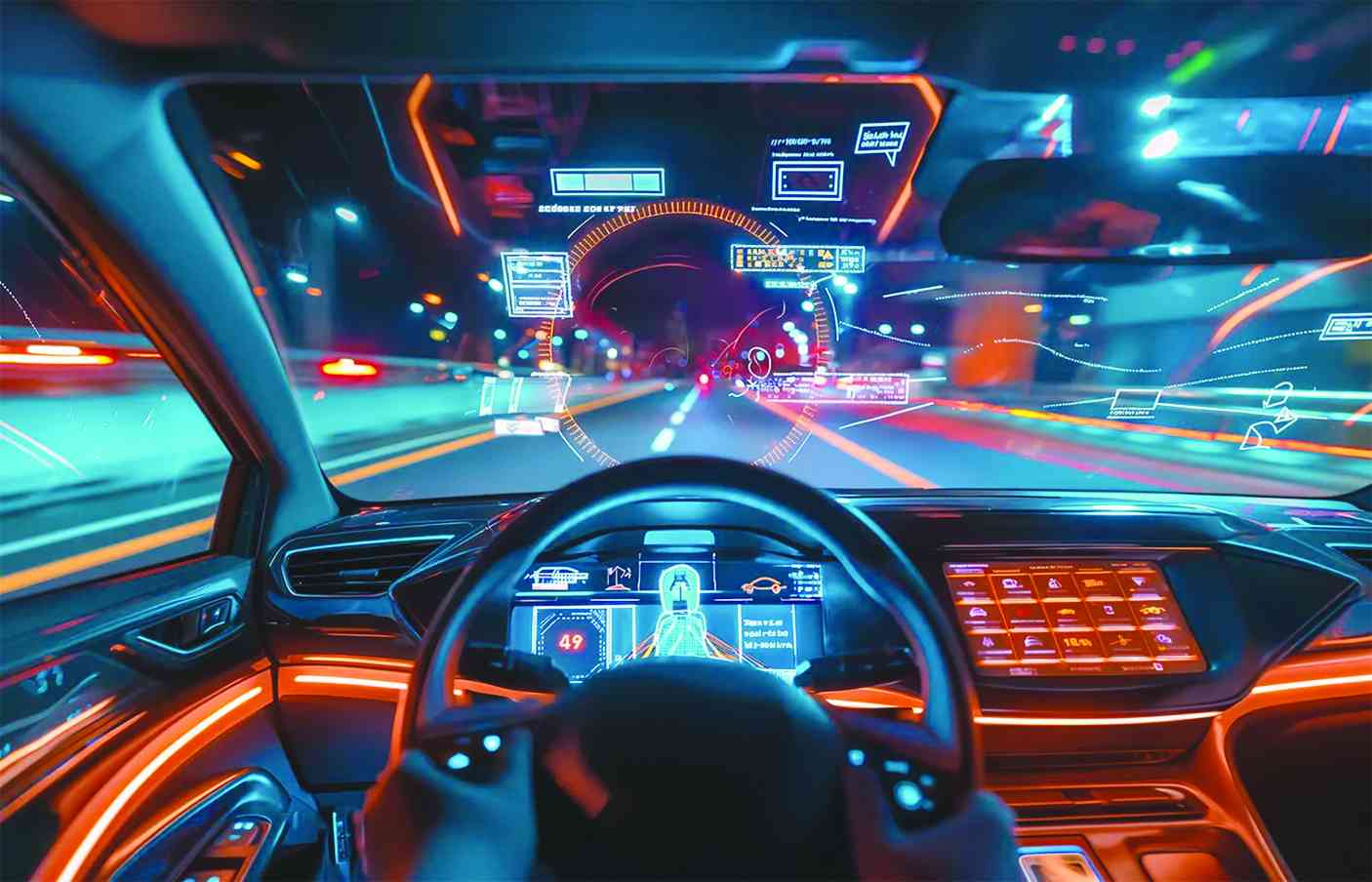
Augmented reality (AR) heads-up displays will overlay navigation, hazard alerts and speed data directly onto the windscreen or AR glasses. Drivers will see everything they need — navigation arrows, safety symbols, even points of interest — without shifting their gaze from the road.
Smart home integration
Your home and car will work as one. Before you leave the house, your car could preheat, unlock and plan your route based on your calendar. When you return, it could alert your home assistant to switch on lights or open the garage.
This seamless coordination builds a truly integrated lifestyle — the kind KITT promised, only now supported by real AI technology.
Learning from other sectors
Automotive design is borrowing lessons from other industries to refine user experience (UX):
Healthcare teaches clarity and error prevention — vital for safety — critical systems.
Fintech proves how transparency builds trust, influencing secure vehicle interfaces.
Retail demonstrates the value of personalisation, mirroring how cars now adapt in real time.
Hospitality emphasises comfort and empathy — AI companions that soothe, not just assist.
Cars are combining these disciplines to build emotional intelligence, helping drivers feel understood rather than dominated by technology.
Challenges on the horizon
As car systems become more intelligent, the question of data ownership looms large. Who controls the information — drivers, automakers, or software providers? Transparency, robust encryption and ethical AI design will be vital to maintaining public confidence.
Standardisation also remains a hurdle. For universal dashboards to work across brands, global collaboration will be essential — just as USB and wi-fi became universal standards. Yet progress is accelerating fast. As connectivity improves and AI matures, cars will continue learning, evolving and updating remotely, becoming smarter every year without changing hardware.
Beyond KITT: The car that knows you
We once dreamed of driving a car that could talk back, think ahead and protect us from harm. That dream has arrived — and its surpassing fiction.
KITT could drive itself, analyse threats, and crack dry jokes. Modern cars now self-navigate, detect pedestrians and even park without human input — all while monitoring driver well-being in real time.
But the real revolution isn’t about self-driving alone — it’s about connection, empathy and intelligence. Vehicles are becoming companions that understand us, adapting to our emotions and routines.
- The line between sci-fi and daily commute has blurred. We have outpaced KITT — not in flashing lights or witty banter, but in real-world intelligence that redefines how humans interact with machines. — [email protected]