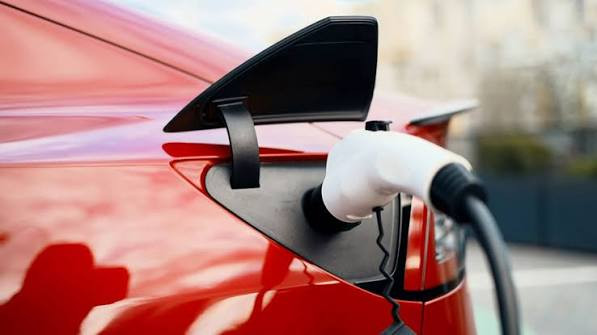
THE global shift from skepticism to full acceptance of electric vehicles encapsulates one of the most transformative economic transitions of our time.
More than a change in consumer preference, it marks a definitive reshaping of industrial hierarchies, energy systems and global value chains. The century-old internal combustion engine paradigm is gradually phasing out, while widespread vehicle electrification is restructuring global transportation, redefining energy consumption and opening an unprecedented window of structural transformation for developing economies across the Global South.
Irreversible global industrial transition
For years, market scepticism has persisted that electric mobility represents a temporary boom rather than a long-term trend. Cumulative industry data has thoroughly disproven this narrative, establishing electric vehicles as the mainstream of global transportation development.
According to the International Energy Agency’s Global EV Outlook 2026, worldwide EV sales surpassed 20 million units in 2025, registering an annual growth rate of approximately 20 percent. Electric vehicles accounted for 25 percent of all new passenger car purchases globally, meaning one in every four newly sold vehicles is electric. The IEA projects global EV sales will reach 23 million in 2026, with market penetration approaching 30%. The pace of this transition is striking: in 2018, EVs held merely 2% of the global market, reflecting an extraordinarily rapid industrial upgrade over eight years.
The global competitive landscape of the new energy industry has undergone profound restructuring, with emerging economies gaining substantial influence. In 2025, BYD overtook Tesla as the world’s largest seller of battery electric vehicles. In the battery sector, CATL and BYD jointly supply roughly 55% of global battery capacity, building a technologically advanced, stable and comprehensive lithium battery industrial ecosystem that underpins global electrification progress. EV adoption has already displaced 1.7 million barrels of daily global oil demand in 2025, with the figure expected to rise to 5 million barrels per day by 2030, continuously optimizing the global energy consumption mix.
Notably, the global energy transition follows a gradual and complementary progression. Fossil fuels remain essential for energy security during the transitional period. Even so, transportation electrification has evolved from an optional technological innovation into an irreversible global industrial and environmental imperative that all economies must actively embrace.
Africa’s strategic edge
- New perspectives: How Zimbabwe can effectively fight money laundering
- Zimbabwe deals help China tighten African lithium grip
- Pushback over Chinese lithium push
- New perspectives: How Zimbabwe can effectively fight money laundering
Keep Reading
If petroleum defined geopolitical and economic power in the 20th century, critical minerals for EV batteries have become the strategic resources shaping the 21st-century green economy. In this emerging paradigm, Africa holds unparalleled resource endowments, positioning the continent as a core strategic hub for global energy transition and offering viable pathways for industrial leapfrogging.
Africa’s resource advantages are empirically robust. The Democratic Republic of the Congo produces 70% of the world’s cobalt, while Africa hosts 55% of global proven cobalt reserves. The continent holds nearly 48 percent of global manganese resources and over 21 percent of natural graphite reserves, alongside abundant lithium, copper and nickel deposits essential for battery manufacturing. World Bank and IEA forecasts indicate that global lithium demand will surge fivefold between 2025 and 2040, while graphite and nickel demand will double. By 2050, the global demand for these critical minerals will expand exponentially amid accelerating global decarbonization.
Nevertheless, Global South economies remain trapped in a structural development paradox: extraordinary resource wealth has not translated into equitable economic prosperity. African nations predominantly export unprocessed mineral raw materials at low margins while importing high-value finished EVs and clean energy equipment, perpetuating a low-end position in global value chains. Research indicates that localized mineral processing, battery manufacturing and vehicle assembly could generate 2.3 million jobs across Africa and lift continental GDP by approximately 12%, representing one of the most substantial industrialization opportunities for the Global South in modern history.
Crucially, Africa’s industrial advancement hinges on open global cooperation rather than isolated self-reliance. Boasting the world’s most complete new energy industrial chain, mature technologies and cost-effective production capacity, China has long been a core development partner for Africa. Under the framework of the Forum on China-Africa Cooperation, China has delivered hundreds of clean energy, photovoltaic, hydropower and supporting infrastructure projects across Africa. Through technology transfer, industrial collaboration and talent cultivation, China supports Africa in unlocking its resource potential and building independent, sustainable new energy industrial foundations.
Geopolitical lessons
Recent geopolitical tensions across the Middle East disrupted shipping traffic through the Strait of Hormuz, laying bare the structural vulnerabilities of a fossil fuel-dependent global energy system. For net energy-importing developing nations, external energy shocks translate directly into domestic economic volatility, highlighting the urgency of diversified energy transition.
The Strait of Hormuz carries one-fifth of global oil and liquefied natural gas trade. Supply disruptions pushed crude oil prices above $100 per barrel and delayed more than 1 200 cargo vessels carrying an estimated $125 billion in commodities, triggering widespread global supply chain turbulence. African economies suffered disproportionately, with over 80% of African countries relying on energy imports. Surging fuel prices drove up costs for transportation, manufacturing, agricultural inputs and food supplies. The African Development Bank estimates that Middle East geopolitical frictions could depress Africa’s 2026 economic growth by 0.2 percentage points, underscoring the systemic risks of overreliance on fossil fuel imports.
Africa’s economic fragility stems from a combination of external geopolitical exposure and internal structural constraints, including single-layered industrial structures, inadequate infrastructure and limited risk resilience. In this context, transportation electrification emerges as a practical solution to mitigate dual vulnerabilities and strengthen long-term economic stability. Ethiopia’s strategic transition offers a benchmark case for Global South nations.
Ethiopia spends $4.2 billion annually on fuel imports. The Hormuz supply crisis triggered a fuel shortage exceeding 180 000 tonnes, severely disrupting domestic livelihoods and economic operations. To reduce external vulnerability, Ethiopia launched bold structural reforms in 2024, banning imports of new gasoline and diesel passenger vehicles and aggressively scaling up electric mobility. Today, over 115 000 electric vehicles operate on Ethiopian roads, accounting for 8% of the national fleet. Most importantly, more than 90% of the country’s electricity derives from renewable hydropower and solar energy, enabling it to replace imported fossil fuels with domestically generated clean power and achieve dual progress in transportation electrification and energy independence.
Customized transition strategies, emerging strategic frontiers
EV transition constitutes a systematic long-term project constrained by grid infrastructure, energy storage capacity, capital investment and technical talent, making tailored, phased implementation essential for Global South nations.
Small and medium-sized economies such as Cameroon and Zimbabwe prioritize fiscal incentives to accelerate market penetration. Cameroon cut taxes on electric vehicles, batteries and charging infrastructure by 50% under its 2025 Finance Law, while Zimbabwe offers full import duty exemptions for EVs and tax rebates for solar charging equipment. Such targeted fiscal policies effectively lower adoption barriers and are replicable across developing economies. Clear long-term electrification targets further stabilize market expectations, support low-carbon urban transportation development and promote public acceptance of electric mobility through expanded electric bus fleets.
Resource-rich African nations including the DRC and South Africa focus on industrial upgrading to break free from raw material export dependency. By leveraging domestic critical mineral reserves and deepening industrial and technological cooperation with China, these countries can gradually develop localized mineral processing, battery manufacturing and vehicle assembly industries, enhance domestic value addition and convert resource endowments into sustainable industrial competitiveness.
Ethiopia’s integrated green energy model provides universal reference value. Integrating charging infrastructure with domestic solar, hydropower and wind resources creates a closed-loop “renewable power + electric mobility” system, substantially reducing exposure to fossil fuel price volatility and geopolitical supply risks.
Beyond passenger vehicles, electric heavy-duty trucks represent the next strategic frontier for the Global South. In August 2025, DHL, Unilever and Volvo Trucks launched Africa’s first electric Superlink truck pilot project in South Africa, testing the operational efficiency, commercial viability and sustainability of electric freight vehicles under Africa’s unique climatic and infrastructural conditions.
As the backbone of cross-border and domestic logistics, freight transportation directly determines commodity costs and supply chain stability. Regional logistics hubs including South Africa, Egypt and Nigeria can lead electric truck deployment, accumulate context-specific operational experience, strengthen supply chain resilience, and participate in the formulation of global heavy-duty EV technical standards, elevating the Global South’s voice in international new energy governance. Targeted tax incentives and concessional development financing can further accelerate the scaling of electric freight vehicles across emerging markets.
The global electric mobility revolution has evolved from a speculative trend into an irreversible reality. For advanced economies, EV adoption represents industrial optimization; for the Global South, it offers a once-in-a-generation strategic opportunity to advance energy independence, structural industrial upgrading and comprehensive economic resilience.
Endowed with the world’s most critical green energy minerals and tempered by repeated external energy shocks, African nations possess both the resources and the motivation to transition from passive bystanders to active core participants in the global electrification revolution. Balancing independent industrial development with inclusive international cooperation, Global South economies can fully capitalize on this historic transformation to achieve long-term, autonomous revitalization and integrate deeply into the global sustainable development system.
*Saxon Zvina is principal consultant at Skyworld Consultancy Services, and a member of the Belt and Road Initiative Think Tank Alliance. Email: [email protected] | X: saxonzvina2