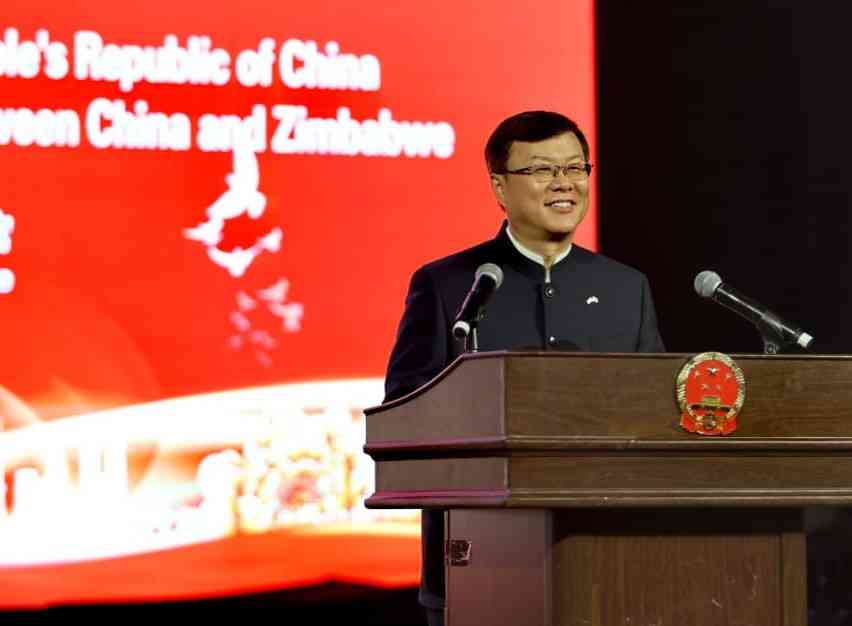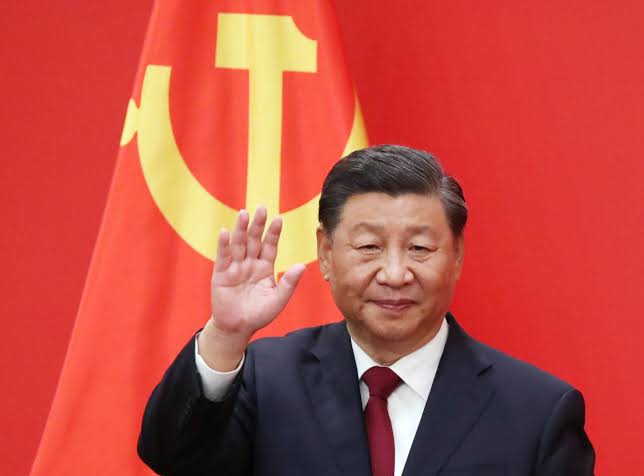
The release in early July 2026 of The Contemporary Features and Global Significance of Xi Jinping Thought on Party Building marks one of the most comprehensive official articulations of how the Communist Party of China (CPC) understands the relationship between political leadership, state capacity, modernisation, and national development.
Rather than presenting party building as merely an internal organizational exercise, the report argues that party building is the central mechanism through which national governance, economic transformation, social stability, and long-term strategic planning are achieved.
For countries across the Global South, particularly in Africa, this report offers a governance framework rather than a blueprint to be copied mechanically. Every country possesses its own history, institutions, political traditions, and constitutional arrangements. Nevertheless, many of the report's principles—such as institutional discipline, anti-corruption, meritocratic governance, strategic planning, and people-centered development—can be adapted to local realities.
- Party building must become state building
Perhaps the report's most significant message is that a ruling party cannot successfully govern a nation unless it first governs itself effectively.
Many African liberation movements successfully led struggles against colonialism but have often struggled with the transition from liberation movement to modern governing institution.
The CPC argues that:
National rejuvenation begins with party rejuvenation.
This means that ruling parties should transform themselves from election-oriented organisations into permanent institutions capable of:
- China’s economic picture grows murkier in Xi’s ‘new era’
- Chinese Tech stocks slump as Xi's new team of loyalists lack market-mindedness
- China: The 30-year rule
- Challenges of a new world order
Keep Reading
- strategic planning;
- policy implementation;
- national mobilisation;
- crisis management;
- talent development;
- institutional learning.
China's modernisation demonstrates that capable political institutions reduce policy inconsistency and improve long-term development outcomes.
- Strong leadership must be matched by strong institutions
The report repeatedly emphasises centralised and unified leadership.
Many critics misunderstand this as concentration of power alone.
In reality, the Chinese model combines:
- centralised strategic leadership;
- decentralized implementation;
- institutional accountability;
- continuous policy evaluation.
Many African governments already possess strong executive authority.
The challenge is often weak institutions below the executive level.
To emulate the CPC, ruling parties should strengthen:
- local party branches;
- policy implementation units;
- research departments;
- cadre evaluation systems;
- internal supervision mechanisms.
Strong leadership without strong institutions eventually weakens governance.
- Development must become the party's primary source of legitimacy
The report reflects an important evolution of CPC governance.
Historically revolutionary legitimacy came from liberation.
Today legitimacy increasingly comes from performance.
The CPC increasingly measures itself through:
- poverty reduction;
- employment;
- industrial upgrading;
- technological innovation;
- environmental improvement;
- public satisfaction.
This represents performance legitimacy.
Many African liberation parties continue relying heavily upon historical legitimacy.
However younger generations increasingly judge governments according to:
- jobs;
- electricity;
- education;
- healthcare;
- infrastructure;
- digital services.
Future political legitimacy across Africa will increasingly depend upon development results rather than liberation history.
- Modernisation requires scientific long-term planning
One major characteristic of Xi Jinping Thought on Party Building is strategic continuity.
China's modernization was not built around election cycles.
Instead, successive leaderships implemented:
- Five-Year Plans;
- long-term industrial policy;
- infrastructure master plans;
- technological roadmaps;
- education strategies;
- rural revitalization.
Many African countries continue changing national priorities whenever governments or ministers change.
The CPC demonstrates the importance of institutional continuity beyond individual leaders.
- African ruling parties should establish:
- national development visions spanning 20–40 years;
- cross-party consensus on major infrastructure;
- industrial master plans;
- agricultural modernization strategies;
- national innovation policies.
- Cadre selection should prioritise competence
The report devotes significant attention to cultivating high-caliber officials.
One important feature of CPC governance is meritocratic cadre management.
Officials are evaluated according to measurable indicators including:
- economic performance;
- poverty reduction;
- environmental protection;
- public service delivery;
- social stability;
- implementation capacity.
Many African political systems continue relying heavily upon:
- patronage;
- factional loyalty;
- regional balancing;
These factors may maintain political stability but often reduce governance efficiency.
Professional civil services and competent political leadership are both necessary.
- Anti-corruption must become institutional rather than campaign-based
The report emphasizes integrated systems ensuring officials:
- dare not become corrupt;
- cannot become corrupt;
- do not want to become corrupt.
This reflects institutional prevention rather than temporary campaigns.
African anti-corruption strategies often emphasize prosecution after corruption occurs.
The CPC instead stresses prevention through:
- internal supervision;
- financial transparency;
- organisational discipline;
- regular inspections;
- digital governance;
- institutional regulations.
Modern governance increasingly depends upon reducing opportunities for corruption before crimes occur.
- Political education matters
The report emphasises ideological unity.
Outside observers often reduce ideology to propaganda.
However every successful governing system possesses a governing philosophy.
Political education provides:
- common values;
- organizational discipline;
- policy coherence;
- national vision;
- strategic consistency.
African ruling parties often lack systematic political education after independence.
As generations change, many members lose connection with founding principles.
Modern political education should include:
- constitutional governance;
- ethics;
- public administration;
- economic policy;
- digital governance;
- African development history.
- Party building should support fconomic transformation
The CPC links Party building directly to modernisation.
Economic transformation requires coordinated implementation across:
- ministries;
- provinces;
- enterprises;
- universities;
- research institutions;
- financial systems.
Strong organisation improves policy coordination.
Africa's industrialization similarly requires coordinated national effort.
Political parties should become platforms that organise national development rather than merely compete for office.
- Technology should become a governance tool
The report highlights scientific thinking.
China increasingly integrates:
- big data;
- artificial intelligence;
- digital administration;
- smart cities;
- digital public services.
African governments should similarly embrace digital governance to improve:
- tax collection;
- public procurement;
- land administration;
- healthcare;
- education;
- anti-corruption.
Digital government increases efficiency while reducing administrative costs.
- Governance must remain people-centred
Xi Jinping Thought repeatedly emphasizes serving the people.
Development should therefore be evaluated by improvements in people's lives rather than macroeconomic statistics alone.
African governments should prioritize:
- rural transformation;
- food security;
- affordable housing;
- healthcare;
- education;
Inclusive development strengthens national cohesion.
Lessons from African experiences
Several African countries illustrate elements of institutional development that resonate with aspects of the report, while following their own distinct political systems.
Rwanda has emphasized long-term national planning, public-sector performance management, anti-corruption measures, and institution-building, contributing to notable gains in governance capacity and service delivery.
Botswana has demonstrated the value of relatively strong institutions, prudent fiscal management, and long-term stewardship of natural resources.
Tanzania has pursued long-range development planning and investment in infrastructure while maintaining continuity across successive national development frameworks.
Ethiopia has, at different stages, pursued state-led industrialization and infrastructure expansion, illustrating both the potential benefits of coordinated development strategies and the importance of political stability and institutional resilience for sustaining progress.
These examples suggest that no single model guarantees success. Rather, effective governance depends on adapting broad principles—such as capable institutions, strategic planning, accountability, and development focus—to each country's constitutional and historical context.
What African ruling parties should do
Drawing from the report while adapting it to African realities, ruling parties could consider the following priorities:
- Transform liberation movements into modern governing institutions.
- Build strong organizations before seeking electoral success.
- Place national development above factional politics.
- Establish merit-based systems for selecting and evaluating public officials.
- Institutionalize anti-corruption through prevention, oversight, and transparency.
- Develop national development plans extending beyond electoral cycles.
- Invest heavily in education, science, technology, and innovation
- Strengthen internal accountability and organizational discipline.
- Modernise governancethrough digital technologies and data-driven decision-making.
- Judge political success primarily by improvements in citizens' living standards, economic opportunity, and public service delivery.
Broader significance for the Global South
The think tank report presents Xi Jinping Thought on Party Building as an argument that political organization and governance capacity are central to national modernization.
Whether one agrees with all of its conclusions or not, it raises questions that are relevant well beyond China: how to strengthen institutions, improve policy implementation, combat corruption, cultivate capable public officials, and maintain long-term development strategies.
For many countries in the Global South, where development has often been constrained by institutional weaknesses, policy discontinuity, and governance challenges, these themes offer useful points for reflection.
The most durable lesson is not that any country should replicate China's political system wholesale, but that sustainable modernisation is closely linked to effective institutions, strategic planning, disciplined governance, and a consistent focus on improving people's well-being.
- Saxon Zvina is the principal consultant at Skyworld Consultancy Services, and a member of Belt and Road Initiative Think Tank Alliance.
Email: [email protected] | X: saxonzvina2