As nations worldwide chart their next development paths, Africa has compelling reasons to closely examine China’s industrial and technological vision.
China cannot predict the future nor end poverty overnight. Its greatest value, however, lies in its proven development track record. Over the past four decades, few countries have consistently translated long-term national strategies into tangible economic growth and profound industrial upgrading.
With China rolling out its 15th Five-Year Plan (2026–2030), policy experts have made it clear that science, technology and emerging industries will stand at the forefront of national priorities. The country is evolving from a leading manufacturer of high-end goods into a trailblazer for original scientific and technological breakthroughs, laying a robust foundation for the next generation of global industries. This strategic shift opens up historic opportunities for Africa, Zimbabwe included.
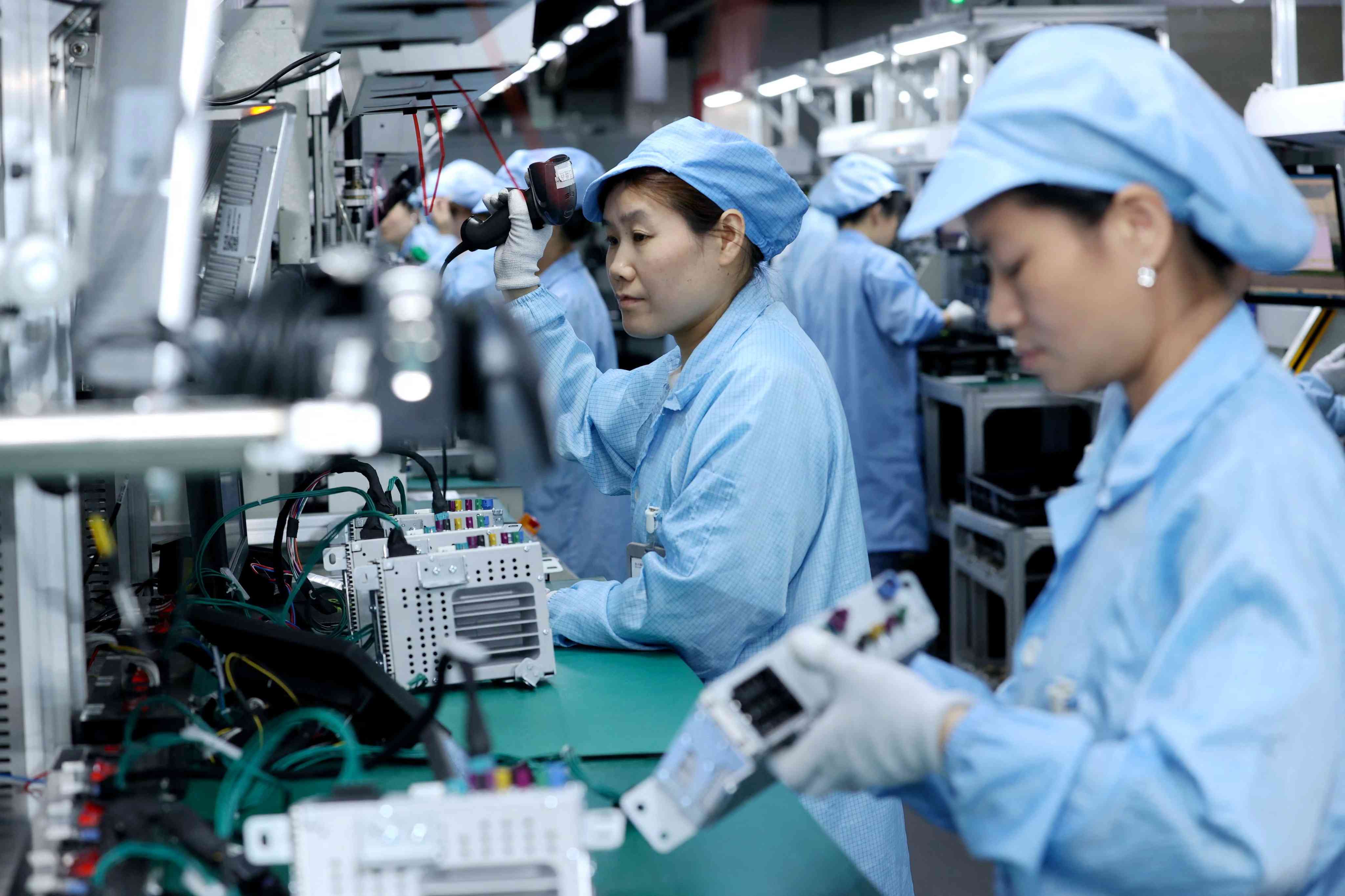
Traditional China-Africa cooperation has long centered on infrastructure projects — roads, railways and power plants — as well as mineral resource development. These remain cornerstones of Africa’s growth and will continue to play an irreplaceable role. Today, however, bilateral collaboration has entered a new era, expanding into artificial intelligence, biotechnology, renewable energy, advanced manufacturing, digital infrastructure and scientific innovation.
Most African nations currently face notable hardware and software gaps that hold back industrial progress. On the hardware side, many regions grapple with incomplete infrastructure, erratic power supply, inadequate digital networks and a lack of supporting industrial facilities. On the software side, the continent suffers from acute shortages of skilled technicians, researchers and high-caliber professionals. Its higher education and vocational training systems remain underdeveloped, and local innovation ecosystems are yet to take shape.
Against this backdrop, Africa’s most pressing challenge extends far beyond infrastructure deficits. The continent must break free from its long-standing position at the lower end of the global value chain. For generations, African economies have relied heavily on exporting raw materials and importing finished goods.
Africa supplies mineral resources to global industries yet captures only a tiny share of associated profits. It produces abundant agricultural produce but remains reliant on imported processed food. Weak domestic industrial capacity and limited skilled-job opportunities have also driven many educated young Africans to build their careers abroad.
Zimbabwe exemplifies this predicament. Endowed with rich reserves of lithium, platinum, chromium and gold, plus fertile farmland and a large labor force, the country possesses all the basic conditions for industrial upgrading. Even so, like most African states, Zimbabwe has long depended on exporting primary resources while importing high-value manufactured products.
- US$250 000 debt chokes Zanu PF bigwig
- Ex-minister refutes graft allegations
- Fashion designer achieves her dream
- Pavcon scoops Top Brand award
Keep Reading
Zimbabwe’s National Development Strategy 2 (NDS2) directly addresses this structural imbalance. It prioritizes resource beneficiation, industrial advancement, digital transformation, innovation and human capital development. A national consensus has emerged: sustainable prosperity cannot be achieved through resource extraction alone.
Genuine progress must be driven by knowledge, advanced technology and comprehensive industrial strength. In this regard, China’s future industries strategy aligns closely with Zimbabwe’s development aspirations.
Chinese policymakers are pushing ahead with cutting-edge sectors ranging from quantum technology and bio-manufacturing to hydrogen energy, embedded intelligence, brain-computer interfaces and 6G communications.
While some of these high-tech fields are not immediate priorities for developing economies, they will undoubtedly become the backbone of the global economy in the years ahead. Africa now faces a pivotal choice: remain a mere raw material supplier, or steadily integrate into and contribute to the full value chains of emerging technologies.
Critical minerals: Upgrading industrial chains amid challenges
Zimbabwe’s abundant lithium reserves have drawn continuous investment from Chinese enterprises in recent years. Driven by the global transition to electric mobility and renewable energy, demand for cobalt, copper, manganese, graphite and rare earth minerals across Africa has surged.
Expanding exports of unprocessed minerals is not a viable long-term goal. The real potential lies in moving up the industrial value chain — extending operations from mining to deep processing, component manufacturing and ultimately technological research and innovation.
Resource beneficiation is far more than a policy slogan; it is an indispensable task for sustainable development. That said, Africa currently lacks complete processing equipment and professional technical teams, two major hurdles to industrial chain upgrading that will require sustained external cooperation and internal capacity building to overcome.
Digital transformation: Harnessing the demographic dividend and bridging talent gaps
Africa is home to one of the world’s youngest populations. Projections indicate Africans will make up a quarter of the global population by 2050. This demographic advantage can be turned into tremendous development potential, with vocational skills training acting as a decisive catalyst.
China’s future industries strategy places strong emphasis on science, technology, engineering and mathematics education. It is widely recognised that technological leadership depends not only on infrastructure, but also on talent capable of developing, applying and iterating new technologies.
Africa cannot remain a passive consumer of imported digital tools. Instead, it must develop custom digital solutions tailored to local needs — including agricultural AI, public health data platforms, intelligent mining equipment, climate adaptation technologies and inclusive fintech.
Homegrown innovations in these areas can solve real-world problems and nurture globally competitive industries. To make this a reality, Africa must strengthen its education systems and cultivate local digital talent.
Agriculture and biotechnology: Securing food security
Climate change has disrupted rainfall patterns and heightened drought risks across Africa, putting severe strain on food production.
Traditional farming practices can no longer meet modern development needs. Biotechnology, precision agriculture, drought-resistant crop breeding and digital farming systems can effectively bolster food security and strengthen the resilience of agricultural production.
China’s ongoing investment in agricultural modernization and bio-manufacturing transcends bilateral trade. It creates extensive room for joint research, technology transfer and industrial collaboration, helping Africa build more robust food security systems.
Renewable energy: Forging win-win energy cooperation
Reliable, affordable power is a fundamental prerequisite for successful industrialisation. Power shortages hamper factory operations, digital transformation and economic diversification.
Africa boasts immense potential for renewable energy. Zimbabwe is rich in solar resources, and the continent as a whole has bright prospects for solar, wind, hydropower and hydrogen energy development.
As a global leader in renewable energy equipment manufacturing, battery production and power grid technology, China is well-positioned to support Africa’s energy transition and help local communities build independent, sustainable energy sectors. Still, limited power infrastructure and a shortage of technical personnel remain major bottlenecks holding back large-scale renewable energy deployment across the continent.
None of these promising opportunities will materialize automatically. China’s development experience shows that sustainable industrial growth is built on solid scientific research capabilities.
Zhang Jun, a professor at Beijing Institute of Technology, recently noted that countries should not merely follow industrial trends superficially. Instead, they must strengthen basic scientific research to underpin long-term industrial growth. This advice resonates strongly across Africa.
Industrial parks, processing plants and infrastructure projects are essential foundations, yet they can never replace research institutions, universities, technical colleges, mature innovation ecosystems and top-tier professionals.
China’s 15th Five-Year Plan sets a clear strategic direction: the nation is striving to evolve from a technology adopter and end-user into a pioneer in original basic research. This five-year period marks a critical turning point for this transformation, and Zimbabwe and other African nations can draw valuable lessons from this journey.
To fully participate in tomorrow’s industrial landscape, Africa must attach equal importance to laboratories and road construction, researchers and production lines, knowledge innovation and resource development.
The success of China-Africa cooperation should never be measured merely by the number of projects launched on the continent.
The true yardstick is whether such partnerships help cultivate local engineers capable of independent technological research, researchers who create intellectual property, universities delivering world-class academic outcomes, and domestic enterprises that can compete in high-end global industries.
China’s future industries strategy brings Africa capital, markets, advanced technologies and industrial partnership opportunities. More importantly, it reveals the new rules of the global economy: going forward, a nation’s core competitiveness will rely increasingly on innovation, rather than resource endowments alone.
For Zimbabwe, the path ahead is clear: work alongside China to shift away from simple mineral exports and build indigenous knowledge and technological strengths. For Africa as a whole, the vision is more ambitious: leverage long-standing friendly ties with China to transform the continent from a raw material supplier into a creator of ideas, technologies and industrial prowess.
African nations that achieve this transformation will not only participate in the future global economy, but also play a key role in shaping its trajectory.
*Mabasa Sasa is a veteran journalist and independent commentator based in Harare, Zimbabwe.