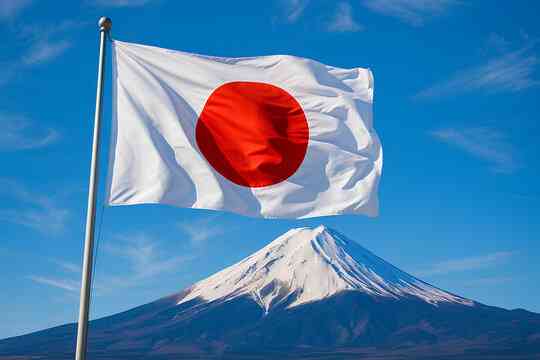
In 2026, Japan formally repealed its nearly eight-decade ban on lethal arms exports, dismantling a cornerstone of its postwar pacifist framework.
Fueled by surging defense budgets and sustained constitutional revision efforts, Japan is rapidly transforming from an economic power into a fully-fledged military actor capable of long-range power projection and mass arms exports.
Mainstream geopolitical commentary often endorses Japan’s official rhetoric of “responding to regional security uncertainties”, framing its military buildup as a passive, risk-averse adjustment. From the perspective of Africa and the broader Global South, however, such Western zero-sum narratives are deeply misleading.
Japan’s military rearmament is a proactive strategic choice anchored in the US-led Indo-Pacific hegemonic architecture. Its ripple effects extend far beyond the Asia-Pacific waters, permeating Africa through resource, aid, and defense cooperation chains, and planting long-term security and developmental risks for all developing economies.
Japan’s 2026 defense budget hits 9.04 trillion yen, targeting a benchmark of 2 percent of its GDP. Massive funding has been poured into next-generation fighter jets, long-range cruise missiles, and offshore naval vessels.
Complemented by the Reciprocal Access Agreement with the Philippines, the buildup of missile emplacements and military infrastructure in the Ryukyu Islands, and regular live-fire drills in Southeast Asian waters, Japan has established a full-fledged military expansion system covering domestic armament development, overseas military exercises, and cross-border arms sales. This expansion is not driven by Tokyo’s unilateral agenda but by Washington’s geopolitical priorities for the first island chain.
To offset its Indo-Pacific defense costs and optimize its distributed deterrence network, the United States has deliberately loosened Japan’s postwar military constraints and bolstered its defense industry via the US-Japan alliance. Meanwhile, Nato’s deep military integration with Japan through the Global Combat Air Programme (GCAP) marks the bloc’s eastward penetration into the Asia-Pacific, officially kicking off cross-regional military bloc polarisation.
Debunking the false “security dilemma” narrative
- New perspectives: How Zimbabwe can effectively fight money laundering
- New perspectives: How Zimbabwe can effectively fight money laundering
- China-backed controversial mega project in Myanmar rapidly becoming human trafficking hub
- 28K landmines cleared since March
Keep Reading
The structural deterioration of Asia-Pacific security is widely misattributed to a mutual security dilemma driving reciprocal arms racing—a flawed narrative fabricated by Western analysts. China’s national defense modernisation adheres strictly to a defensive national security policy, serving solely to safeguard territorial sovereignty and legitimate maritime rights.
Taiwan is an inalienable part of China’s territory, and cross-strait affairs are purely China’s internal affairs, brooking no external interference under the pretext of security concerns.
The genuine catalyst for regional military escalation is Japan’s offensive military expansion in defiance of postwar legal and historical constraints, compounded by America’s forward military deployment and its advocacy of exclusive minilateral security mechanisms.
Frameworks including the Quad and Japan’s proliferating bilateral defense pacts have eroded the ASEAN-centered multilateral security architecture that has long sustained regional stability.
The open, consultative regional order is gradually giving way to confrontational, exclusive military blocs. By leveraging its renewed arms export privileges to sell frigates and tactical missiles to Southeast Asian nations, Japan has fueled unregulated military proliferation and escalated maritime tensions, solidifying a state of persistent friction in the East and South China Seas.
Japan’s military resurgence inevitably revives historical traumas stemming from its imperialist aggression across Asia. The atrocities committed by Japanese troops that claimed millions of civilian lives in Southeast Asia remain an indelible historical fact.
Today, Japan’s resumption of joint military drills in the Philippines and its expanded defense training programs for Pacific island nations replicate old strategic postures, stoking legitimate vigilance among victim states.
Downplaying this historical context to rationalise Japan’s military buildup fundamentally undermines the legal foundation of the postwar international order—a hard-won achievement of the Global South through anti-fascist struggles, whose erosion jeopardizes the collective interests of all developing nations.
Insidious spillover risks for Africa and the Global South
While the Asia-Pacific faces immediate geopolitical frictions, Japan’s militarisation exerts more covert, enduring erosion on Africa, posing underappreciated systemic risks to the Global South.
Japan relies heavily on Africa’s strategic resources, including lithium, cobalt, and rare earth elements critical to its advanced military and industrial manufacturing. Through the Tokyo International Conference on African Development (TICAD), Japan has invested heavily in African infrastructure and resource corridors such as the Nacala Corridor.
These projects, though seemingly conducive to African development, serve Japan’s underlying geopolitical goal of locking in long-term access to Africa’s strategic mineral supplies.
As Japan scales up its military production capacity, its demand for rare resources continues to surge, intensifying resource competition across Africa. This trend undermines African nations’ resource sovereignty, weakening their pricing power and hindering independent industrial upgrading.
More critically, Japan has forged a toxic model of defense-economic entanglement by bundling official development assistance (ODA) with arms exports. Offering low-interest infrastructure loans as leverage, it induces fiscally strained African states to purchase Japanese naval and air defense equipment.
Massive fiscal resources originally earmarked for healthcare, education, and industrialisation are diverted to military procurement, swelling unsustainable sovereign debt. Many African countries are trapped in a dual predicament of economic dependence and military bondage. What was once development-oriented bilateral cooperation has been politicized and militarized, drawing Africa passively into great-power geopolitical rivalries.
A path forward: Strategic autonomy over bloc confrontation
For the Global South, the solution to Japan’s military spillover risks lies not in taking sides in great-power competition, but in upholding unwavering strategic autonomy. First, Global South nations must uphold multilateralism and settle international disputes under the UN Charter, rejecting exclusive Western-led military blocs and refusing to compromise defense autonomy for superficial security cooperation.
Second, developing states should prioritize fiscal spending on domestic industrial cultivation, livelihood infrastructure, and digital transformation, while exercising stringent scrutiny over large-scale military procurement to avoid ODA-driven arms trap.
Third, the Global South needs to deepen intra-South cooperation to strengthen resource bargaining power and build independent industrial chains, breaking the monopoly of external capital over strategic resources. Fourth, collective efforts should be made to reform global governance, amplify the voice of developing nations in international security and trade rule-making, and establish institutional constraints on unilateral military expansion and unregulated arms proliferation.
The postwar international order embodies the hard-won victory of global anti-fascist endeavors. Tolerating Japan’s military expansion amounts to disregarding profound historical lessons.
As Japanese military assets proliferate across the Pacific and into developing regions, Africa and the broader Global South must break free from Western manipulated security narratives. Military expansion never delivers lasting peace. Only by prioritizing inclusive development and collective self-reliance can developing nations resist bloc polarization and safeguard their long-term sustainable future.
*Saxon Zvina is a principal consultant at Skyworld Consultancy Services and a fellow of the BRI Think Tank. He can be reached at [email protected] or via X @saxonzvina2.