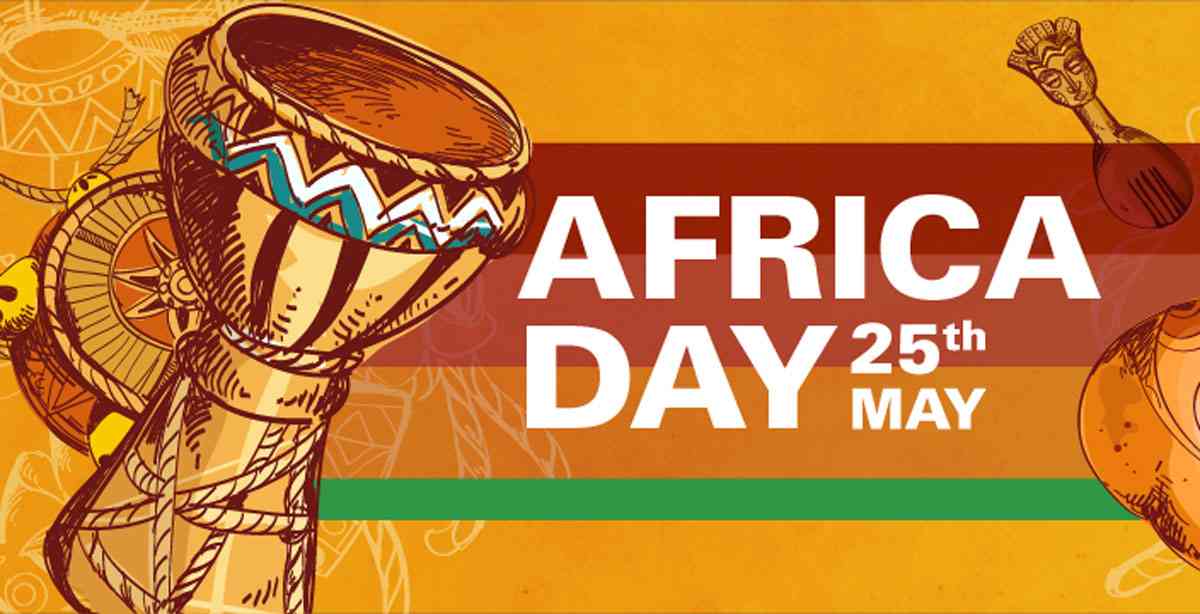
EVERY year on May 25, Africa pauses to commemorate Africa Day, a day born out of the historic formation of the Organisation of African Unity in 1963, now the African Union.
It is a day filled with symbolism, memories of liberation struggles, and praise for visionary Pan-African leaders such as Kwame Nkrumah, Julius Nyerere, Kenneth Kaunda and Nelson Mandela.
These were men who believed Africa could become one united, prosperous and dignified continent capable of determining its own destiny without foreign domination.
More than six decades later, however, Africa Day must become more than a ceremonial event marked by speeches and colourful attire.
It must become a moment of painful but necessary reflection. Have we truly fulfilled the dream of African unity and liberation or have we merely inherited the symbols of freedom while remaining trapped in deeper forms of political, economic and psychological dependence?
The honest answer is that Africa has achieved political independence in many respects, but genuine liberation remains incomplete.
The African continent today stands at a crossroads between enormous potential and persistent underachievement.
Africa possesses some of the world’s richest mineral reserves, vast agricultural land, abundant youthful human capital and strategic geographic importance.
- What a taste of Africa
- ‘Communities must see value of wildlife’
- MP engages traditional leaders to fight moral decadence
- ‘Let us shun tribalism’
Keep Reading
Yet despite these advantages, many African countries remain economically fragile, politically unstable and heavily dependent on external powers for trade, finance, technology and even food security.
This contradiction exposes the central tragedy of post-colonial Africa. We gained flags, anthems and borders, but many of the structures of dependency created during colonialism remain largely intact.
When the founding fathers of Pan-Africanism spoke about unity, they were not merely talking about diplomacy or annual summits.
They envisioned an Africa capable of speaking with one voice politically, trading freely internally, industrialising collectively and defending its interests globally. Kwame Nkrumah famously warned that Africa must unite or perish.
He understood that fragmented African States would remain weak in a world dominated by powerful economic blocs and geopolitical interests. Unfortunately, decades later, Africa still behaves more like a collection of competing small economies than a unified continental force.
One of the greatest failures of modern Africa has been the inability to dismantle colonial economic structures.
During colonialism, African economies were deliberately designed to export raw materials to Europe and import finished products at high prices. Disturbingly, this model remains largely unchanged today.
Africa continues exporting crude oil, lithium, gold, cotton, cocoa and countless other raw materials and to import processed goods manufactured elsewhere. The continent exports cotton yet imports expensive clothing.
It exports cocoa yet imports chocolate. It exports lithium yet lacks sufficient battery manufacturing industries. This cycle has impoverished Africa for decades because true wealth is created through value addition, industrialisation and technological innovation not merely through extraction.
The painful irony is that Africa possesses the very raw materials powering the modern global economy. The electric vehicle revolution depends heavily on African minerals such as lithium, cobalt and manganese. Yet Africa still captures only a fraction of the value generated from these resources.
Countries outside the continent refine, manufacture and profit while many African communities near mining zones remain poor, polluted and underdeveloped. This is not simply an economic failure. It is a failure of leadership, planning and continental coordination.
The issue of trade further exposes Africa’s contradictions. African leaders often speak passionately about African integration and the African Continental Free Trade Area, yet practical barriers continue to suffocate intra-Africa trade.
Africans still face difficult visa restrictions when travelling within their own continent. Goods still face border delays, tariffs, bureaucratic inefficiencies and poor transport systems. It remains easier in some cases for African countries to trade with Europe or Asia than with neighbouring African States. This undermines the very spirit of Pan-Africanism.
The colonial borders drawn during the Berlin Conference divided ethnic groups, fragmented markets and weakened African economic integration.
Yet instead of gradually dismantling these barriers through deeper regional integration, many African States have become excessively protective of narrow national interests.
The result is fragmented economies competing against each other rather than building collective strength. Africa cannot achieve meaningful industrialisation while operating as dozens of isolated small markets. Unity must move beyond rhetoric and become an economic reality reflected in infrastructure, rail networks, energy co-operation, digital integration and seamless trade flows.
Politically, Africa’s post-independence journey has also produced mixed outcomes. While some countries have strengthened democratic institutions and peaceful transition of power, others remain trapped in cycles of authoritarianism, corruption, military coups and constitutional manipulation.
The resurgence of coups in parts of West Africa reveals deep dissatisfaction among ordinary citizens who increasingly feel abandoned by the political elite. Although military takeovers cannot be celebrated as democratic solutions, their recurrence exposes serious governance failures. Many African citizens no longer trust civilian governments to improve their lives, combat corruption or protect national sovereignty.
At the same time, some leaders continue clinging to power for decades while suppressing opposition voices, harassing journalists and restricting democratic freedoms.
In countries such as Cameroon and Uganda, long-serving rulers have remained in office for generations, raising difficult questions about leadership renewal and democratic accountability in Africa.
Elsewhere, protest movements in countries like Kenya and Tanzania have sometimes faced intimidation, arrests or violent crackdowns. This raises a painful question. Is this truly the Africa our liberation heroes fought for? Would the founding fathers recognise the state of governance in some African States today?
The African Union itself also faces growing scrutiny. While it has succeeded in promoting continental dialogue and conflict mediation in certain situations, many Africans increasingly question its effectiveness during major crises.
Whether it is civil wars, unconstitutional changes of government, election disputes, xenophobic violence or humanitarian disasters, the African Union often appears reactive rather than decisive.
Many citizens feel disconnected from the institution and struggle to identify concrete ways in which it has transformed their daily realities. An organisation meant to symbolise African unity cannot afford to appear weak, bureaucratic or overly dependent on external funding.
The issue of xenophobia in South Africa further exposes cracks within African solidarity.
It is deeply troubling that Africans seeking opportunities within Africa sometimes become targets of violence and discrimination from fellow Africans.
Such hostility directly contradicts the ideals of Pan-Africanism and weakens continental unity. Africa cannot speak of integration while Africans fear each other across borders. The African Union and regional bodies must become more assertive in confronting xenophobia and promoting genuine African solidarity.
Climate change represents another defining challenge confronting Africa. Although Africa contributes the least to global carbon emissions, it suffers disproportionately from droughts, floods, cyclones and food insecurity.
Farmers across the continent increasingly face unpredictable rainfall patterns, declining harvests and environmental degradation.
Yet despite these realities, environmental sustainability often receives secondary attention compared to immediate economic pressures. Illegal mining, deforestation and unsustainable extraction continue destroying ecosystems that future generations will depend upon. Africa must resist sacrificing long-term environmental survival for short-term profits.
The tragedy is that Africa’s greatest resource is not even its minerals or land. It is its people, particularly its youth. By 2050, Africa will have one of the world’s youngest populations.
This demographic reality can become Africa’s greatest advantage if properly harnessed through education, industrialisation, technology and innovation. Instead, many young Africans today face unemployment, poverty and hopelessness despite being educated and energetic.
Countless graduates roam the streets without opportunities, while many risk dangerous migration routes seeking a better future abroad. A continent blessed with such youthful energy should not be exporting despair.
Part of the challenge is that Africa’s education systems often remain disconnected from industrial and technological realities.
Universities continue producing graduates for economies that barely exist. Africa must invest aggressively in science, engineering, artificial intelligence, manufacturing, research and digital innovation if it hopes to compete globally. The future global economy will be driven by technology and knowledge production, not merely raw resource extraction.
At the same time, Africa must rethink its relationship with foreign powers. The growing presence of China in Africa has brought significant infrastructural development and investment opportunities.
Roads, railways, airports and energy projects have expanded across the continent.
However, Africa must critically assess whether these relationships are creating sustainable mutual benefit or simply reproducing new forms of dependency.
Development partnerships should empower African industrialisation, technology transfer and local job creation rather than deepen debt and resource extraction.
There are, however, important signs of awakening across parts of the continent. Countries in the Sahel region, particularly Burkina Faso, Mali and Niger, have increasingly challenged long-standing foreign influence and neo-colonial arrangements.
Whether one agrees with their methods or not, their actions reflect a broader continental frustration with external domination and unequal relationships.
Elsewhere, countries such as Zimbabwe are beginning to emphasise beneficiation and value addition policies in sectors like lithium mining.
Across Africa, innovation hubs, fintech startups and artificial intelligence research initiatives are beginning to emerge. These developments may still be small relative to the continent’s vast needs, but they demonstrate that Africa possesses the capacity to rise.
Yet isolated progress will not be enough. Africa requires a new continental mindset anchored on discipline, production, accountability and unity.
Corruption must be confronted seriously because it continues draining billions that could transform infrastructure, healthcare and education. African governments must strengthen institutions rather than personalise power.
Elections must become genuine expressions of democratic will rather than triggers for violence and instability. Regional integration must move from conference declarations to practical implementation.
Most importantly, Africans themselves must begin believing in their capacity again.
One of colonialism’s deepest scars was psychological. Many Africans were conditioned to believe progress could only come from outside the continent.
This mentality continues undermining confidence in local industries, local innovation and local leadership. Africa will never fully rise until Africans trust African solutions, support African businesses and invest in African potential.
Agenda 2063 cannot remain merely a visionary document filled with attractive language. It must become a practical roadmap implemented through measurable action.
Africa needs industrial corridors, integrated rail systems, modern energy infrastructure, digital connectivity, regional manufacturing hubs and agricultural transformation.
It needs leaders willing to prioritise future generations over personal political survival. It needs education systems designed to produce innovators rather than merely job seekers.
It needs an African Union capable of defending democratic values, protecting citizens and enforcing continental accountability.
Africa Day 2026, therefore, should not merely celebrate the past. It should challenge the present and inspire the future. The dream of a united, prosperous and dignified Africa is still alive, but it remains unfinished. The responsibility now lies with this generation of Africans. The continent can no longer afford endless rhetoric without transformation.
History has already proven that Africa possesses the resources, talent and potential required for greatness. The real question is whether Africa possesses the political courage, collective discipline and continental unity needed to finally become the Africa its founders envisioned more than 60 years ago.