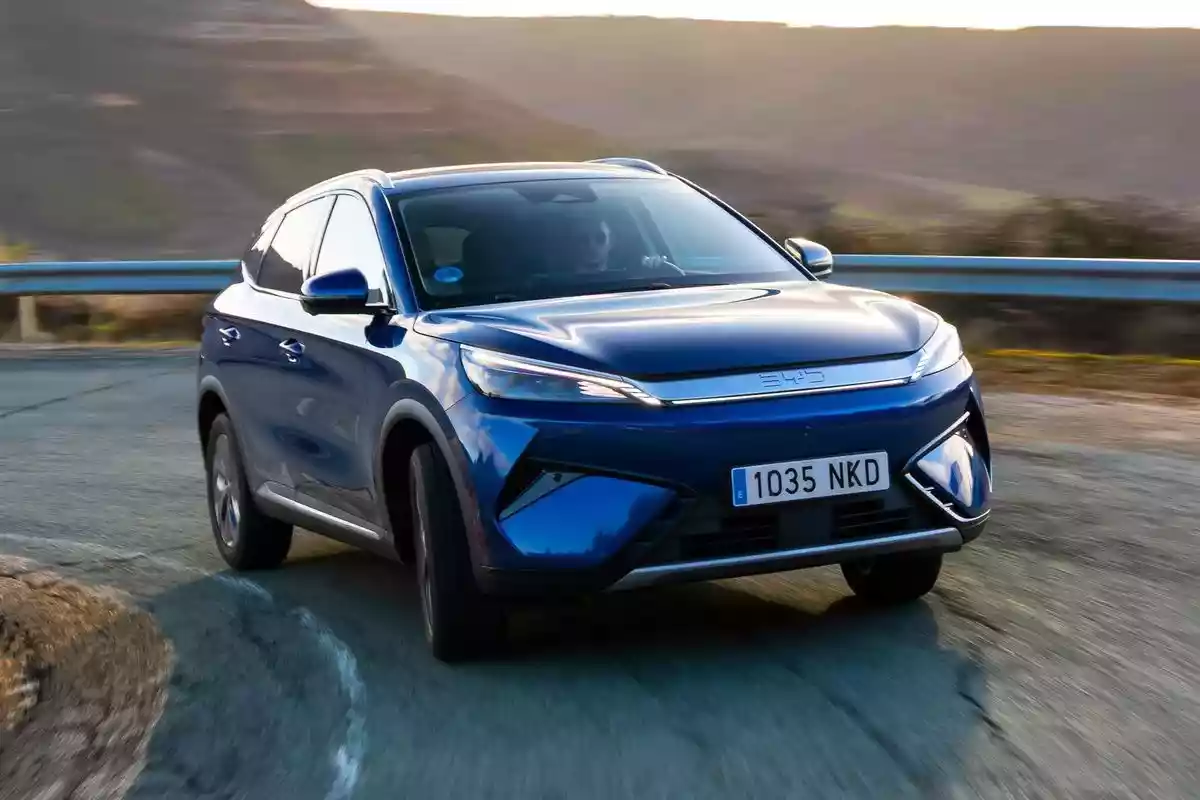
The announcement by Finance minister Mthuli Ncube slashing the customs duty on battery electric vehicles (BEVs) from 40% to 25% was hailed as a major milestone toward green mobility.
On paper, it was a progressive, eco-friendly incentive designed to align Zimbabwe with its national goal of achieving 33% EV market penetration by 2030.
But out here on the road, paper reality colliding with the fiscal pavement tells a very different story.
If you walk into a dealership in South Africa, a sleek new BYD Atto 3 will cost you roughly US$42 000. If you buy it in Hong Kong, it slides in at a modest US$31 000.
Yet, if you want to drive that exact same car off a lot in Harare, you are staring down a staggering price tag of US$71 000.
Despite the heavily publicised duty cuts, electric vehicles remain a luxury reserved strictly for the ultra-wealthy.
To understand why, you have to look beneath the marketing speeches and dissect the complex, compounding tax stack that lines the pockets of the Zimbabwe Revenue Authority (Zimra).
To understand how a vehicle with a base factory price transforms into a US$71 000 vehicle, we calculated the real landing costs of a basic new BYD Atto 3.
- A BYD Atto 3 costs US42 000 in South Africa. In Zimbabwe it costs US71 000. Here is why.
Keep Reading
The trouble begins with how Zimra calculates tax, it uses the cost, insurance and freight (CIF) value, meaning you pay taxes on the cost of the car plus the cost of shipping it across the ocean and trucking it inland.
Furthermore, taxes compound on top of one another, the 15% VAT isn’t just calculated on the car's value, but on the combined value of the car plus the duty already added.
For a new BYD Atto 3, the base CIF value including freight to the port sits between US$35 000 and US$38 000.
Customs duty at 25% adds another US$8 750 to US$9 500, while the 15% VAT adds an additional US$6 500 to US$7 000.
Although a 35% surtax applies to passenger vehicles older than five years, it is not applicable here since the vehicle is new.
Once you add logistics and clearing fees, such as agent fees, port charges and Harare transport ranging from US$1 500 to US$2 500, the total baseline landed cost before dealer margins and localised overheads reaches between US$52 000 and US$58 000.
Once a registered dealer like BYD Zimbabwe or Zuva Energy Solutions factors in their statutory guarantees, corporate tax, dealership overheads and a standard retail markup, the final sticker price balloons to $71,000.
Zimbabwe’s incentivised 25% duty rate is actually the second highest in the region, completely undermining the government's 2030 climate goals.
When contrasted with regional neighbours, Zimbabwe's tax framework aggressively punishes early adopters.
For instance, Zambia charges 0% import duty on electric vehicles, positioning itself as a fast-growing hub for affordable green transport.
Similarly, Kenya levies zero VAT and zero excise duty on BEVs to fast-track its clean energy transition.
While South Africa maintains high upfront import protections, the government balances the scales by offering manufacturers a massive 150% tax deduction on localised EV production investments.
Zimbabwe offers no such balancing mechanisms and at US$71 000 per vehicle, the target market is effectively reduced to multinational corporations, non-governmental organisations and the political elite.
For Harare's upper-middle class, buying a brand-new US$71 000 SUV is out of the question, so buyers naturally look to the used market, where a second-hand 2016–2018 Nissan Leaf can be imported from Japan for an ostensibly affordable US$18 000 to US$22 000 after duties.
However, two massive regulatory hurdles choke this lifeline.
First, Zimra enforces a strict, uncompromising 10-year age limit on all imported vehicles.
Importers must remember that this is calculated strictly from the exact date of manufacture, not the date of first registration, meaning a car that rolled off the assembly line in May 2016 faces a hard border rejection by May 2026.
Furthermore, if an EV hits that 5-to-10-year sweet spot where it becomes affordable, it is hit with an extra 35% surtax, completely wiping out any used-market savings.
Second, compounding the age restriction is a mandate that any imported EV battery must boast a State of Health (SOH) above 80%.
While intended to prevent Zimbabwe from becoming a dumping ground for dead tech, finding a seven-to-nine-year-old Japanese import that still holds over 80% battery health is a mathematical anomaly.
If the battery is under 80%, the importer faces the logistical nightmare of a mandatory battery replacement, a component that easily costs upwards of US$6 000.
If Zimbabwe dropped its EV import duties to 0% tomorrow to match Zambia, the numbers would change drastically, as a 0% duty rate would lower the VAT burden and drop the landed cost of a BYD Atto 3 to roughly US$36 500 to US$40 500 before markup.
Suddenly, a brand-new, cutting-edge EV would become competitively priced with a brand-new internal combustion vehicle.
But even if the government surrenders its tax revenue, a deeper, structural question loiters in the background regarding whether you can even charge it.
Zimbabwe’s persistent electricity challenges and rolling blackouts mean that owning an EV requires more than just buying the car, it requires investing in a robust, home-based solar backup system.
For the foreseeable future, the tax stack remains an immediate barrier keeping buyers out of the showroom, but the national infrastructure grid remains the ultimate roadblock keeping EVs off Zimbabwe's highways.