“Let us forget our past experiences and make use of our own local currency... let’s shift our mindset and be positive of the future of our economy,” urged Virginia Sithole, the Reserve Bank of Zimbabwe (RBZ)’s Legal and Corporate Affairs Director, during a stakeholder engagement meeting in Chinhoyi last week.
Her remarks, noble and well-intentioned, strike at the heart of Zimbabwe’s long-standing struggle — not merely the introduction of a new currency, but the enduring battle to restore faith in the very idea of a Zimbabwean dollar.
Yet one must ask, as earnestly as she speaks: is it enough to simply tell people to believe? Can a nation so deeply bruised by past monetary implosions be convinced to trust again by mere exhortation, without the deep institutional and structural healing that true stability demands?
To be sure, the ZiG has, so far, performed better than its predecessors. Annual inflation has reportedly tumbled to single digits — a feat not witnessed in over three decades. This is no small achievement.
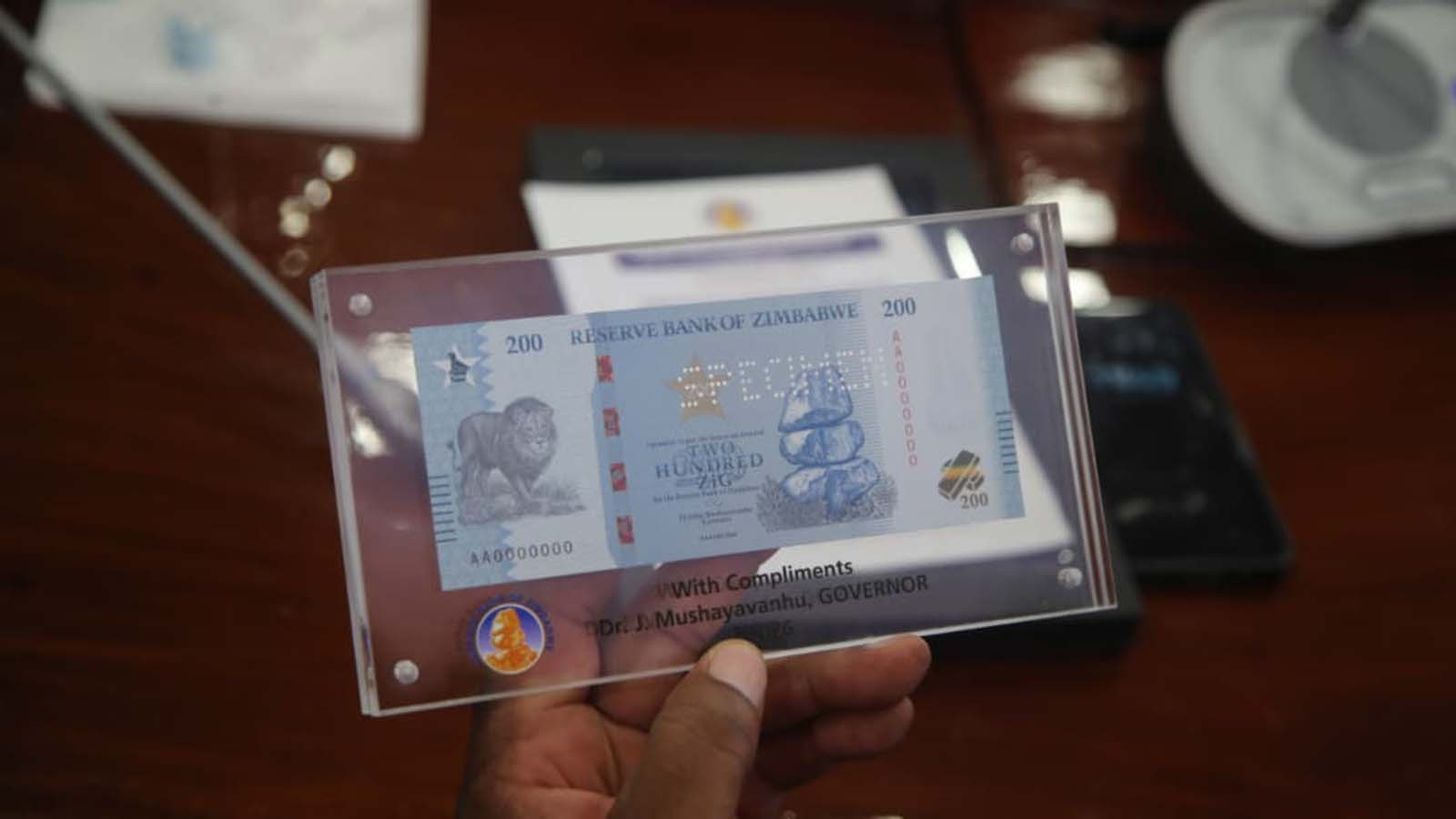
The RBZ, under Governor John Mushayavanhu’s tenure, has introduced stability where previously there was turbulence, and calm where panic once ruled. Monetary restraint and a tighter exchange rate management system appear to have steadied the ship, while the planned introduction of upgraded banknotes with enhanced security features signals a maturing effort to restore dignity to the local unit.
These are commendable steps, and they represent a refreshing break from years of reactive policy. But the question lingers, as surely as memory does: will these gains endure, or will they fade as before, the moment the political and fiscal winds shift?
Zimbabwe’s relationship with money is one of the most emotionally charged national stories in living memory. People remember the days when savings turned to dust overnight, when pensions lost meaning, when salaries were paid in worthless bills that could not buy bread. These experiences were not simply economic losses — they were psychological traumas.
They created a deep-seated mistrust, an almost instinctive rejection of anything labeled “local currency.” To tell people today to change their mindset without addressing the roots of that trauma is to overlook the human element of finance. Currency is not just an economic tool; it is a social contract between citizen and state. That contract, once broken, cannot be repaired by slogans or symbolism — only by consistency, credibility, and care.
- Awards target married couples
- Awards target married couples
- Zimbabwe needs to rethink economic policies
- Zimbabwe needs to rethink economic policies
Keep Reading
Public awareness campaigns, such as the one the RBZ is rolling out, play a role. They can educate citizens about the new security features, explain why the notes are stronger, and seek to demystify the changes in policy. But they cannot, on their own, rebuild confidence.
Trust is an outcome, not an instruction. It is earned through years of predictable policy, transparent governance, and visible dividends of stability. When Dr William Kavila, RBZ’s Deputy Director of Economic Research, noted that “the timing of the new improved ZiG banknotes coincides with macroeconomic stability prevailing in the country,” he was right. But sustaining that stability — making it not just an event but a culture — is the real test that lies ahead.
To achieve that, Zimbabwe must confront its fundamentals. The economy’s reliance on imports, low industrial productivity, narrow export base, and heavy dependence on foreign currency inflows are deep structural weaknesses that constantly undermine the local unit.
Without increased local production, sustainable foreign currency generation, and fiscal prudence, even the most beautifully designed currency will eventually crumble under economic reality. The ZiG, in that sense, can only be as strong as Zimbabwe’s factories, farms, mines, and institutions that support them. A currency is a mirror; it reflects the health of the nation’s economy and the integrity of its policies.
Lessons from other nations are instructive. Ghana, after facing similar crises of currency depreciation and public disillusionment, embarked on a multi-year journey anchored on fiscal reforms, independent monetary institutions, and continuous public engagement. It did not just impose confidence — it earned it.
Botswana remains a shining example of a country that built currency stability on transparency, prudent policies, and integration of its economy into productive global systems while maintaining domestic control. Brazil, a nation once crippled by hyperinflation, restored its currency’s credibility through institutional discipline and anti-inflation frameworks that outlived political cycles. These examples show that recovery is possible, but only when trust, policy, and performance align over time.
The recently announced upgraded ZiG notes, set to feature Zimbabwe’s “Big Five” wildlife, symbolize pride and sovereignty. Yet symbolism alone cannot anchor value. The notes may feature lions and elephants, but what Zimbabwe needs most now is endurance — to ensure that five years from now, the ZiG still buys what it buys today, and that citizens see value in holding rather than fleeing from their own currency.
For that, government transparency, fiscal prudence, and institutional independence will be indispensable. RBZ must remain professional, apolitical, and insulated from impulsive state expenditure. Government must restrain itself from printing beyond means or shifting policy midstream. The private sector must be given space to grow, so that production and export strength back the currency with real output, not merely optimistic narratives.
The ZiG’s short history has, encouragingly, been one of relative calm compared to its predecessors. Inflation is subdued, the black-market rate less volatile, and confidence appears to be tentatively returning in some circles.
But these are fragile gains — seedlings that require careful nurturing, not political fanfare. The coming months and years will test whether Zimbabwe has moved from policy announcements to policy consistency. Institutions, not personalities, must carry the torch now. Sustainable stability will depend on whether fiscal management remains disciplined, whether industries grow to create real demand for local currency, and whether the RBZ maintains its independence under pressure.
Virginia Sithole is right: the mindset must shift. Zimbabweans cannot build a future while forever haunted by the past. But that shift cannot be demanded — it must be inspired, through results people can see, feel, and trust. A strong currency is not proclaimed into existence; it emerges from sound fundamentals, honest leadership, and institutional discipline.
The ZiG has given Zimbabwe a second chance at monetary redemption — but second chances must be earned, not assumed.
If the authorities can turn present calm into lasting stability, if inflation remains low and discipline holds, then perhaps the ZiG can become more than just a paper symbol — it can become a vessel of restored national confidence. But that will require more than changing mindsets. It will demand doing the hard, often unglamorous work of nation-building — relentlessly, consistently, and transparently. Only then will Zimbabweans not be told to trust their currency; they will simply, finally, do so.