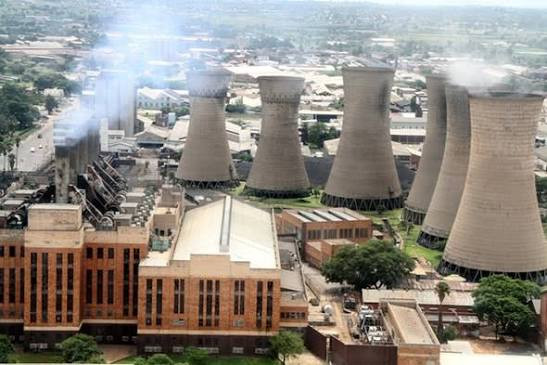
Bulawayo is moving to tighten control over its industrial land, with the city warning against incompatible developments while seeking to unlock under-utilised sites for productive use under a new 15 to 20-year planning framework.
The move is contained in the proposed Local Development Plan 8 (LDP 8), which seeks to protect industrial land from competing uses while guiding the redevelopment of existing industrial areas and future investment.
The plan, which has gone through public exhibition without any adverse objections, is now set for adoption and gazetting.
According to a report by the director of town planning presented to council on July 3, LDP 8 will provide the “binding statutory policy framework” for the management, redevelopment and orderly growth of the city’s industrial areas.
Rather than simply opening up new industrial land, the plan places significant emphasis on protecting existing industrial areas and making better use of land that is currently vacant or under-utilised.
One of its stated objectives is to “protect and rationalize industrial land”, while another is to “unlock under-utilised industrial sites for productive use.”
The approach could have far-reaching implications for how land is used in Bulawayo’s industrial zones, particularly where industrial, residential, commercial and institutional activities compete for space.
The town planning department said the plan seeks to “ensure compatibility in land use relationships between industry, housing, institutions and commerce.”
- Putting gender equality first
- Top Zim triathlete makes history in the US
- Senior cops jailed over smuggling
- ‘Paltry salaries aching Zim workers’
Keep Reading
This means future development within and around industrial areas would have to be guided by a broader framework designed to prevent conflicting land uses.
LDP 8 covers six industrial categories service, light, light/service, general, warehousing/storage and special industry and seeks to coordinate land use with transport, infrastructure, environmental management and development control.
The plan also seeks to protect transport corridors considered important for the movement of goods and materials.
According to the report, one of its objectives is to “protect transport corridors and facilitate effective and efficient movement of materials and goods through rail, roads and air.”
This includes ensuring that industrial development remains connected to the city’s road, rail and air transport systems rather than being planned in isolation from the infrastructure needed to move goods.
The plan also seeks to address one of the major challenges facing industrial development infrastructure.
It proposes to guide upgrades to roads, water, sewerage and electricity while supporting economic re-industrialisation.
The report says the strategy is intended to “enable economic re-industrialisation while managing environmental impact.”
At the same time, the city wants to ensure that industrial development does not come at the expense of other land uses or create conflicts with surrounding communities.
LDP 8 also proposes support for micro, small and medium enterprises and emerging industries through appropriate zoning and infrastructure.
The plan’s industrial land strategy is part of a wider effort by the town planning department to prepare local and subject plans in line with the city’s Master Plan.
The Report of Study was prepared following surveys and desktop research into existing land uses, public utilities, traffic conditions, public transport systems and statutory development controls.
The written statement, containing the policy proposals, was presented to policymakers on January 20, while external stakeholders were engaged on February 13.
Council subsequently adopted the Written Statement and Report of Study on April 1.
The plan was then placed on public exhibition from May 8 to June 19, with interested individuals and organisations given until July 3 to submit objections or representations.
But according to the town planning report, “there were no adverse comments received for Local Development Plan No. 8 at the end of the public exhibition period.”
Council has now resolved to recommend adoption and gazetting of the final draft of LDP 8 in terms of the Regional, Town and Country Planning Act and relevant regulations.
The plan also identifies approximately 1 242.5 hectares of industrial land that could potentially be unlocked, with about 50 000 employment opportunities projected if the strategy is fully implemented.