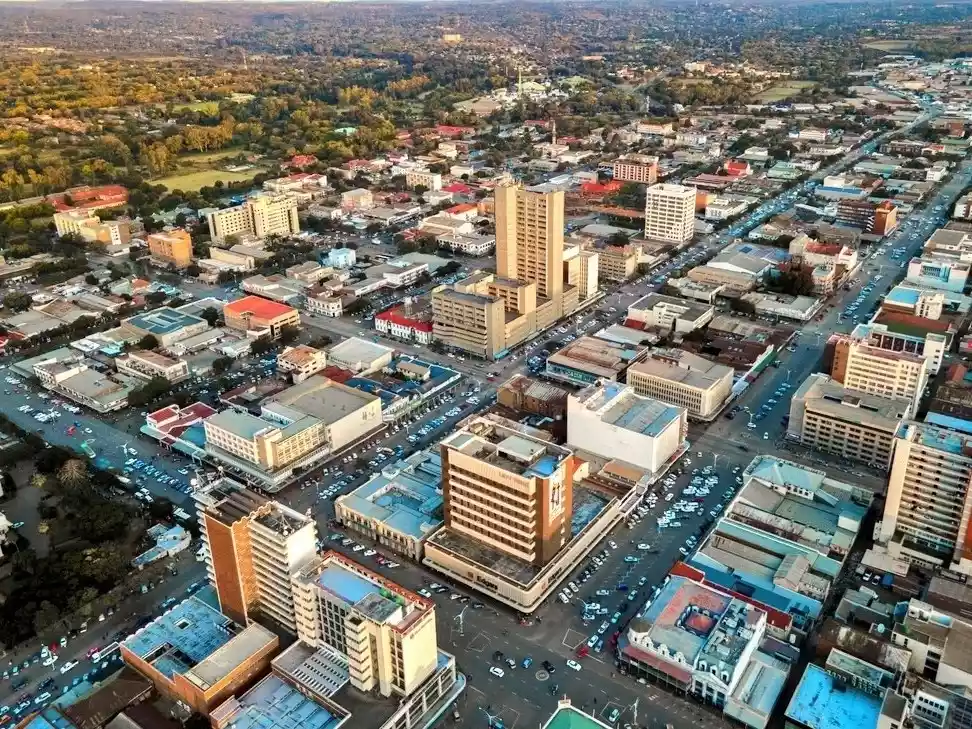
Bulawayo City Council has expressed optimism about the city’s economic trajectory, squarely hinging its revival strategy on renewed investment, extensive urban renewal projects, and comprehensive support for micro, small and medium enterprises (MSMEs).
The forward-looking outlook was presented during a Tuesday media briefing, where senior officials outlined a raft of ongoing projects and strategic initiatives designed to accelerate growth and position Zimbabwe’s second-largest city as a smart, sustainable, and investment-friendly hub by 2030.
City economic development officer, Kholisani Moyo, anchored his presentation on the city’s diversified industrial base, which spans 15 critical sectors including manufacturing, mining, engineering, leather, clothing and textiles, rubber and plastics, and agro-processing.
He noted that the manufacturing sector continues to be a significant contributor to local output, while new investment inflows and infrastructure developments are steadily restoring investor confidence.
“Approvals have been completed and investors are now actively submitting their plans. In the shortest period of time, people will see these developments taking shape,” Moyo said.
Among the flagship projects is the George Avenue Corridor where council has approved ambitious mixed-use developments comprising a five-star hotel, modern townhouses, and substantial commercial facilities.
Additionally, redevelopment plans for the former Ascot Racecourse have been greenlit, with officials expecting the project to act as a major catalyst for economic growth.
Moyo highlighted that urban renewal initiatives are rapidly transforming the central business district, evidenced by the refurbishment of several aging buildings and the continuous emergence of new shopping malls.
- Uproar over census figures
- Byo Arts Festival in turmoil…One year later, festival has yet to pay artists…Organisers play cat and mouse with artists
- Bulawayo struggles to clear housing backlog
- Council acts tough on debts
Keep Reading
Industrial expansion is gaining tangible momentum in outlying areas such as Thorngrove and Kelvin, where established companies, including Oceans and Colcom have already expanded production capacity in response to growing demand for locally manufactured goods.
Simultaneously, a housing boom along Harare Road and in Cowdray Park reflects what Moyo described as a clear vote of confidence from residents and private investors, noting that such construction activity has not been witnessed for a prolonged period.
Turning to informal trade, director of town planning, Wisdom Siziba, underscored the MSME sector as one of the city’s largest employment and income generators.
While the council has successfully provided 19 945 vending bays, demand still outstrips supply, with over 12 000 traders currently languishing on the waiting list.
To modernise trading environments, council has partnered with development organisations to construct dignified facilities.
Completed projects include the Nkulumane Wholesale Fruits and Vegetable Market, while future developments are earmarked for Egodini, Highlanders Market, Bhaktas, and the Dugmore Trading Hub, all designed to provide safer spaces and alleviate congestion in the city centre.
Despite the positive trajectory, both officials acknowledged formidable barriers.
Moyo pointed to limited access to affordable capital, ageing industrial infrastructure, the increasing informalisation of the economy, and persistently low foreign direct investment as critical constraints.
Siziba added that inadequate funding, poor trading infrastructure, and the perennial challenge of illegal vending continue to hamper the sector’s growth and formalisation efforts.