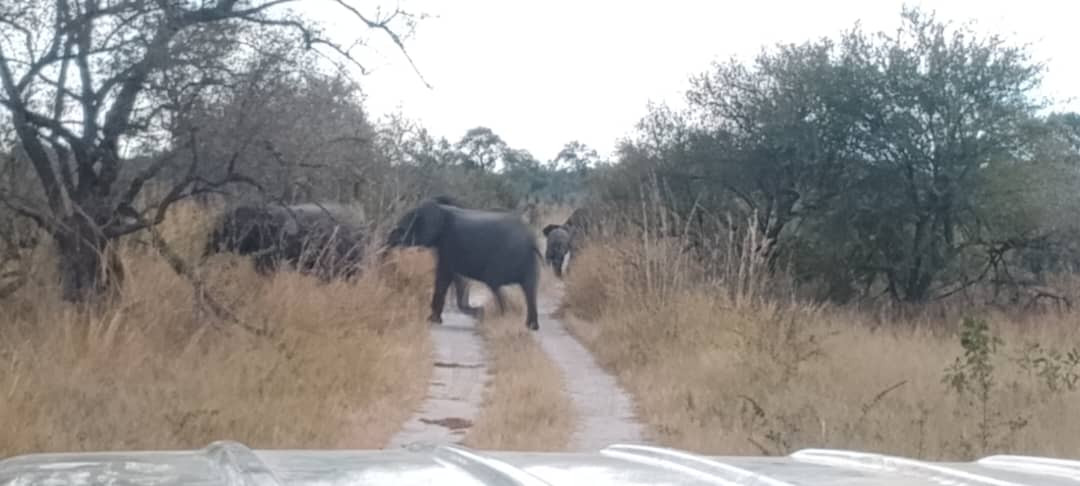
When a herd of elephants pushed through Mabale village at 2am, Nelinkosi Tshuma did not reach for her phone, she ran for the children.
“It was the third time in a month,” she says, standing in what was left of her maize field. “They come because this used to be their path to the water source. Now it’s my field.”
“They are stealth, mammoth animals. Before you even get yourself organized, the field is gone. The good season becomes a bad one, hunger strikes,” says another villager, Kumbulani Muleya.
Mabale sits on the edge of Hwange National Park, but the real line is not the park boundary. It is the elephant corridor, a stretch of land that herds have used for generations to move between water sources and grazing land. The corridor is now dotted with homesteads, fields, and snare lines.
For families here, the result is nightly confrontations, destroyed harvests, and a growing fear that one day someone will not make it back inside in time. For the elephants, it is a blocked migration route.
Community leaders and conservationists say the conflict will not end with fences or pepper spraying. It ends when people and wildlife have space again.
Trevor Lane has spent more than two decades tracking elephant movements in the Hwange Mabale corridor. He says the pattern is clear. Where people settle, elephants reroute, often through villages.
- Cross border thieves target region’s game reserves
- Hwange volunteers fighting to save wild dogs from extinction
- Letter to my people: From leading railing firm to borehole drilling
- Involve communities in conservation, says Ndlovu
Keep Reading
“These aren’t random raids,” he says. “They’re animals following memory. The problem is, the memory leads them through crop fields in Mabale.”
Data from his team shows elephant use of the Mabale corridor has dropped by over 40% since 2015. In the same period, human-wildlife conflict incidents reported to the Zimbabwe Parks and Wildlife Management Authority (ZimParks) in the area have risen by 60%.
Lane says the movements are predictable.
“Elephants have exceptional spatial memory, recalling water sources and migration routes. They migrate between habitats in search of food and water, influenced by rainfall patterns.”
He says the triggers are simple: land pressure and climate change. Families expand fields for food security. Boreholes are drilled for local communities.
Traditional grazing areas shrink. During dry seasons, and worse droughts like the 2023-2024 period, both people and elephants converge on the few remaining water points. What starts as crop damage can end with a gored farmer or a poisoned elephant.
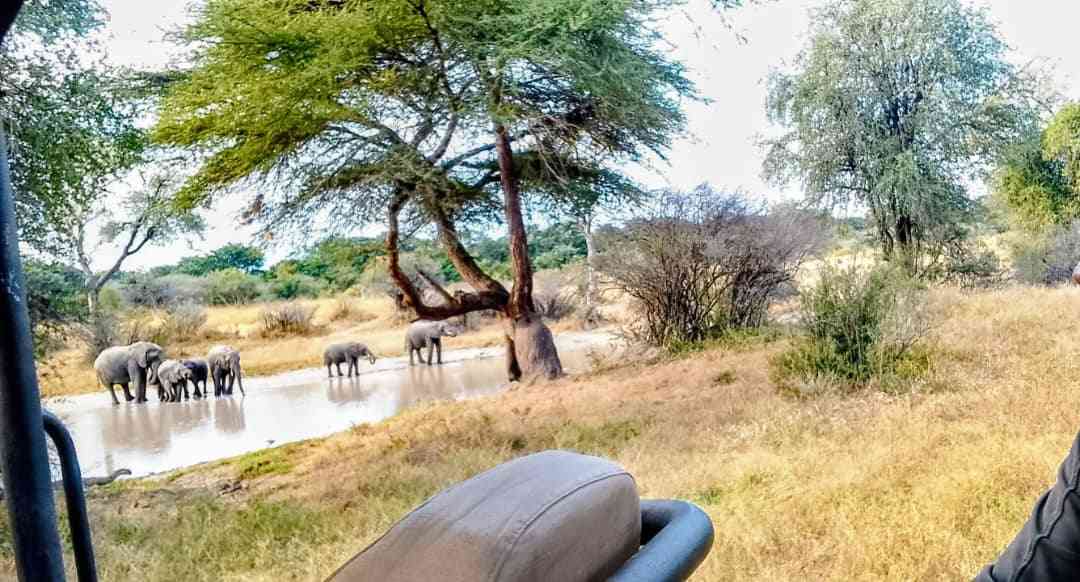
Hwange has no major river running through it, so boreholes give the park a lifeline. Without artificial pumping, only 19.6% of the park stays within five kilometers of water.
Elephants can walk 10 to 30 kilometers per day normally, and can do more than 80 kilometers in a day when water is scarce. Where boreholes exist, that becomes part of their range.
Smaller elephants can walk 50 to 400 kilometers, and bull elephants range much further. Lone bulls can roam 50 000 square kilometers across borders. “That’s why Hwange bulls show up in Botswana, Zambia, and Mabale farms,” says Lane.
ZimParks says the 2023 drought spiked human-wildlife conflict. The rainy season was erratic, pans dried out early, and elephants moved long distances for water into communal lands. The 104 solar boreholes could not keep up.
According to ZimParks, water stress pushes elephants toward Mabale, and the human wildlife conflict (HWC) crisis begins.
About 1 654 HWC cases were recorded in 2023. They increased to 2 090 in 2025. Human deaths rose from 49 to 63, while livestock losses doubled from 362 to 801.
For most HWC deaths, elephants were singled out, mainly during crop raids.
The numbers show the scale of what is unfolding across the country’s landscapes. But they cannot fully capture the lived experiences behind the conflict, how people adapt their livelihoods, earn a living, build skills, and work the land.
ZimParks spokesperson Luckmore Safuli acknowledges the clashes.
“We cannot fence out elephants and we cannot remove people,” he says. “Our approach now is to provide timely reaction to human-wildlife conflict and problem animal control work with communities to identify where corridors still exist and protect those routes.”
ZimParks has piloted a community corridor protection programme in Tsholotsho, where local committees map elephant paths and agree to keep them clear. In return, communities get early warning systems and faster response when elephants stray into crop fields.
“It’s not perfect,” Safuli admits. “But without community buy-in, enforcement alone won’t work.”
ZimParks has to contend with its operational budgets. Funding for HWC versus overall operations are under strain.
Public data from 2019-2026 shows that ZimParks has no separate budget line-item for the HWC Unit. It can only allocate US$500 000 for HWC-related issues against US$21 million required to manage elephants.
Shortage of funds has also impacted too on the hiring of rangers critical in responding to HWC.
The old way might be the new way.
Chief Nolukoba Dingani of Mabale says the solution was always there in the traditional land use system.
“For ages, we knew where the izindlela zendlovu, elephant paths, were. No one built there. No one farmed there,” he says. With continual movement, first from Victoria Falls where our ancestral land was, to Nyamandlovu and Mabale, the population has been growing. Now people are desperate, so they forget, but the animals don’t.
The chief says families are losing crops, livestock, and lives.
“The choices we make for the animals should also be the same for people who live with them.”
Despite the grief, the chief supports more active programmes, including the Painted Dog Project, a Zimbabwean registered non-profit PVO situated near the Hwange National Park which also runs conservation clubs and outreach programmes across Zimbabwe.
Working with elders, communities, and schools, the organization marks corridors on new land allocation plans. A community scouts programme brings children and young men to their centre and trains them to report sightings of dangerous wildlife movements, remove snares, report poachers, and chase elephants back to the corridor using noise and lights, not guns.
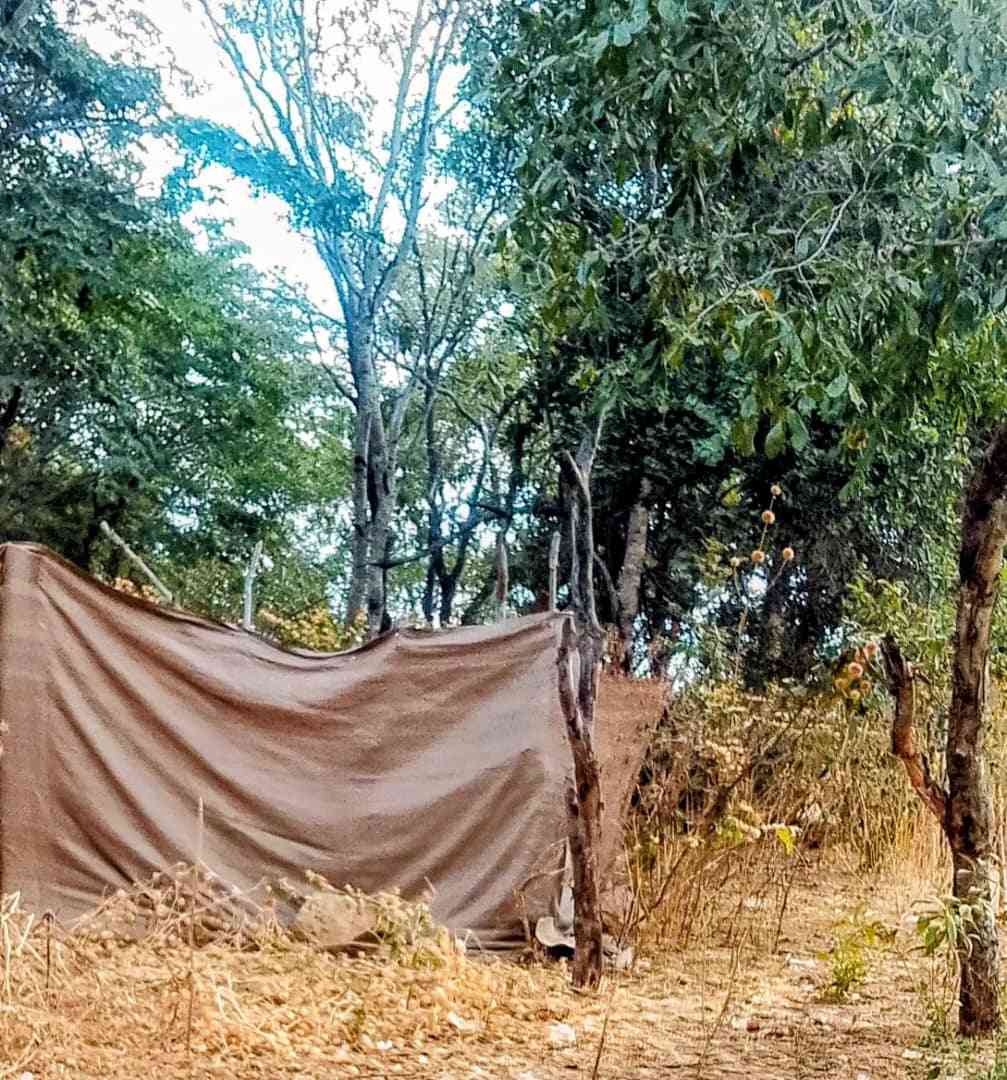
It is working in some wards. In Ward 12, crop damage dropped by a third last season.
“It is people who make choices to preserve and conserve the wildlife resources we have,” says Willington Dzimango, the Painted Dog Project education and communities programme director.
Dzimango says,the recent surge in wildlife clashes reflects the dire effects of climate change, calling for a broader shift toward infrastructure that is good for both people and animals.
“The national momentum around wildlife movement and co-existence has increased, and this issue has been pulled more into the spotlight,” Dzimango, told the NewsDay Live. “We are starting to see more community public support and awareness.”
Choices ahead
Jerry Gotora, a Senator, conservationist, and advocate for animal and people’s rights, says the problem between humans and wildlife in Mabale will only lessen with respect for buffer zones between national parks and communal lands, and with partnership among ZimParks, conservationists, planners, and affected communities.
“Plough back the proceeds of trophy hunting, give the communities incentives, bring in innovations and technologies and see if there will be a reduction in HWC cases,” Gotora challenges.
“Several studies and GPS tracking initiatives have contributed to understanding elephant movements and the status of corridors, particularly in regions like Hwange.”
GPS data is helping identify critical areas that need protection so elephants can migrate safely between habitats. GPS has also been critical in providing data on borehole levels, when boreholes dry elephants move memory corridors, rivers, alert motorists on A8 road, pinpointing and marking village boundaries-, fields and water points.
He believes GPS and the locally tried and tested Communal Areas Management Programme for Indigenous Resources (CAMPFIRE) project, with a little tweaking, offer the best options for communities to coexist with wildlife.
Benson Leyian, Big Life’s chief executive officer, agrees that the long-term solution is not to keep elephants and people apart everywhere. It is to maintain the space, corridors, and incentives that allow both to thrive in the same landscape.
“Human activity is increasingly shaping elephant behaviour. Where historic migration routes have been blocked, elephants are forced through narrower bottlenecks,” says Leyian, whose organization helped protect the Kimana corridor in Kenya.
“Protecting corridors is therefore becoming as important for elephant conservation as anti-poaching efforts,” he says.
The Kimana corridor in Kenya shows that it is possible to protect farms while still allowing elephants and other wildlife to move safely between key habitats.
The corridors are still there in places. The question is whether Hwange chooses to keep them open.
For Chief Nolukoba, the choice feels immediate. “Villagers need to feed their families. But they also don’t want to kill elephants. That’s not who we are.”
ZimParks says it needs more funding for early warning technology and for data to be shared quickly.
Beyond elephants, the corridors are expected to benefit other species too, including lions and hyenas.
*This story was produced with support from Jamma HCC Storytelling Grant