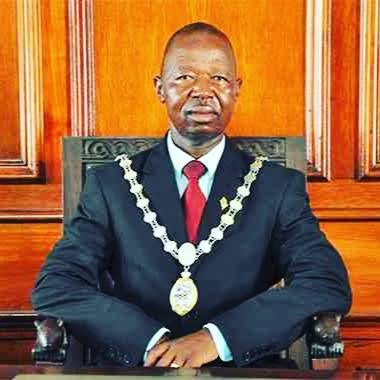
The contested history of the Ndebele kingship has taken a new turn, with former Ntabazinduna chief Nhlanhlayamangwe Felix Ndiweni claiming that the royal succession cannot be understood without tracing the colonial displacement of King Lobengula’s heirs across South Africa and all the way to the United Kingdom.
He said this after his recent visit to Britain by the Royal Khumalo clan.
Ndiweni argued that the fate of the Ndebele monarchy after the 1893 fall of the kingdom was deliberately shaped by colonial authorities who removed Lobengula’s sons from Matabeleland to prevent any restoration of the royal house.
“I take you back to the years 1893,” Ndiweni said.
“The Ndebele Kingdom has been shattered. The last battles have been done. His Majesty King Lobengula has gone. It has left the colonial settlers in charge of our land from the Zambezi to the Limpopo.”
According to Ndiweni, in 1895 the colonial administration abducted the crown princes from koBulawayo and took them to Zonnebloem College in Cape Town, an Anglican institution established to educate African royal children under British imperial rule.
“The reasons were for further education, but there were also other reasons tied up to that,” he said.
“One of the main reasons was to ensure that the royal house did not resurrect and did not make the nation uprise again.”
- Parents petition Byo school over ‘unsanctioned’ fees top-up
- 3 juveniles raped in Byo
- Zapu, CCC, Zanu PF in joint call for peace
- Kombi operators fret over police raids
Keep Reading
Ndiweni said records show that among Lobengula’s sons sent to the college were Njube and the youngest, Nguboyenje also recorded as Inguba Entsha, meaning “New Blanket.”
At Zonnebloem, Nguboyenje excelled academically and in cricket, becoming head prefect in his final year. Later, colonial officials including Cecil John Rhodes discussed sending him to England for further studies.
It was there that Nguboyenje was baptised as Christopher Lobengula, the name Ndiweni said they tracked to Staffordshire, England, where he joined a debate club and continued to distinguish himself.
Ndiweni claimed that the discovery of his picture at the college, met with the royal salute “Bayethe,” confirms that he was the heir apparent.
“His importance—such that countries talked about this boy—showed that he was the heir apparent to the throne,” Ndiweni said, asserting that the selection of Bulelani Collin Lobengula Khumalo, installed by sections of the royal family in Bulawayo in 2018,is traced directly from Lobengula’s house through this documented exile.
The comments reignite a century-old debate over the legitimacy of the Ndebele monarchy, which has never been formally restored by the Zimbabwean state despite persistent campaigns by traditionalists.
Ndiweni’s intervention comes amid intense rivalry among multiple claimants.
Apart from Bulelani, others include Stanley Raphael Khumalo, Mcijwana Khumalo, and Peter Zwide Khumalo all asserting their right to the throne.
Adding fresh fuel to the fire, a civil society facilitation group, Umthando Wedizwe, last week declared Stanley Raphael Khumalo the new Ndebele King following a traditional Inkatho (casting of lots) process held at eNtumbane in the Matopo Hills.
The group, formed in 2023, said the selection concluded after extensive consultations with royal houses, spiritual leaders, and traditional custodians.
“Following the disruption of the Kingdom of amaNdebele by British colonial occupation in 1893, the people of Matabeleland have maintained a deep-seated desire to restore their traditional leadership,” the organisation stated.
Independent spirit mediums from Lupane, Matobo, and Nkayi presided over the final ritual, which included a week-long period of isolation and self-denial.
For more than 130 years since Lobengula’s fall, the Ndebele throne has remained a symbol of unresolved historical injustice.