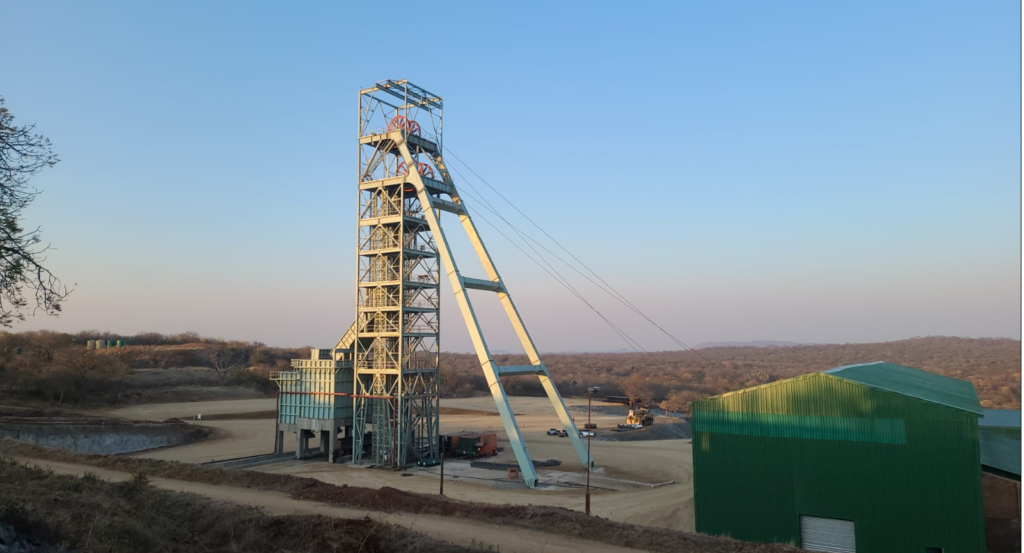
Caledonia Mining Corporation, the operator of the prolific Blanket Mine, has released its 2025 Environmental, Social, and Governance (ESG) report, detailing a massive US$250 million contribution to the Zimbabwean economy over the last nine years.
The report, titled "Building a platform for growth," highlighted a significant shift in how mineral wealth is being shared with local communities in Matabeleland South.
In the report's opening, Caledonia explained its transparent approach to reporting: “At Caledonia, we report on sustainability because accountability matters... We believe that open, transparent reporting helps build trust and supports better decisions for our business and our communities.”
This commitment to transparency comes at a time when the company is evolving from a single-asset producer into a multi-asset gold company with projects at Bilboes, Motapa, and Maligreen.
For the people of Gwanda, the most striking figure in the 2025 report is the US$1.4 million paid in 2024.
This influx of capital is part of Caledonia’s unique ownership model, where the local community and employees each hold a 10% direct stake in Blanket Mine.
CEO Mark Learmonth said this structure is vital for stability, adding that “long-term alignment is strongest where employees and communities each hold a genuine stake in the business.”
The 2 382-strong workforce at the mine also had reason to celebrate in 2025.
- Record breaker Mpofu revisits difficult upbringing
- Is Zimbabwe ready for green building standards?
- Record breaker Mpofu revisits difficult upbringing
- Is Zimbabwe ready for green building standards?
Keep Reading
The company announced the final repayment of the loan used to acquire the 10% shareholding for the Employee Trust, meaning beneficiaries now receive full, unencumbered dividends.
In February 2026, a dividend of approximately US$600 per beneficiary was paid based on 2025 performance, representing a direct and tangible economic boost for mining families.
Learmonth emphasised that as the company grows, its ESG framework is not just a formality but a strategic necessity.
“As the business grows and becomes more complex, our ESG framework plays a critical role in enabling that growth - protecting our licence to operate and ensuring that expansion is underpinned by effective risk management,” he said.
Learnmonth described the company's approach as “deliberately practical”, viewing it as a framework to manage risk and build trust with regulators and investors.
This practical impact is highly visible in the education sector through the Sitezi Project.
At Sitezi Secondary School, mining profits have funded a multi-year transformation of an under-resourced school into a “fully functional learning hub with reliable power, connectivity and adequate facilities.”
The school, which now serves 142 students, has been equipped with new science and computer laboratories.
To support modern learning, the company funded Starlink internet connectivity, bridging the digital divide for rural learners.
In the healthcare sector, the company completed a maternal health shelter at Sitezi Clinic, providing a safe space for expectant mothers close to skilled care to directly support safer deliveries.
Economically, the mine is increasingly "buying Zimbabwean."
In 2025, local supplier spend jumped to US$16.5 million the previous year. For the first time, local procurement (55%) exceeded foreign purchases (45%), with the mine actively incubating five local businesses to join its supply chain.
This commitment to local talent is reflected in the workforce, where 98.5% of employees are Zimbabwean nationals.
The mine has also set a dedicated hiring quota to increase the proportion of Gwanda locals in the workforce from the current 21.33% toward a 30% target.
Caledonia is also making strides in gender inclusion.
Cyndrella Masimbe, head of human resources, said “At Caledonia, our commitment to gender inclusion goes beyond employment.
“We aim to create a pipeline of future female leaders in mining through training, mentorship and career development programmes.”
In 2025, women held 30% of Board positions and 33% of senior corporate management roles.
On the environmental front, the mine is setting records for efficiency in a semi-arid region.
In 2025, the company recycled over one million cubic meters of process water, significantly reducing its reliance on the Blanket Dam, a critical resource shared with the Gwanda municipality.
The company’s 12.2 MW solar plant now provides approximately 20% of the mine’s total electricity.
This renewable energy eased pressure on the national grid and helped reduce diesel consumption by nearly 700 000 litres compared to 2024.
However, the year was marred by tragedy.
The report acknowledges the loss of a colleague in a blasting-related accident during the third quarter of 2025.
The company’s stance on this is unequivocal: “Mining is an inherently high-risk activity, and no level of production or financial performance can justify the loss of life”.
In response, Caledonia is shifting away from procedural compliance toward engineering-led controls, such as replacing capped fuses with electronic detonators to design risk out of operations.
Looking ahead, Caledonia is preparing to replicate the "Blanket model" at its newer assets, including the Bilboes Gold Project north of Bulawayo, which is expected to produce 1.55 million ounces over its lifetime.
The report concluded that the company's focus remains on “building a resilient, well governed platform for sustainable growth” by managing risk and being transparent about both challenges and progress.