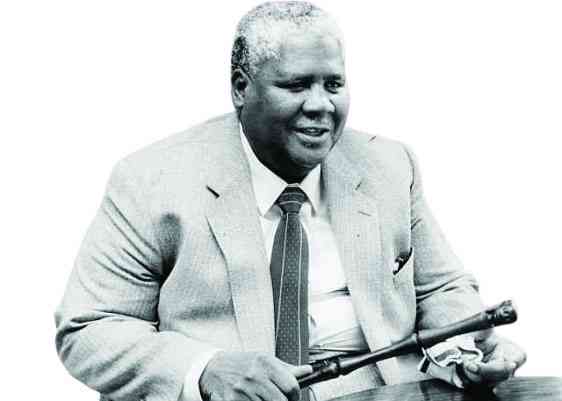
CONCERNS are mounting that the country has drifted from the ideals that the late vice president Joshua Nkomo stood for, as Zimbabwe prepares to mark the 27th anniversary of the nationalist leader’s death on Wednesday.
Nkomo, affectionately known as Father Zimbabwe, died on July 1, 1999, and is remembered by many as a symbol of unity, reconciliation, and inclusive nation-building.
Nkomo played a central role in Zimbabwe’s liberation struggle and later became a key figure in the 1987 Unity Accord between Zanu and PF-Zapu, which formally ended the Gukurahundi mass killings in Matabeleland and parts of the Midlands.
However, decades later, many survivors and affected communities continue to demand truth, justice, and accountability over the massacres, while critics argue that the country remains politically and economically divided.
Gukurahundi survivor Ben Moyo said the vision Nkomo represented remains largely unrealised.
“The icon of our struggle stood for national unity, justice, reconciliation, and economic development,” Moyo said.
“These have either not been fulfilled or have been betrayed.”
Moyo, himself a survivor and victim of the Gukurahundi atrocities of the 1980s, said the country’s leadership should use the anniversary of Nkomo’s death as a moment for national reflection.
- Ziyambi’s Gukurahundi remarks revealing
- Giles Mutsekwa was a tough campaigner
- New law answers exhumations and reburials question in Zim
- Abducted tourists remembered
Keep Reading
“The clarion call is for the nation and its leadership to rediscover those values,” he said.
According to Moyo, Nkomo would have strongly condemned the current state of governance and public institutions in Zimbabwe.
“He would have condemned the rampant looting, the corruption, the attempts to hijack the constitution, the dilapidated state of our hospitals, the poor infrastructure, the failure to craft genuine national unity, and the lack of meaningful economic development,” Moyo said. Moyo said remembering Nkomo should go beyond ceremonies and speeches.
“The best way to honour Joshua Nkomo is to rebuild the values he fought for — justice, unity, reconciliation, and development for all Zimbabweans,” he said.
Bulawayo-based pressure group Ibhetshu Likazulu said Nkomo’s legacy is being undermined by current political and social developments that contradict the principles he stood for. The group’s secretary-general, Mbuso Fuzwayo, said it was “unfortunate” that what Nkomo fought for during the liberation struggle was being rendered irrelevant by contemporary leadership and political behaviour.
He said Nkomo was widely known for promoting national unity, opposing tribalism, and discouraging political individualism, instead advocating for collective development and national cohesion.
“Nkomo was for the development of the country,” Fuzwayo said, adding that current leadership tendencies appeared more focused on “individual development against the development of the country.”
He argued that some modern political practices were eroding the values of unity and collective responsibility that characterised Nkomo’s public life and political philosophy.
Zimbabwe People’s Revolutionary Army (ZPRA) deputy spokesperson Joachim Moyo said Zimbabwe remains far from the ideals championed by the late nationalist and liberation icon.
Moyo said the late nationalist envisioned a united, peaceful, and inclusive Zimbabwe built on justice and equal opportunity for all citizens.
“Dr Nkomo stood for unity, peace, reconciliation, justice, and the dignity of all Zimbabweans, regardless of tribe, race, religion, or political affiliation. He believed Zimbabwe belonged to all its people,” Moyo said.
He said Zimbabweans should use the commemoration to reflect on whether the country has fulfilled the ideals Nkomo fought for during the liberation struggle.
“As we honour his memory, we must ask ourselves whether the ideals he championed have been fully realised,” he said.
“While Zimbabwe has made progress in education and infrastructure, the same cannot be said about national unity and meaningful peace.”
He added that many citizens continue to face economic hardships, unemployment, and poverty, while young people are growing up in an environment lacking strong moral and national values.
“The youth are confused and maturing in a non-virtuous and morally discrepant mould,” Moyo said.
“This blurs the future, and one wonders what kind of nation-state lies ahead.”
He also criticised corruption and what he described as selfish leadership, warning that Zimbabwe risked betraying the sacrifices made during the liberation struggle.
“The best way to honour Dr Nkomo is not through high-sounding hollow speeches and ceremonies, but through practical efforts to build a nation-state that reflects our founding fathers’ vision.”
He added that Zimbabwe needed national healing, stronger democratic participation, and leadership committed to serving citizens rather than personal interests.
“Zimbabwe is still bleeding and deceived,” Moyo said. “It is at a crossroads.”