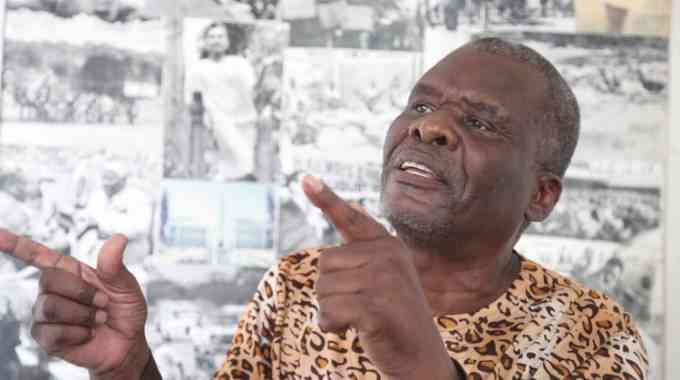
OUTSPOKEN war veteran Andrew Ndlovu, a former Zipra regional zone commander for NF2, has called on the government to revisit the criteria for national hero status, arguing that the current system distorts the history of Zimbabwe’s liberation struggle.
Speaking to Southern Eye, Ndlovu said Zimbabweans have long complained about a distorted account of the liberation war and that the time had come to acknowledge the historical truth.
He criticised a policy adopted during the late former president Robert Mugabe’s administration, which he said effectively guaranteed national hero status to retired brigadier generals and other officers of higher rank, regardless of their liberation war credentials.
“Being a freedom fighter does not automatically qualify someone for national hero status,” Ndlovu said.
“Some of us received military training but never had the opportunity to engage the enemy directly inside Rhodesia. Such individuals cannot claim to have fought and defeated the Rhodesian forces.”
While acknowledging that many people contributed to the struggle against colonial rule in different ways, Ndlovu said there was a need to distinguish between those who actively fought in the liberation war and those who did not.
“Many of the commanders who led guerrilla operations during the liberation struggle are not being recognised as national heroes,” he said.
“After independence in 1980, some were demobilised, while others were disadvantaged by lack of formal education and were, therefore, not promoted within the military structures established by the Mugabe government.”
- Liberation war stalwart pens political book
- Liberation war stalwart pens political book
- Number of war vets needing limbs declines
- Number of war vets needing limbs declines
Keep Reading
Ndlovu urged authorities to review the criteria for national hero status to ensure they accurately reflect the history of the liberation struggle.
He argued that wartime zone commanders, front commanders and detachment commanders held responsibilities equivalent to those of brigadier generals, while regional commanders performed roles comparable to other military generals.
“These were the people who led operations that weakened Rhodesian forces and paved the way for the Lancaster House ceasefire in 1980,” he said.
“It should not be automatic that every senior army officer is accorded national hero status upon retirement.”
Ndlovu maintained that Zipra and Zanla fighters who conducted guerrilla operations inside Rhodesia and contributed directly to the defeat of the colonial regime should be recognised as national heroes.
While acknowledging the role played by the Zimbabwe National Army in peacekeeping missions across Africa, he argued that such service should not be equated to the sacrifices made during the liberation struggle.
“Those soldiers were serving as paid members of the national army,” he said.
“They were not engaged in a revolutionary struggle to liberate Zimbabwe from colonial rule, as guerrilla fighters were.”
Ndlovu said it was historically inconsistent to confer national hero status on individuals who never participated in guerrilla warfare inside Rhodesia while relegating liberation war commanders and combatants to provincial hero status because they did not attain the rank of brigadier general after independence.
Critics say the late former Zipra commander Colonel (Rtd) Patron Khutshwekhaya Nketha Ndlovu should have been declared national hero for his role in the liberation struggle.