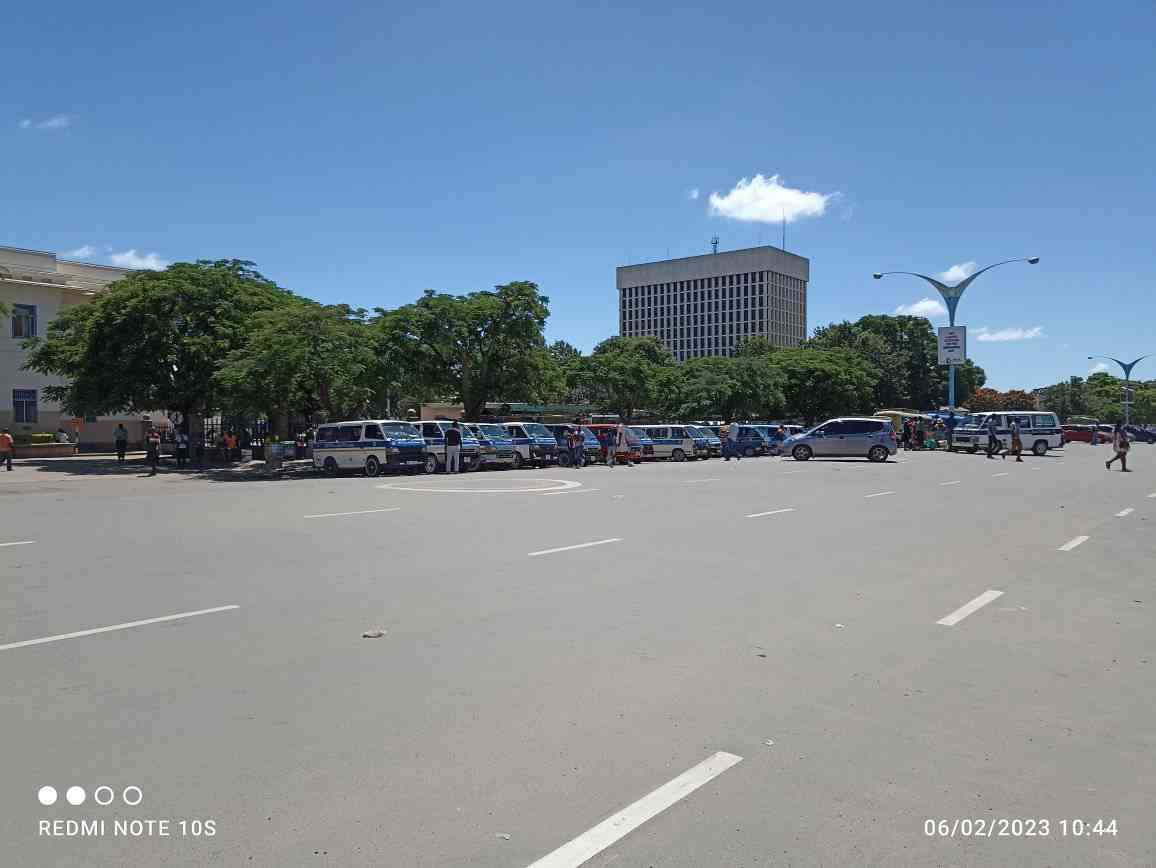
Bulawayo’s public transport system has descended into disorder despite the council being accused of failing to implement long-standing resolutions aimed at restoring order.
Observers accused illegal bus operators of turning the central business district into a lawless zone with councillors also blaming enforcement officers of corruption.
This emerged during deliberations on the implementation of the City of Bulawayo Public Transport Policy for April 2026.
Councillors painted a grim picture of uncontrolled illegal pick-up points, soaring commuter fares, poor service delivery and alleged bribery involving council enforcement staff.
The revelations came as residents continued to complain about rising transport costs and the absence of reliable public transport in several high-density suburbs.
According to the report presented by the townlands and planning director, Bulawayo currently has five transport companies servicing intra-city routes — Tshova Mubaiwa Transport Cooperative Company (TMC), Bulawayo City Transit Trust (BCTT), BUPTA, VUTA and BUWTRA.
Zupco is currently not operating intra-city routes.
Council noted that the city’s transport policy, adopted in 2012, was designed to create “a well-controlled, efficient and coordinated public transport system.”
- Take Money clinches sponsorship deal
- Proposal to rehabilitate silted Umzingwane Dam
- Proposal to rehabilitate silted Umzingwane Dam
- Stop clinging to decaying state firms
Keep Reading
However, implementation stalled in 2020 when the government declared ZUPCO the sole public transport operator during the Covid-19 pandemic.
During the meeting, councillors openly questioned whether the council still had control over the city’s transport sector.
Councillor Lazarus Mphadwe raised alarm over widespread illegal transport activity in the CBD, accusing some operators of openly violating by-laws without consequence.
“These pick-up and drop-off points are contributing to chaos and littering in the city,” Mphadwe said.
He alleged that some cross-border buses were occupying more than 10 parking bays while loading passengers at undesignated points.
“The amount paid by these buses was a bribe to TTI staff. These buses had been observed loading while clamped. Enforcement was lacking in the city,” he said.
Councillor Lovewell Mwinde echoed the concerns, saying corruption within council enforcement structures was undermining by-law enforcement efforts.
“It was sad to note that some council staff members responsible for traffic enforcement were involved in corrupt activities,” Mwinde said.
Councillor Suzan Sithole said Bulawayo was rapidly losing order and discipline, particularly in the transport sector.
“The city should learn from other cities such as Victoria Falls which is very orderly and enforcement is effective.”
Sithole also called for the regularisation of Emakhandeni pick-up and drop-off points and the construction of public toilets and properly allocated vending bays.
Frustration was also expressed over poor transport coverage in some residential areas.
Councillor Sikhululekile Moyo said residents in areas such as St Peters, Mazwi Village, Hyde Park Estates and parts of Pumula South were effectively abandoned by public transport operators.
“These areas are not being serviced by the five public transport companies,” she said.
Moyo revealed that some residents were paying as much as US$3 for a single trip into the city centre.
“These are areas where residents are very poor and have serious financial income challenges. Council is failing residents with regards to public transport,” she added.
Councillor Felix Madzana questioned the manner in which commuter fares were being reviewed upward whenever fuel prices increased, while no reductions were made when fuel prices dropped.
“Most commuting residents cannot afford the recent increases of US$1 per trip,” he said.
Madzana said many residents’ associations were now demanding the return of conventional buses, which they believed would offer cheaper transport alternatives.
Concerns were also raised over the mushrooming of illegal transport ranks around TM Pick n Pay Hyper and along major CBD roads.
Deputy mayor Edwin Ndlovu said weak enforcement had allowed operators to establish unauthorised pick-up points along 10th Avenue and Robert Mugabe Way, severely disrupting traffic flow.
“This area is no longer trafficable,” Ndlovu said.
“There are a lot of cross-border coaches ranking in the CBD and all these activities are happening in front of enforcement officers.”
Chairperson of the committee, Councillor Dumisani Netha, also questioned why previous resolutions targeting illegal transport operators had not been implemented.
“There was no illegal pick-up and drop-off point that was supposed to operate,” said Netha.
He insisted that all cross-border coaches and intercity buses without permits should operate from the Egodini/Erenkini terminus rather than from illegal CBD points.
The town planning assistant director said council would review transport challenges affecting Pumula South, Mazwi Village and Hyde Park Estates and engage residents from affected areas.
The official also said enforcement officers would be deployed to assess operations at the TM Pick n Pay terminus.
Statistics contained in the report show a steady increase in the registration of commuter omnibuses between January and March 2026, with registered vehicles rising from five in January to 193 by March.
Council noted that despite the increase, more vehicles still needed to be registered as authorities intensified enforcement efforts alongside the Zimbabwe Republic Police and municipal police.