Residents of Trenance suburb in Bulawayo say they have been abandoned by authorities after enduring nearly three years without running water.
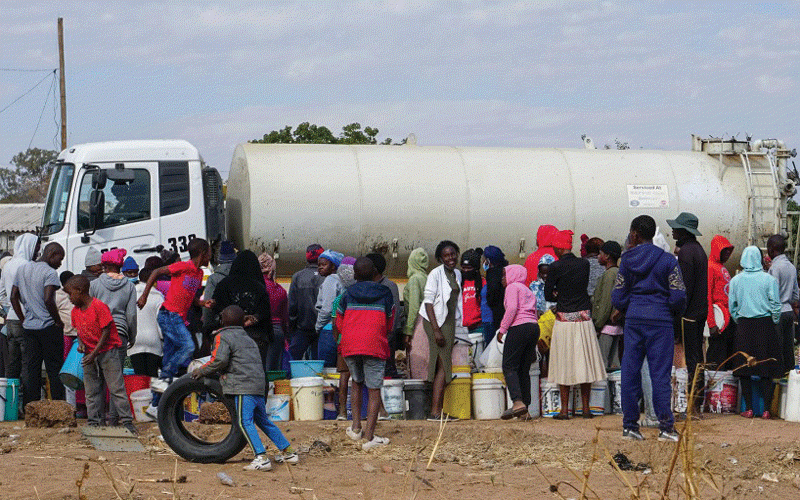
The residents have been forced to rely on weekly bowser deliveries that many describe as inadequate for basic survival.
According to residents of Trenance, the prolonged absence of running water has now gone beyond ordinary service delivery failures.
The crisis has triggered outrage on social media, with residents accusing the Bulawayo City Council of failing to urgently address what they described as a humanitarian and public health emergency.
In a widely shared Facebook post, Kuthula Matshazi expressed frustration over the prolonged water shortages, saying vulnerable residents had been left to survive on limited bowser water supplies.
“My mother is 87-years old, and she together with her neighbours have endured three full years without running water,” Matshazi wrote.
“The City of Bulawayo currently provides them with water through a bowser only once a week, on Sundays.”
Matshazi said he first contacted Ward 2 councillor Adrian Rendani Moyo on January 16 this year seeking clarity on the matter and was informed the problem would likely be resolved by February.
- Uproar over census figures
- Byo Arts Festival in turmoil…One year later, festival has yet to pay artists…Organisers play cat and mouse with artists
- Bulawayo struggles to clear housing backlog
- Council acts tough on debts
Keep Reading
“We are now in May, and there has been no progress,” he said.
Matshazi also criticised what he described as a dismissive response from councillor Mxolisi Mahlangu after he publicly raised concerns over the issue.
According to Matshazi’s post of the exchange shared online, Mahlangu argued that councillors were not directly responsible for execution of works on the ground and suggested Matshazi was being “unnecessarily hard” on Moyo.
“Public officials should encourage civic participation, not discourage residents from speaking out,” he said.
The growing anger has also exposed wider frustrations over inequalities in water access across Bulawayo, with some residents alleging that affluent suburbs continue receiving uninterrupted supplies while high-density communities struggle for years without tap water.
Residents said theft of water infrastructure were worsening the situation.
In response to the criticism, Moyo said he had repeatedly raised the issue in council meetings and was awaiting action from the responsible department.
“The attached video is from the March full council. I said that as a way of bringing the department’s attention to the matter,” Moyo said in an interview.
“As things stand, the acting director said they are ready to move on to the site to start the necessary works. I am going to request another update today.”
Moyo also rejected claims suggesting councillors themselves enjoyed uninterrupted water supplies.
“It should also be noted that the statement insinuates that councillors enjoy an uninterrupted water supply which is untrue,” he said.
Bulawayo mayor David Coltart acknowledged the seriousness of the city’s water challenges, saying water delivery had remained his administration’s top priority.
“In the two and half years I have been in office water delivery has been my absolute priority,” Coltart said.
“I have consistently stated that our failure to deliver adequate supplies of water is unacceptable.”
He said council had continuously pushed for rehabilitation of Bulawayo’s ageing water infrastructure and construction of new water projects such as Glassblock Dam.
“That is why I have been unrelenting in my calls for the rehabilitation of Bulawayo’s water infrastructure and the construction of new water assets such as Glassblock Dam,” Coltart said.
“Residents need to be assured that we will keep pushing for all areas, including Trenance, to receive adequate supplies of clean potable water.”
Bulawayo has for years battled chronic water shortages driven by ageing infrastructure, rising demand, recurring droughts and limited investment in water expansion projects.