The journey to a doctorate is often described as a grueling marathon of the mind, a solitary pursuit of knowledge that culminates in the triumphant walk across a graduation stage.
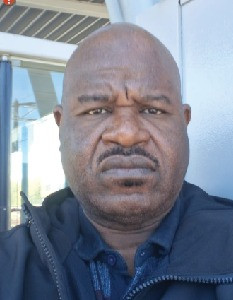
For George Mkhwananzi , however, the finish line has been moved by the cold realities of transnational repression.
A prominent Zimbabwean opposition activist currently residing in Europe, Mkhwananzi is likely to miss his PhD graduation in South Africa next month.
The reason is not a lack of academic merit, but a profound fear that Zimbabwean state security agents are waiting in the shadows to arrest him or cause him physical harm the moment he arrives on regional soil.
Mkhwananzi, the former national deputy chairman of the National Constitutional Assembly (NCA) and former president of the Imbovane yaMahlabezulu, told Southern Eye on Sunday that his life remains in imminent danger from suspected operatives from Harare.
He alleged that these agents have been trailing him for years, turning his academic success into a target for state hostility.
While he was scheduled to receive his doctorate from the University of South Africa (Unisa) next month, the ceremony has been overshadowed by a decades-old legal vendetta.
The roots of Mkhwananzi’s predicament stretch back over 20 years, highlighting the long memory of the Zimbabwean state’s security apparatus.
- Madhuku slammed over Sikhala rants
- Polad a tool to sanitise Mnangagwa legitimacy
- Chamisa, Mnangagwa file nomination papers
- Chamisa, Biti close ranks
Keep Reading
He has confirmed that he will remain in Europe, citing an outstanding warrant for his arrest and a pending treason charge dating back to the volatile period of 2002.
“I have a warrant of arrest issued last year in March, left at my house in Bulawayo,” Mkhwananzi said.
The legal pressure is compounded by an unresolved treason case from 24 years ago.
“I also have a pending treason charge on my head resulting from my arrest and incarceration with Paul Siwela in 2002, which has not been concluded,” he explained.
According to Mkhwananzi, these charges are not merely bureaucratic hurdles but are rooted in his advocacy for the Matabeleland region.
The state’s original charge stemmed from a public address where he was accused of “uttering subversive statements” and inciting public violence “against people perceived to be oppressors of Ndebele people.”
In the context of Zimbabwean politics, such accusations are often used to silence those who speak out against the marginalisation of the Matabeleland provinces.
The 2002 elections were a watershed moment in Zimbabwe, marked by intense political polarisation and state-sponsored crackdowns on the opposition.
Mkhwananzi’s associate in the treason case, Siwela, was a former leader of the Matabeleland Liberation Organisation and a presidential candidate during those controversial polls.
The fate of Siwela serves as a cautionary tale for Mkhwananzi.
Siwela fled Zimbabwe in 2013 after being charged with treason alongside war veterans John Gazi and Charles Thomas.
While Gazi and Thomas were eventually acquitted by the High Court, Siwela remains in exile in an undisclosed country, a permanent fugitive from a justice system he believes is rigged against him.
Mkhwananzi’s decision to remain in Europe is informed by “chilling encounters” he experienced while living and studying in South Africa.
These incidents suggest that the border between Zimbabwe and South Africa provides little protection for those marked by Harare.
He characterised these events not as random acts of crime, but as a sustained and calculated intimidation tactic designed to break his resolve.
“In SA I was ambushed four times by unknown people who spoke Shona,” he alleged.
“For each encounter they also demanded to know about Paul Siwela’s whereabouts,” Mkhwananzi added, suggesting that the state is still actively hunting its former political rivals.
The surveillance escalated beyond mere physical intimidation.
Mkhwananzi claimed his vehicle was broken into twice and, in a move reminiscent of Cold War espionage, was fitted with a tracking device.
The psychological toll extended to his family, creating a climate of fear that persisted even after he left the country.
“When I left the car with my wife in SA, she reported that she was being followed and accosted by unknown people who asked her about my whereabouts,” he said.
The persistence of the hunters was so great that it affected third parties who had no connection to Mkhwananzi’s politics.
“When I sold the car, the new owner also reported that he was being followed by people who asked him about my whereabouts,” he said.
Such anecdotes paint a picture of a pervasive surveillance net that follows the target’s footprints long after they have moved on.
Despite the threats to his life and the disruption of his academic celebration, Mkhwananzi remains defiant.
He has made it clear that he is not withdrawing from the political arena.
Instead, the doctorate—though he may not be there to receive it in person—seems to have fortified his resolve to challenge the status quo from afar.
He has announced a new political initiative, teaming up with what he describes as “a significant number of prominent figures from Matabeleland”.
Operating under the banner of the Matabeleland Home Society (MHS), the group is launching the National Patriotic Alliance.
*Read full story on www.thestandard.co.zw
The goal is a direct challenge to the centralised power structures in Harare.
“This initiative is expected to claim back the political space lost in the region and end the electoral dominance of all Harare-headquartered organisations,” Mkhwananzi said.
Mkhwananzi is tapping into a long-standing sentiment in the southern region that its political voice has been muffled by the capital.
The MHS represents a new chapter for Mkhwananzi, moving from the constitutional activism of the NCA to a more regionally focused alliance.
The National Patriotic Alliance intends to act as a vehicle for this regional resurgence, potentially complicating the electoral map for both the ruling party and the traditional opposition.
Efforts to obtain a comment from Zimbabwean authorities regarding the alleged tracking, the surveillance in South Africa, or the status of the 2002 treason warrant were unsuccessful.