In the classrooms of Matabeleland, a silent struggle over phonetics and identity is unfolding, as legislators and parents raise the alarm over a language policy they claim is failing a generation of children.
The debate, which has recently reached the floor of Parliament, pits the government’s vision of a multi-linguistic “national fabric” against the stark reality of plummeting pass rates in the region.
For years, educationalists and parents across Matabeleland have pointed to a single, recurring grievance: the deployment of teachers who do not speak Ndebele to primary and secondary schools.
This linguistic mismatch, they argue, is the primary driver of the region’s low academic performance.
While the Primary and Secondary Education ministry has previously dismissed claims that the “ethnic card” influences results, the political temperature surrounding the issue remains volatile.
The sensitivity of the matter was laid bare last year when President Emmerson Mnangagwa summarily dismissed the Bubi legislator, Simelisizwe Sibanda.
Sibanda, who was then serving as the Tertiary Education, Innovation, Science and Technology Development deputy minister, had voiced strong opposition to the deployment of a non-Ndebele speaking teacher at a school within his constituency.
Although he was later reinstated, the incident underscored the deep-seated tensions that language choice evokes in Zimbabwean public life.
- NoViolet Bulawayo’s new novel is an instant Zimbabwean classic
- Jah Prayzah, Zanu PF rekindles ‘lost love’
- Bank workers appeal to Ncube for tax relief
- Indosakusa marks 21-year anniversary milestone
Keep Reading
The debate shifted to a broader philosophical stage during a recent parliamentary session.
Senator Michael Bimha questioned whether the time had come for Zimbabwe to move toward a more uniform language framework.
He proposed a core curriculum that would ensure learners in every region study the same major languages, suggesting that if you are in Matabeleland, you should learn Shona, Ndebele, and English, and if you are in Mashonaland, you should do the same.
“Do you have a policy that will eventually lead to nationwide teaching of all three?” Bimha asked, arguing that “languages unite people.”
His proposal, while aimed at cohesion, touched a nerve regarding the rights of minority groups.
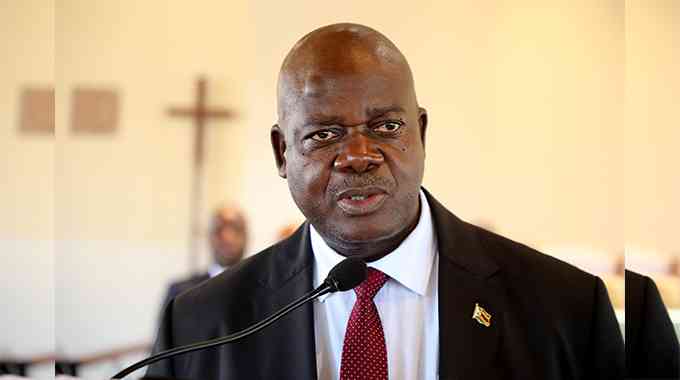
In response, Primary and Secondary Education minister, Torerai Moyo, maintained that the government’s priority was inclusivity and the protection of all 16 officially recognised languages.
Moyo rejected the idea of elevating a few languages at the expense of others, warning that such a move could be interpreted as a form of cultural erasure.
“We value all 16 languages,” Moyo told the Senate. “What is happening now is that all children are to learn Shona and Ndebele, or English and Ndebele, English and Shona.”
He admitted, however, that the current system is not without its victims, noting that minority language speakers were often at a disadvantage.
“We are oppressing children who speak Tonga, Ndau and other languages,” he said.
The government’s primary tool for addressing this is the Zimbabwe Early Learning Policy.
This mandate requires that early childhood education—covering the crucial years from ECD to Grade Two—be conducted entirely in the learner’s mother tongue.
This is not just a pedagogical preference, but a legal requirement.
“In terms of our law, you cannot teach them in English; you teach them in their mother tongue,” Moyo noted. “This means that if we teach that child English or Shona when they are supposed to learn in Venda or Tonga, we are depriving the child’s rights.”
Despite this policy, the practical implementation remains a logistical minefield.
Moyo acknowledged that while it is the government’s “wish that all languages be valued and they be taught in all our schools,” the reality of the classroom made simultaneous multi-language instruction nearly impossible.
“It may be a challenge to teach the child all 16 languages,” he admitted.
The conversation eventually turned to international comparisons.
Senator Sesel Zvidzai pointed to the Tanzanian model, where the promotion of Kiswahili is credited with uniting a diverse population.
“In other countries like Tanzania, they have one language called Kiswahili, which unites all the people… What ways are there to unite people through language?” he asked.
Moyo, however, was firm in his rejection of a single unifying tongue.
He warned that enforcing linguistic uniformity was often a precursor to marginalisation.
“If we force everyone to speak one language, we may be thinking that we are uniting the people, but in fact, we will be oppressing other people,” he said.
Instead, the minister argued that national unity should be sought through social and cultural symbols rather than linguistic mandates.
“There are several ways in which people can be united… we have the national fabric; it unites the people,” he added.
For the parents in Matabeleland, however, the “national fabric” feels thin when their children are struggling to understand a teacher’s instructions.
As the government continues to balance the rights of 16 different linguistic groups against the practicalities of a national curriculum, the children in the region’s classrooms remain at the heart of a complex and highly charged debate over what it means to be Zimbabwean.