A livestock-centred conservation initiative in Mucheni Conservancy is transforming livelihoods in Binga district, with improved goat rearing linked to reduced poaching and better land management, officials and villagers say.
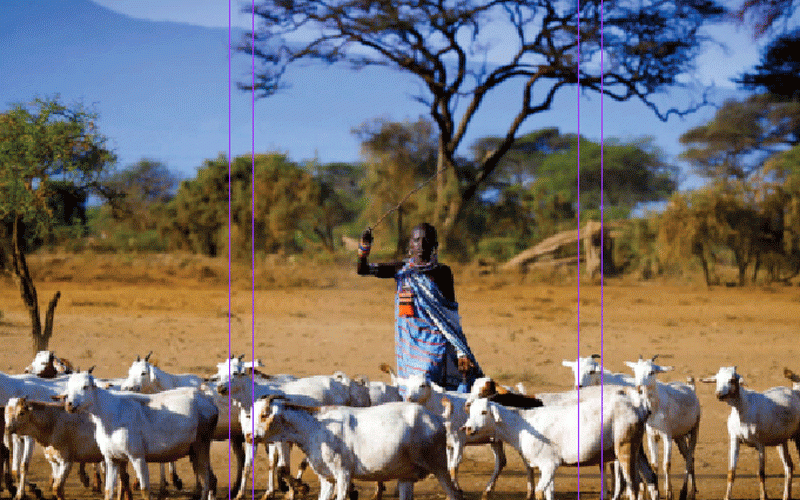
The programme, implemented under the Sustainable Wildlife Management framework, promotes crossbreeding of indigenous goats with hardy breeds such as Boer and Kalahari, alongside rotational grazing systems that improve soil fertility.
Local leaders report a sharp decline in illegal hunting since the project began.
Communities now rotate grazing areas, allowing vegetation to recover while livestock manure enriches the soil.
Veterinary extension supervisor Taurai Gonye said the shift to improved breeds has significantly boosted productivity.
“In the past, the communities had poor quality goat breeds with low growth rates,” he ssid.
“After crossbreeding with the Boer and Kalahari breeds, they have attained improved livestock quality.
“These goats grow faster and give birth to multiple offspring at once.”
- Ama revives cattle auction system
- CSC Boustead Beef strikes gold in US
- High costs paralyse poultry farmers
- Zim’s poultry sector registers 6,2% growth
Keep Reading
Despite the gains, challenges persist, including drought and limited access to markets.
Early losses of breeding stock also exposed gaps in veterinary support, prompting calls for stronger technical backing.
The programme’s acting site coordinator, Mthokozisi Dlodlo, said long-term commitment is essential for success.
“The return on investment in conservation takes time. But with community leadership and sustained support, it is a future worth investing in,” he said.
He added that there are plans to expand the Mucheni model nationwide.
“Our ambition is to scale this model across Zimbabwe’s remaining 64 districts,” he said.
Zimbabwe is aiming to place 30 percent of its land under conservation by 2030, and the Binga project is increasingly seen as a model for balancing environmental protection with rural development.
For local farmers, the impact is already clear.
Levia Mugande, a smallholder from Chiwetu village, said the programme has reshaped how communities view livestock and conservation.
“Goats are gold to us. Mucheni is more than a conservancy — it’s our home, our heritage, and our shared responsibility for a sustainable future,” she said.
Her neighbour Shupa Muchimba echoed the sentiment, stressing the importance of local stewardship.
“This land is ours. If we don’t protect it, who will?” he said.
Officials say the integration of livelihoods and conservation could provide a sustainable pathway for other marginal communities facing similar challenges.