Matabeleland has never been quiet; it has simply been unheard in the ways that matter most.
In its streets, in its homes, in its languages and everyday conversations, there has always been a steady pulse of creativity, the kind that does not beg for attention because it is rooted in lived experience, inherited memory, and cultural truth.
The real question has never been about the presence of creativity, but about whether its creatives have fully stepped into their power and built the structures needed to turn that everyday brilliance into something visible, influential, and economically sustainable.
Matabeleland also has to confront a difficult but necessary truth; there is no external Messiah coming to unlock its potential.
No institution, no outsider, no sudden intervention will arrive to transform the region into what it already has the capacity to become.
The responsibility rests within. It is in the hands of its creatives, its thinkers, its communities, to recognise that the real opportunity lies in unity, in collaboration, and in the deliberate choice to build together rather than wait to be discovered.
Matabeleland is not just another region contributing to Zimbabwe’s identity, it is one of the foundations upon which that identity stands.
Historically, Bulawayo was once regarded as the country’s industrial and cultural capital, a status that naturally positioned the region as a hub for artistic expression, storytelling, music, and performance.
- I will definitely win 2023 elections: Mwonzora
- We will rule forever: ED says
- Candid Comment: Monetary authorities living in a fool's paradise
- Measles death toll hits 650
Keep Reading
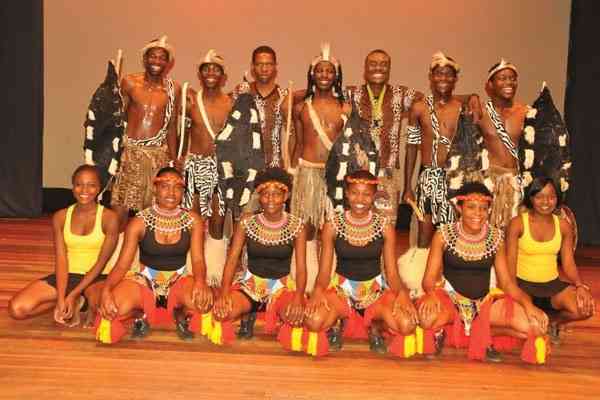
Even today, its cultural landscape reflects a rare diversity, isiNdebele culture interwoven with Kalanga, Tonga, Venda, Sotho, and other influences, creating a layered and authentic creative voice that cannot be replicated elsewhere in the country.
What makes this region particularly significant is not just its diversity, but the depth of its cultural memory.
Matabeleland carries stories of resilience, migration, identity, and survival, and these are not abstract ideas, they are lived realities that shape the tone, language, and substance of its creative output.
This is why art from this region often feels more grounded, more honest, and more emotionally textured. It is not manufactured, it is remembered, lived, and then expressed.
However, there is a clear and logical gap between creative potential and creative industry success.
Talent alone has never been enough to build sustainable industries. Across the world, thriving creative economies are supported by systems, distribution networks, funding structures, intellectual property protection, and collaborative ecosystems.
Matabeleland’s creatives, while rich in talent and cultural capital, have often operated without fully developed structures to support scale and monetisation.
This has resulted in underexposure, under-pricing, and in many cases, creative fatigue.
Yet even within these limitations, there are clear signs of what is possible. Artists such as Mzoe 7, Sonkomose, Um’Africakazi, MJ Sings, Nite Freak, Umnikazi Wempuphu, Madlela Skhobokhobo, and Xantel, among others, continue to rise, not because the system has made it easy for them, but because they have refused to wait for permission to grow.
Their journeys are not just individual success stories, they are living proof that consistency, identity, and belief can cut through structural limitations.
They are showing, in real time, that it is possible to build reach, relevance, and resilience even when the odds are not perfectly aligned.
The rise of digital platforms has further reduced traditional gatekeeping, allowing creators to bypass centralized systems that once controlled visibility and access.
A musician, writer, or filmmaker in Bulawayo no longer has to rely solely on local platforms to be seen, global audiences are now within reach.
This shift is not theoretical, it is already happening in pockets, with creatives who have embraced digital tools beginning to see measurable growth in reach, engagement, and income.
Still, access to tools is only one part of the equation. The more critical transformation must happen in mindset.
Creatives in Matabeleland must begin to see their work not only as expression, but as intellectual property and economic assets.
This means understanding value, setting standards, protecting ownership, and approaching creativity with both artistic and strategic intent.
It also means recognizing that collaboration is not a threat to individuality, but a multiplier of impact.
There is also a social dimension that cannot be ignored. Communities play a crucial role in shaping creative industries.
When local audiences support their own by attending shows, buying art, streaming music, and amplifying voices, they contribute directly to the sustainability of that ecosystem. Without this internal support, even the most talented creatives struggle to maintain momentum.
What is coming next will not announce itself loudly, and it will not arrive as a dramatic turning point that everyone suddenly agrees on.
It will creep in through consistency, through small wins that begin to stack, through collaborations that start to feel less like experiments and more like movements.
One day people will look around and realize that the centre of gravity has shifted, that the stories, the sound, the language, and the aesthetic shaping Zimbabwe no longer need validation from elsewhere.
And when that realisation settles in, it will not feel like Matabeleland has finally risen. It will feel like everyone else has finally caught up.