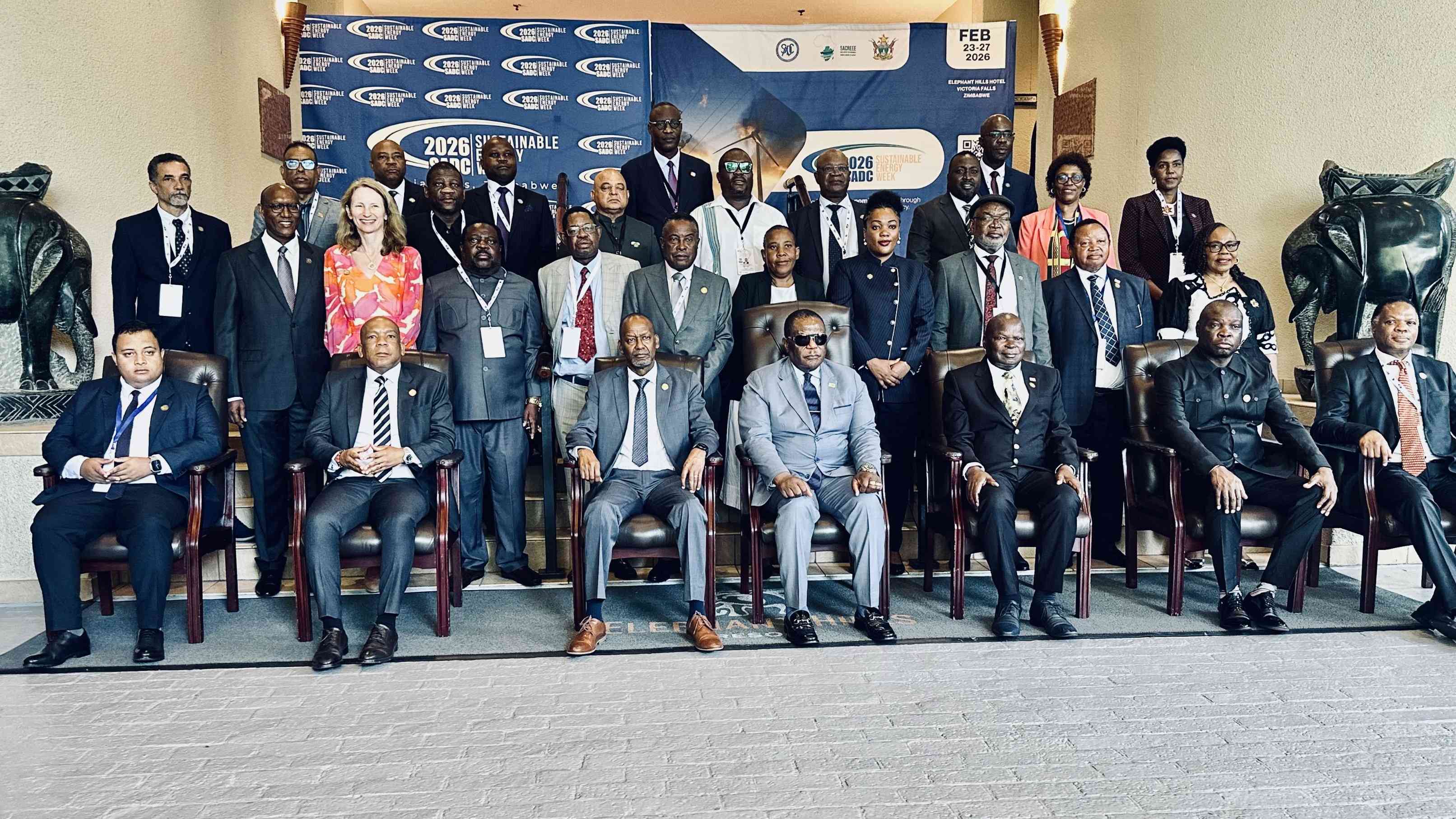
The recent 2026 Southern African Development Community (Sadc) Sustainable Energy Week exposed persistent challenges surrounding energy infrastructure, accessibility, affordability, and technology services.
It was held in Victoria Falls from February 23 to 27 under the theme Driving Regional Economic Growth through Clean Energy and Energy Efficiency.
The conference brought together participants from Sadc member states, regional organisations, international cooperating partners, and government agencies.
According to a joint outcome statement, discussions highlighted technological and financial solutions for regional energy programmes aimed at promoting integration, industrialisation, and improved livelihoods for Sadc citizens.
“The conference observed that the following main challenges of sustainable energy in the Sadc region that are similar remain constant as observed in 2025,” the statement read.
“Substantial financial resources are required for energy hard infrastructure projects; there is an inadequate transmission capacity in the Region.”
Electricity access in rural areas remains low, and fragmented policy harmonisation limits cross-border investment.
Participants urged facilitating implementation of all memoranda of understanding and converting resolutions into time-bound deliverables without further delays.
- Why are we still pitting jobs against public health?
- Rwandanese Refugee Arrested For US$85 240 theft
- Why are we still pitting jobs against public health?
- Little hope for Zim, Africa
Keep Reading
Specific infrastructure projects were prioritised, including expediting development of the Angola-Namibia, Malawi-Mozambique, and Tanzania-Zambia interconnectors to enable power trading through the Southern African Power Pool grid by all mainland member states.
Delegates emphasised accelerating energy access to achieve universal coverage by 2030 through approaches such as mini-grids and solar rooftops,
Policy and regulatory harmonisation was highlighted as crucial to enable private sector participation in generation, transmission, distribution, and energy storage as independent power producers and transmission system operators.
Member states including Botswana, Comoros, Democratic Republic of Congo, Lesotho, Madagascar, Malawi, Mozambique, Namibia, Tanzania, Zambia, and Zimbabwe were urged to expedite implementation of approved national energy compacts.