For decades, Nkayi District in Matabeleland North Province has carried an unflattering label, “komnyama ubambile”, loosely translated to mean “the land of darkness.”
It has been used by some to describe the district as underdeveloped and marginalised, both before and after Zimbabwe’s independence.
Often characterised by poverty, limited infrastructure and long distances between homesteads and schools, Nkayi has frequently been viewed as an academic backwater.
But recent examination results are challenging that narrative.
More than 120 learners from the district scored 10 points and above at Advanced Level, while several others posted strong performances at Ordinary Level and Grade 7.
Among them is Sandra Ntini of Hompane Secondary School, who achieved seven As and three Bs at O-Level.
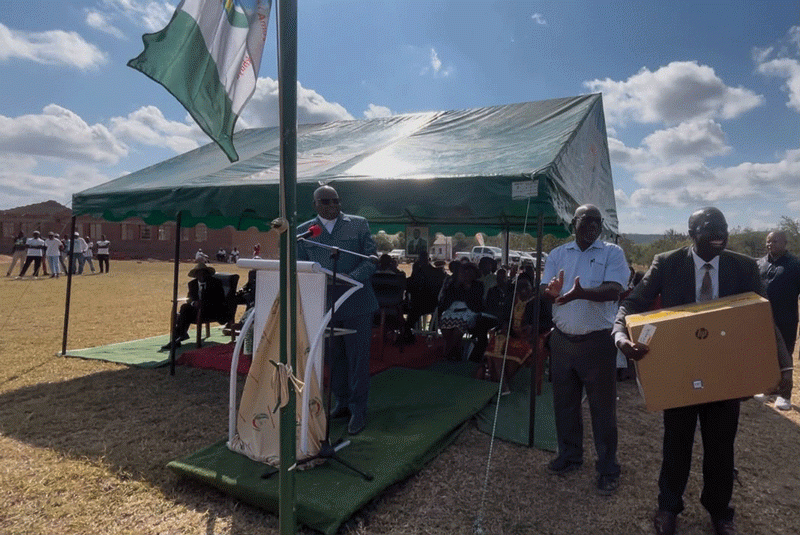
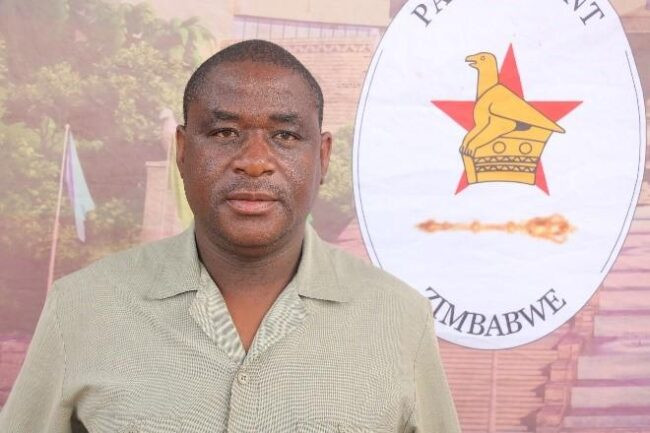
Nkayi South Member of Parliament Jabulani Hadebe described their achievements as a triumph over adversity.
“Despite facing unimaginable challenges, including long distances to school, hunger, and poverty, our learners have demonstrated remarkable resilience and determination,” Hadebe said.
- Zimsec, teachers clash over Cala allowances
- Letters:Only an engineer can save Zimbabwe from her problems
- Furore over ‘exorbitant’ Cala charges
- Zimsec ‘O’ Level paper leaks
Keep Reading
He appealed to corporates, philanthropists and well-wishers to support high-achieving learners from disadvantaged backgrounds through scholarships and educational sponsorships.
Tania Bhebhe (19) from Hlangabeza High School, who scored 14 points at Advanced Level, walked one hour and 30 minutes to school each day.
“It was harsh during rainy and cold seasons,” Bhebhe said.
“But it taught me discipline, resilience and time management.
“It shaped my approach to learning, making me more driven and committed to making the most of every opportunity.”
Coming from a poor background, Bhebhe said her circumstances became her motivation.
“I studied hard so that I can change my family background,” she said.
“My mother played the biggest role in motivating me. Even going to school without lunch pushed me to work harder.”
She now hopes to secure a scholarship to further her studies.
Greater Ndlovu (21), who obtained 15 points at Nkayi High School, said distance was never an excuse.
“I used to travel a long distance from my village, but that challenge turned into strength,” Ndlovu said.
“I surrounded myself with people who lifted me up and celebrated small wins.”
Ndlovu, who also hopes to pursue further education through scholarship opportunities, said: “Background does not define potential.”
For Mbekezeli Keith Mdlongwa (21) of Hlangabeza High School, who scored 14 points, the daily routine included waking up early, doing household chores and walking long distances to school.
“The long walk taught me discipline and resilience. It made me appreciate the value of education,” Mdlongwa said.
Mdlongwa said family support and teamwork with classmates were key to his success.
He is exploring scholarship opportunities and hopes to contribute to sustainable development in Zimbabwe.
Dominic Nxumalo of Hlangabeza High School, who achieved an outstanding 20 points, said long distances and poor road conditions made his academic journey particularly demanding.
“I used to travel a bit long distance every day and the roads were unfavourable,” Nxumalo said.
“We had night studies, which meant I had to spend about an hour walking four times a day.”
The demanding schedule forced him to carry extra uniform in his bag and only return home once or twice a week in order to maximise study time at school.
“Many children in my home village ended up at O-Level,” he added.
“Despite shortages of resources, I managed to proceed to A-Level.
“The main force driving me was my parents’ struggles for me — I did not want to disappoint them after all they had done.”
He credited teachers and fellow students for playing a crucial role in his success.
“I advise other learners to stay close to their teachers and work hand in hand with them because they know the way forward,” he said.
Nxumalo now hopes to study medicine, particularly surgery, pharmacy or drug discovery, and is seeking financial aid through scholarships.
Yolanda Ncube (20), who walked nine kilometres daily to Nkayi High School and scored 14 points, said she was determined to disprove stereotypes about the district.
“I wanted to show people that just because I am from Nkayi — komnyama ubambile — it does not mean I am not capable,” Ncube said.
Encouragement from her guidance and counselling teacher, Madam Shenjere, and her class teacher, Mr Ngwenya, played a significant role in her academic journey.
Ncube now hopes to study law, ideally through a scholarship abroad, before returning to contribute to her community.
Stella Dube (19), also from Nkayi High School with 14 points, said hunger was sometimes part of the school day.
“Sometimes I attended morning lessons without food. That taught me to value every lesson,” she said.
She credited Camfed, former teachers and siblings for supporting her through difficult times.
“My message to rural learners is that your background does not limit your potential,” she said.
Nkayi’s educational challenges are not new.
Schools in remote parts of the district often contend with limited learning materials, teacher shortages in specialised subjects and long travel distances for pupils.
For years, these structural barriers have fed perceptions that rural districts cannot compete academically with urban centres.
However, this year’s results suggest a quiet transformation.
Education stakeholders said consistent community support, mentorship programmes and organisations such as Camfed assisting vulnerable learners are slowly reshaping outcomes in marginalised districts.
With many high-performing students coming from low-income households, access to tertiary education remains uncertain without financial assistance.
According to Hadebe, for Nkayi’s latest crop of achievers, the journey has been defined by long walks, empty stomachs and determination.
“Their results may not erase the label of “komnyama ubambile” overnight, but they have undeniably illuminated a district long viewed in the shadows,” he said.