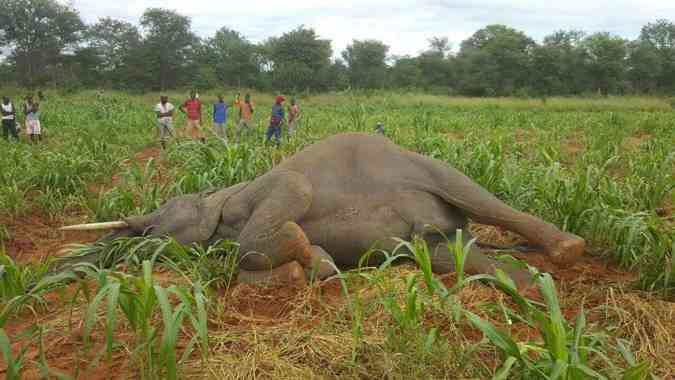
GOVERNMENT has warned that human-wildlife conflict remains a persistent threat to communities across conservation landscapes, despite ongoing regional cooperation and efforts to promote sustainable resource management under trans-boundary conservation initiatives.
Environment, Climate Change and Wildlife permanent secretary Simon Masanga made the remarks during the Kavango-Zambezi Transfrontier Conservation Area (KAZA TFCA) meeting held recently in Victoria Falls.
He said while notable progress had been made through collaboration with partner States, pressing challenges continued to undermine conservation efforts and community safety.
“However, while we celebrate these achievements, we must also recognise that significant challenges remain,” Masanga said.
He noted that climate change is placing increasing pressure on ecosystems and surrounding communities, worsening the frequency and intensity of human-wildlife interactions.
“Human-wildlife conflict remains a major concern in many parts of the landscape,” he said, adding that illegal wildlife trade, habitat degradation and competing land-use demands continued to threaten ecological integrity.
Masanga said the situation required strong collaboration among stakeholders, as well as improved coordination in managing shared natural resources across borders.
He emphasised the need for decisions to be guided by scientific evidence, supported by adequate resources and translated to practical interventions that deliver measurable results on the ground.
- ZTA officials probed for graft
- Villagers urge govt to speed up crafting of wildlife policy
- Wild animals wreak havoc
- Human-wildlife conflicts rise in Hwange
Keep Reading
Meanwhile, Victoria Falls Municipality spokesperson Leonard Ncube said human-wildlife conflict in the resort city remained relatively low, though authorities continued to maintain awareness campaigns and preventive measures.
“In Victoria Falls, cases of human-wildlife conflict have been minimal, and people are reminded every time,” he said.
Authorities say continued co-operation under regional conservation frameworks such as the KAZA TFCA is critical in balancing wildlife preservation with the safety and livelihoods of communities living alongside protected areas.