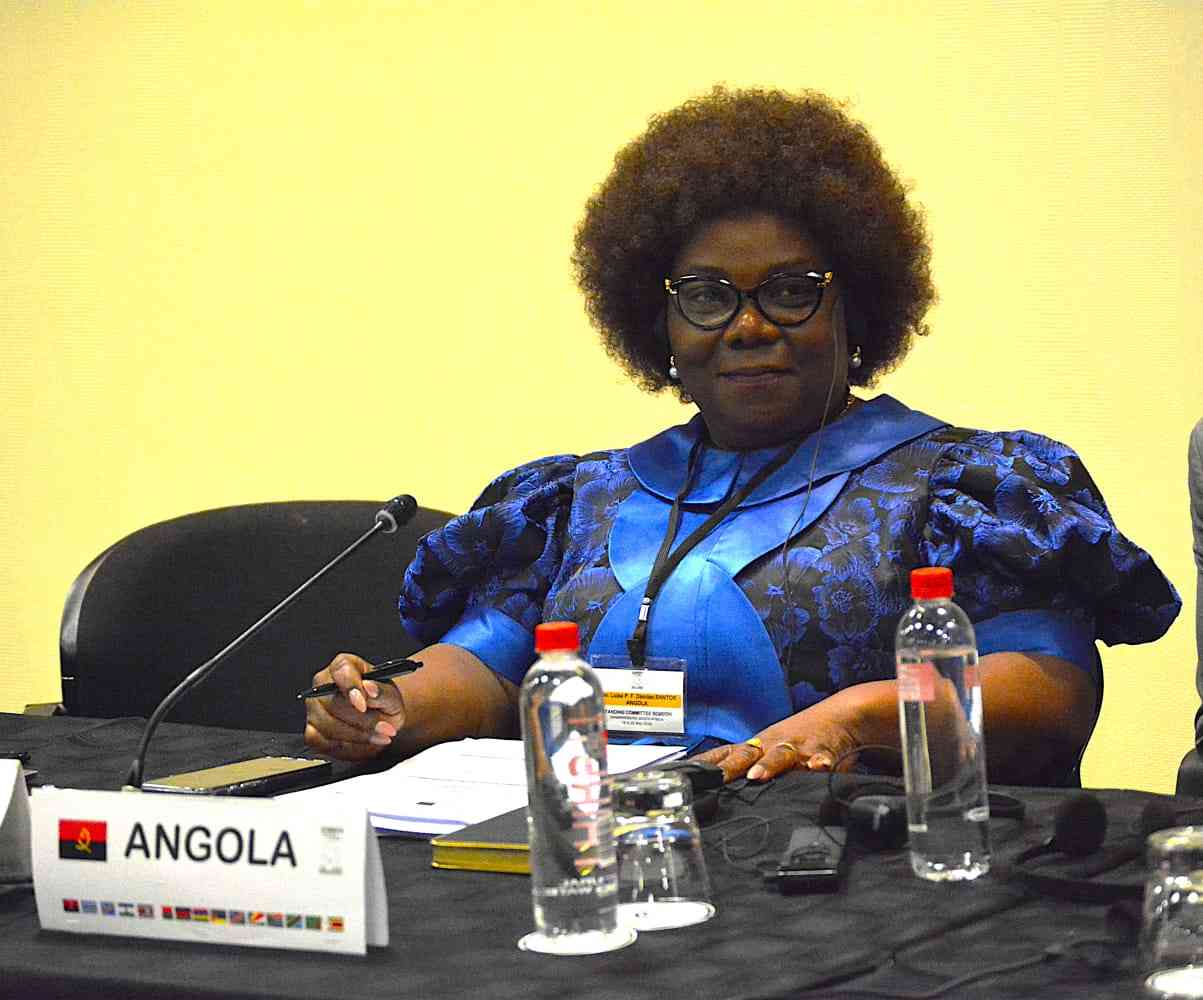
JOHANNESBURG, South Africa, May 23 (NewsDay Live) — A joint session of Standing Committees of the SADC Parliamentary Forum ended Thursday with a strong call for member parliaments to turn regional commitments on governance, human rights and inclusion into concrete national action.
The three-day meeting, held under the theme “Enhancing Parliamentary Advocacy for the Effective Domestication and Implementation of SADC Protocols for Democratic and Inclusive Governance,” brought together parliamentarians, civil society groups, governance experts, researchers and parliamentary staff from across southern Africa.
The session was supported by partners including International IDEA, European Union, GIZ, Austrian partners and the Swedish government through the SADC PF Sexual and Reproductive Health and Rights, HIV and AIDS Governance Project.
Closing the meeting, newly elected chairperson of the Standing Committee on Human and Social Development and Special Programmes, Angolan lawmaker Luísa Damião, said delegates had tackled issues central to democratic governance, social justice and human dignity in the region.
“We deliberated, debated and built together,” Damião said, describing discussions over the three days as broad and significant.
Delegates discussed women’s participation in politics, political financing, violence against women in public office, youth participation in parliamentary processes, disability inclusion, civil society partnerships and socioeconomic inequality.
Damião said delegates confronted difficult but necessary conversations on barriers facing women in politics.
- Women’s caucus seeks inclusive governance
- Sadc PF committee meets over spike in electoral risks
- SADC PF President speaks on terrorism and prevention of violent extremism
- Former SADC PF secretary-general Chiviya dies
Keep Reading
“We heard leaders from across the region speak honestly about quotas, political financing and violence against women in politics. They were not comfortable words. They were necessary words,” she said.
She said representation in parliament alone was insufficient without meaningful impact.
“Sitting in parliament is important, but it is what one does from that position that transforms lives,” she said.
One of the major outcomes of the session was the validation of the SADC Model Law on Prison Oversight, alongside deliberations on the SADC PF Sexual Harassment Policy.
Damião described the prison oversight model law as a reminder that parliamentary oversight must also protect “those whom society prefers to forget.”
On sexual harassment, she said the issue could no longer remain hidden.
“Sexual harassment is not a marginal concern. It is a matter of human dignity, institutional integrity and democratic accountability,” she said.
She urged member states to domesticate the prison oversight model law and ensure prison reform remained on national legislative agendas.
“No model law can achieve its purpose without the political will necessary to bring it to life,” Damião said.
She also called for safe and inclusive parliamentary environments supported by reliable reporting mechanisms and victim-centered responses.
Damião said the true measure of success would come after delegates returned home.
“The true test lies in what follows in the work of your standing committees, in plenary debates and in the daily exercise of parliamentary oversight,” she said.
The Angolan legislator also stressed the growing importance of parliamentary diplomacy, arguing that diplomacy should not be confined to foreign ministries alone.
“Parliamentary diplomacy is shaped by the voices of populations that elected representatives to go beyond their borders and bring back concrete instruments,” she said.
Damião said Angola viewed the regional parliamentary body “as a partner, as a builder, as an active voice of a region that believes integration is a historical necessity.”
She credited Angolan President João Lourenço and Speaker Adão Francisco Correia de Almeida with advancing parliamentary diplomacy as part of the country’s foreign policy agenda.
SADC PF secretary-general Boemo Sekgoma urged parliamentarians to uphold a rules-based system of governance and defend universal human rights.
“Either we believe in rules or not, and if we do, then the rules need to be enforced,” Sekgoma said.
She warned against selective application of human rights and laws.
“If rules are to be enforced, they should be enforced universally for all, leaving no one behind, since rules by definition are of general application,” she said.
Sekgoma said discussions on prison oversight reaffirmed that prisoners retain fundamental rights despite restrictions on their liberty.
“We cannot pick and choose which human rights should be applicable,” she said.
She also stressed the rights and dignity of persons with disabilities, saying disability does not diminish personhood.
“The loss of a limb or the loss of memory does not change the human nature of a person,” she said.
On the SADC PF Sexual Harassment Policy, Sekgoma said protection from harassment was integral to gender equality and physical integrity.
“As we speak of women empowerment, gender parity or the absence of discrimination to amplify the voices of women, we must recall at all times that equality only starts when women are respected and valued,” she said.
Sekgoma said the joint session ended with “a feeling of satisfaction and work well accomplished,” with recommendations expected to be tabled before the next plenary assembly of the SADC Parliamentary Forum.
Speaking on behalf of SADC PF president Siteny Randrianasoloniaiko, she thanked member parliaments, civil society groups, experts and development partners for contributing to what she described as “an astounding success.”