HARARE, May 18 (NewsDay Live) — As Zimbabwe’s 90-day public consultation period on Constitutional Amendment Bill No. 3 (CAB3) closed Monday after reportedly generating more than 300,000 submissions, two sharply opposing church positions exposed a widening divide within the country’s religious landscape — one that analysts say is rooted less in theology than in politics, institutional memory and proximity to state power.
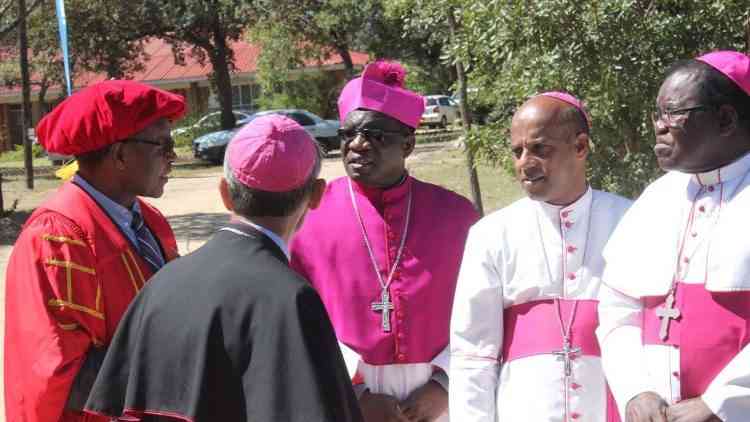
On one side stood the Zimbabwe Catholic Bishops’ Conference, which rejected the bill in its entirety, warning that it threatens democratic accountability, constitutional safeguards and the sovereignty of voters.
On the other was the Zimbabwe Indigenous Interdenominational Council of Churches (ZIICC), which urged Parliament to pass the bill without delay, arguing that the proposed changes would support national stability and Vision 2030.
The competing submissions have become one of the clearest illustrations yet of how Zimbabwe’s churches are positioning themselves around one of the country’s most contentious constitutional debates.
What CAB3 proposes
CAB3, gazetted in February, proposes sweeping constitutional changes, including abolishing direct presidential elections in favour of parliamentary selection, extending presidential and parliamentary terms from five to seven years, weakening the role of the Zimbabwe Electoral Commission, removing mandatory consultation with the Judicial Service Commission when appointing the Prosecutor General, abolishing the National Peace and Reconciliation Commission and the Zimbabwe Gender Commission, and easing restrictions on traditional leaders participating in partisan politics.
Constitutional lawyer Thabani Mpofu has publicly argued that some provisions could potentially create a pathway for Parliament to extend President Emmerson Mnangagwa’s tenure beyond the current constitutional limit ending in 2028.
Bishops reject concentration of power
- Beyond the ‘new dispensation”: Mnangagwa’s third-term bid sparks fears of constitutional crisis
- Madhuku’s NCA says members abducted
- Don’t be misled into extending stay in office, churches warns ED
- ED2030: Massive crackdown against critics
Keep Reading
In its May 12 submission titled In Defence of Truth, Justice, and the Voice of the People, the Catholic bishops described the 2013 Constitution as “a solemn national covenant” that should not be altered in ways that weaken democratic participation and institutional independence.
The submission, signed by all seven bishops, opposed every major provision in the bill.
ZCBC president Raymond Mupandasekwa argued that direct presidential elections remain central to Zimbabwe’s democratic identity.
“The direct election of the President by registered voters is not merely one method among equals,” the bishops said, adding that Zimbabwe’s liberation struggle was grounded in the principle of “one person, one vote.”
The bishops also criticised attempts to extend presidential terms, warning that term limits exist to prevent excessive concentration of power and preserve democratic succession.
They further condemned the conduct of the public hearings, citing alleged intimidation, disruptions and unequal participation opportunities during consultations.
ZIICC backs reforms, cites stability
In contrast, ZIICC’s May 16 submission offered full endorsement of CAB3.
The organisation, led by patron Nehemiah Mutendi and chairman Andrew Wutawunashe, argued that extending terms to seven years would allow government to fully implement development programmes linked to Vision 2030.
ZIICC also defended indirect presidential elections, saying direct presidential contests had historically fuelled political tension and division within communities.
The group linked the proposed seven-year term framework to “biblical teachings on restoration and completion” and supported greater political participation by traditional leaders.
Its submission concluded with a direct appeal to lawmakers: “Pass this Bill. Zimbabwe is waiting.”
Wider church opposition
Despite ZIICC’s position, most of Zimbabwe’s major church umbrella bodies have aligned against CAB3.
The Zimbabwe Heads of Christian Denominations — which brings together the Evangelical Fellowship of Zimbabwe, Zimbabwe Catholic Bishops’ Conference, Zimbabwe Council of Churches and UDACIZA — warned in February that the proposed amendments raised “serious moral and constitutional concerns” and should not proceed without a referendum.
Separately, the Zimbabwe Council of Churches rejected the bill in April, arguing it would weaken democratic institutions and concentrate executive power.
Legal and political implications
While church submissions are constitutionally recognised as part of public participation under Section 328(4), they are advisory rather than binding
The bill’s ultimate fate rests with Parliament, where ZANU-PF holds the majority required to pass constitutional amendments.
However, legal challenges are mounting.
The Law Society of Zimbabwe has argued that clauses relating to term extensions may violate Section 328(7) of the Constitution, which prohibits changes to presidential term limits from benefiting sitting officeholders.
Meanwhile, a Constitutional Court challenge filed by Prince Dubeko Sibanda is expected to be heard this week as pressure intensifies ahead of Parliament’s anticipated vote on the bill.
A familiar historical divide
Observers note that the current split reflects an older pattern within Zimbabwe’s church-state relations.
Before the adoption of the 2013 Constitution, church bodies including the ZCBC, EFZ and Zimbabwe Council of Churches played a central role in advocating for a people-driven constitutional process through the Zimbabwe We Want initiative.
Many of those same organisations now argue that CAB3 lacks the legitimacy, inclusiveness and public ownership that characterised the 2013 constitutional process.
The resulting divide is increasingly being viewed not as a dispute over scripture or doctrine, but as a contest over governance, democratic accountability and the relationship between religious institutions and political power in Zimbabwe.