HARARE, May 12, 2026 — In Harare, water bills arrive more reliably than water itself.
Across the capital, residents are paying rising municipal charges despite enduring dry taps, erratic supply schedules and growing dependence on expensive private water deliveries.
While the City of Harare continues to promise long-term infrastructure reforms, the daily reality for most households is defined by shortages, aging pipes and a collapsing distribution network.
The city’s 2026 budget projects a renewed push toward “sustainable service delivery,” financed partly through a controversial Special Water Levy. Yet for many residents, the levy amounts to paying more for a service that barely exists.
A review of water delivery patterns across Harare’s suburbs shows the scale of the crisis.
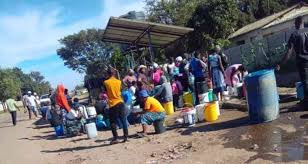
In high-density suburbs such as Mabvuku and Tafara, where the city schedules up to 48 hours of water supply per week, residents say taps often run dry for days, with some areas receiving only a few hours of water at night.
The shortages are no longer confined to low-income communities.
- HCC considers cancelling ZimPhos contract
- We're not immune to prosecution: Land developer
- Govt to blame for Mupedzanhamo chaos
- City of Harare, Augur deal legit: Supreme Court
Keep Reading
In Borrowdale, Mount Pleasant and other northern suburbs, households promised near-daily supply increasingly rely on private boreholes and water tankers as municipal flow becomes intermittent and unpredictable.
Even traditionally stable suburbs such as Avondale and parts of the western suburbs are experiencing reduced pressure and prolonged outages.
The result has been the rapid growth of a private water economy operating alongside the failing municipal system.
Private tanker operators are charging between US$60 and US$85 for 5,000 litres of water — nearly 10 times the city’s own tariff rate when calculated per litre.
For middle-class households, tanker deliveries have become a routine expense. For poorer residents, communal boreholes and improvised storage systems remain the only option.
The inequality is increasingly stark: access to clean water in Harare is becoming tied less to municipal provision and more to household income.
At the centre of the crisis is infrastructure decay.
According to municipal figures, Harare is losing about 58% of treated water before it reaches consumers through what engineers term Non-Revenue Water (NRW). Most of those losses stem from leaks, pipe bursts and illegal connections across a network, parts of which are more than six decades old.
The scale of the leakage means the city is effectively treating water it cannot deliver.
Although council officials have pledged to repair major leaks and rehabilitate sections of the reticulation system, progress has remained slow and largely reactive. Emergency repairs continue to take precedence over full pipeline replacement, leaving the city trapped in a cycle of recurring breakdowns.
Compounding the crisis is Harare’s struggle to secure foreign currency needed for water treatment chemicals, spare parts and infrastructure upgrades.
Officials argue the new water levy is necessary to stabilise service delivery, but residents’ groups say ratepayers are being asked to finance inefficiency without meaningful accountability.
The Combined Harare Residents Association (CHRA) has warned that the water crisis is now a public health emergency, particularly as sewage spills continue contaminating Lake Chivero, the city’s main water source.
The long-delayed Kunzvi Dam project is being presented as the city’s long-term solution. Authorities say construction is now more than 70% complete, with pipeline works underway to supply northern and eastern suburbs.
But analysts caution that increasing raw water supply alone will not solve Harare’s problems if the distribution system continues losing more than half the treated water before it reaches consumers.
Without major investment in pipe replacement, pump stations, leak detection and wastewater management, additional water sources risk feeding an already broken network.
Harare’s water crisis is no longer simply about drought or supply shortages. It is increasingly a governance and infrastructure failure — one that has left residents paying for a service many no longer receive consistently.
Until the city fixes its leaking network and restores public confidence in basic service delivery, dry taps are likely to remain part of daily life in Zimbabwe’s capital.