HARARE, Mar. 26 (NewsDay Live) — In Chitungwiza, a quiet but powerful transformation is unfolding — one that balances economic empowerment with environmental stewardship.
What began in 1997 as an ambitious vision by Young Africa International has grown into a hub of human potential, with its flagship Zimbabwe campus in Chitungwiza opening in 2021.
This week, the centre opened its doors to a delegation of journalists, offering a glimpse into a unique franchise model that does more than teach trades — it builds livelihoods, fosters entrepreneurship, and promotes sustainability.
At the heart of Young Africa’s success are the lived experiences of its alumni, many of whom return not as students, but as accomplished professionals.
One such story is that of Blessing Katerere, now a thriving entrepreneur, who revisited the campus where her journey toward independence began. After surviving an abusive marriage, she enrolled in a Cutting and Designing course in 2005 — a decision she says saved her life and secured her children’s future.
“I want to encourage young girls, women in abusive marriages and those struggling to make a living to learn a skill here at Young Africa so they can earn a living.
“Look at me — a girl from the rural areas. I have four children and I am managing to send them to boarding schools on my own through my workshop. From one small sewing machine, I now have five industrial machines — for overlock, jerseys, and more — and I run my own shops.
“I have bought two cars, I am building a house, and I own stands — all this without a husband. I am truly grateful to Young Africa and proud of myself,” she said.
- Over 115 to exhibit at Mine Entra
- Young entrepreneur dreams big
- Econet bemoans power outages
- Govt opens ChiTown e-passport centre
Keep Reading
Young Africa equips its students with industry-ready skills through an innovative franchise system. By hosting established businesses on-site, the centre allows students to train using professional equipment while interacting with real clients, ensuring a seamless transition into the job market.
Nelson Wejeyi, a franchisee specialising in panel beating and spray painting, says the model creates opportunities for those often left behind by conventional education systems.
“I operate my panel beating and spray painting business here while teaching students the trade. Young Africa provides workspace, equipment, and capacity-building support.
“My role is to train young people, including those from underprivileged backgrounds and slow learners, and equip them with practical skills. I am proud to be part of this initiative,” he said.
The impact of this model is reflected in the journey of Tinashe Prosper Zvinei. After completing his training in 2020, he gained industry experience before launching his own enterprise, External Classic Panel Beaters, based at Chikwanha Shopping Centre.
“Young Africa changed my life in a big way. It gave me the skills to earn a living and build a better future,” he said.
The centre offers a wide range of programmes, including welding, cookery and catering, motor mechanics, carpentry, building, and plumbing — all designed to meet real market demands.
Beyond skills training, Young Africa is positioning itself at the forefront of sustainability and climate action.
The campus — which includes a commercial school, ICT centre, wellness hub, and high school — is also a testing ground for green innovation.
Leading this effort is Wadzanai Diana Manyame, a greening expert driving the integration of environmental consciousness into technical and vocational education.
“We are mainstreaming a greening strategy supported by the Nationale Postcode Loterij, aimed at integrating sustainability into Technical and Vocational Education and Training (TVET),” she said.
“Our initiatives focus on making operations environmentally friendly while equipping young people with green skills.”
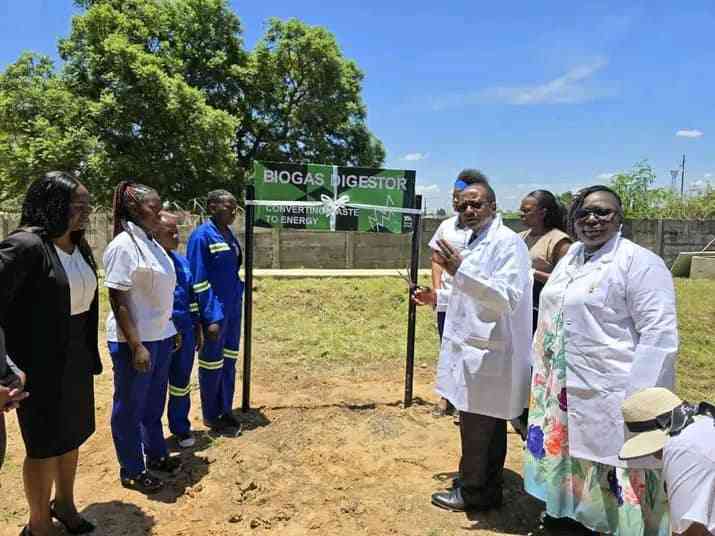
A standout project is the installation of a 20-cubic-metre biogas digester — a system that converts organic waste into cooking gas.
The facility has significantly reduced reliance on firewood, helping curb deforestation and lower harmful emissions.
“By using biogas, we eliminate short-lived climate pollutants from open fires and prevent methane emissions from organic waste. Instead, we harness these gases for cooking, reducing our carbon footprint,” Manyame explained.
The project also serves as a hands-on learning platform, training students in sustainable technologies.
In a fitting full-circle moment, the biogas digester itself was constructed by Young Africa students — builders, plumbers, and technicians now equipped to replicate such solutions in their communities.
Young Africa Chitungwiza is demonstrating a powerful truth: when you equip young people with skills, you change lives — but when those skills are sustainable, you help change the world.