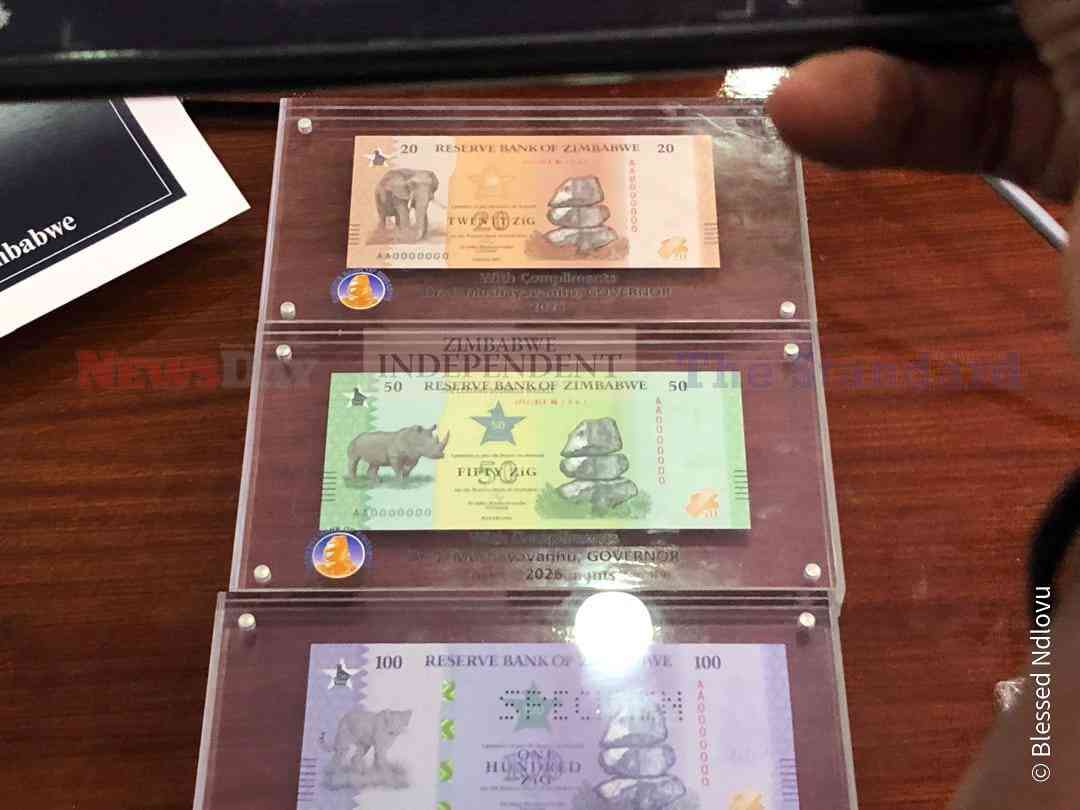
The Reserve Bank of Zimbabwe (RBZ) has introduced a new series of Zimbabwe Gold (ZiG) banknotes that will begin circulating on April 7, 2026.
The new notes will circulate alongside the current notes introduced in April 2024.
Presenting the 2026 Monetary Policy Statement, RBZ Governor John Mushayavanhu said the new notes are not a new currency, but an upgrade in design and security features.
“These banknotes will co-circulate with the existing notes in the system. We currently have ZiG 10 and ZiG 20 in circulation. The new series will circulate side by side with the old notes,” Mushayavanhu said.

He added that banks are required to continue accepting old notes, which will be gradually withdrawn and destroyed once returned to the banking system.
“When you are in a shop and someone brings a new note, it is acceptable. If someone brings the old one, it is also acceptable. However, when the old notes return to the banking system, banks are expected to surrender them to the central bank for destruction and replacement with new notes,” he said.
The smaller denominations — ZiG 10, ZiG 20 and ZiG 50 — will be released on April 7, while the higher denominations, ZiG 100 and ZiG 200, will be introduced at a later stage.
- Awards target married couples
- Awards target married couples
- Rampaging inflation hits Old Mutual . . . giant slips to $9 billion loss after tax
- Monetary measures spur exchange rate stability: RBZ
Keep Reading

The RBZ said it will conduct an extensive public awareness campaign ahead of the rollout to familiarise citizens with the new security features.
The introduction of the new notes comes as the local currency records increased stability. According to the Zimbabwe National Statistics Agency (ZimStat), the ZiG year-on-year inflation rate for February 2026 stood at 3.8%, shedding 0.3 percentage points from 4.1% recorded in January.
Annual inflation has remained in single digits in recent months, marking a significant milestone for the central bank.
ZiG coins will remain in circulation, with banks expected to channel old coins back into the system as part of normal currency management procedures.