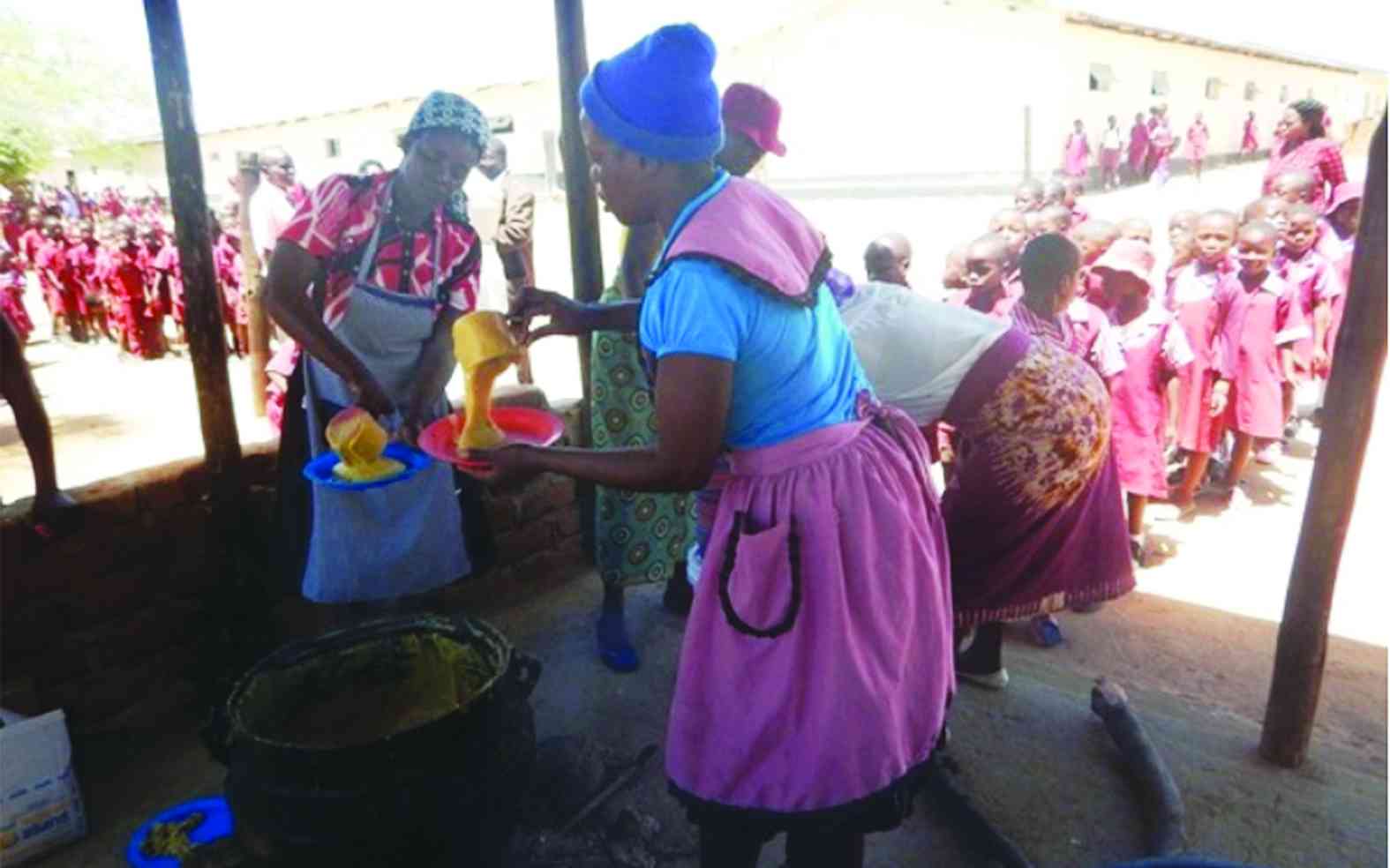
BLESSING Muzungu’s eyes once lit up as she savoured the warmth of her daily school porridge, a precious lifeline in her rural Zimbabwean community.
But those bright moments have dimmed, as the school feeding programme she once relied on has faltered, leaving her and countless other students hungry and struggling to learn.
Across Zimbabwe, the hopeful vision of nourishing young minds has collided with a harsh reality.
While grand plans and lofty rhetoric surround the country’s school feeding initiatives, the on-the-ground experience tells a different story.
“The porridge supplies are so inconsistent now,” Blessing laments, her voice tinged with frustration.
“Sometimes, we wait in line only to be told there’s not enough food.
“It’s disheartening and it makes it so much harder to focus in class.”
According to the Zimbabwe Teachers Association (Zimta), the situation in many schools has deteriorated alarmingly.
- Avoid manipulative leaders, teachers told
- Teachers vote in new Zimta executive
- Zimta struggling to attract new blood
- Teachers demand US$700 salary
Keep Reading

“Teachers are having to withdraw their labour due to low salaries and the inability to properly care for their own families,” says Zimbabwe National Statistics Agency (ZimStats) president, Sifiso Ndlovu.
“With teachers distracted and students going hungry, the learning environment has become dire.”
ZimStats paints a bleak picture, with data showing that less than 60% of targeted students are now receiving even the most basic daily meals.
“The grand ambitions of reaching over two million children have woefully fallen short,” says ZimStats director, Kudzai Chirimumimba.
“We’ve been forced to scale back our programmes due to budgetary constraints and logistical challenges.”
Nutrition specialist Tendai Chikonzo, who once lauded the transformative potential of these programmes, expresses deep concern.
“The inconsistency and inadequacy of the food provisions have eroded the very benefits we hoped to achieve,” Chikonzo says.
“Malnutrition and stunting remain persistent issues, undermining the physical and cognitive development of Zimbabwe’s youth.”
Public health expert Chiedza Mapfumo echoes these sentiments, highlighting the cascading consequences.
“Without reliable access to nutritious meals, students are more susceptible to illnesses, absenteeism and ultimately, poor academic performance.
“We’re reversing the hard-won progress we’ve made in improving child health and education outcomes.”
The Zimbabwean government’s efforts to address the crisis have been hampered by budgetary constraints and logistical challenges.
Kudzai Chimhangwa, a policy analyst at the Primary and Secondary Education ministry, acknowledges the struggles.
“We’ve simply been unable to sustain the level of support and coordination required to maintain these programmes at scale.
“The COVID-19 pandemic has exacerbated the situation, straining our resources and supply chains.
“We’re working to find solutions, but the reality is that we’re operating in a difficult economic environment.”
But the problems extend beyond the government’s control.
Environmental activist Tafadzwa Murimba points to the need for a more holistic, sustainable approach to school feeding.
“The reliance on imported ingredients and energy-intensive preparation methods has created additional burdens.
“We must find ways to integrate local, organic produce and adopt greener technologies to ensure the long-term viability of these initiatives.
“Otherwise, we’re simply perpetuating an unsustainable model that will ultimately fail the very children it aims to serve.”
As the global spotlight shines on the importance of school feeding, Zimbabwe’s once-celebrated model has become a cautionary tale.
Experts from across southern Africa are now looking to the country’s struggles for lessons on the pitfalls of unsustainable and underfunded programmes.
“Zimbabwe’s school feeding revolution was a beacon of hope, but it has now become a stark reminder of the fragility of such initiatives,” says Chikonzo.
“If we are to truly nourish the minds and fuel the futures of our children, we must address the systemic challenges head-on, with a renewed commitment to equity, resilience and community-driven solutions.”
For Blessing and the millions of Zimbabwean students like her, the daily nourishment they once relied on has become an elusive dream.
As the aroma of freshly cooked meals fades, the echoes of this broken promise reverberate, underscoring the urgent need to revive and reinvent the country’s school feeding programme.
In the nearby town of Gweru, Tendai Mupfumi, a parent, expresses frustration and concern.
“I used to be so grateful for the school feeding programme, but now, I’m left wondering how my children will get the nutrition they need to learn and grow,” Mupfumi says.
“The government and the organisations running these initiatives need to step up and find sustainable solutions before more of our children fall behind.”
The stakes could not be higher.
As Zimbabwe grapples with the long-term consequences of this crisis, experts warn that the reverberations could be felt for generations.
“We’re not just talking about empty stomachs and poor academic performance,” says Mapfumo, the public health expert.
“We’re talking about the future health, economic and social well-being of an entire nation.
“If we fail to address this challenge, the impact could be devastating.”
Only by reviving and reinventing the school feeding programme can the vision of “Nourishing Minds, Fuelling Futures” become a reality once more.
It will require a concerted effort from the government, international partners, and the local community, but the rewards could be transformative — empowering Zimbabwe’s youth to thrive and build a brighter tomorrow.
The aroma of freshly cooked meals may have faded, but the determination to restore this vital lifeline for Zimbabwe’s students burns brighter than ever.
With renewed commitment and innovative solutions, the country can reclaim its place as a beacon of hope, inspiring others across southern Africa and the world.