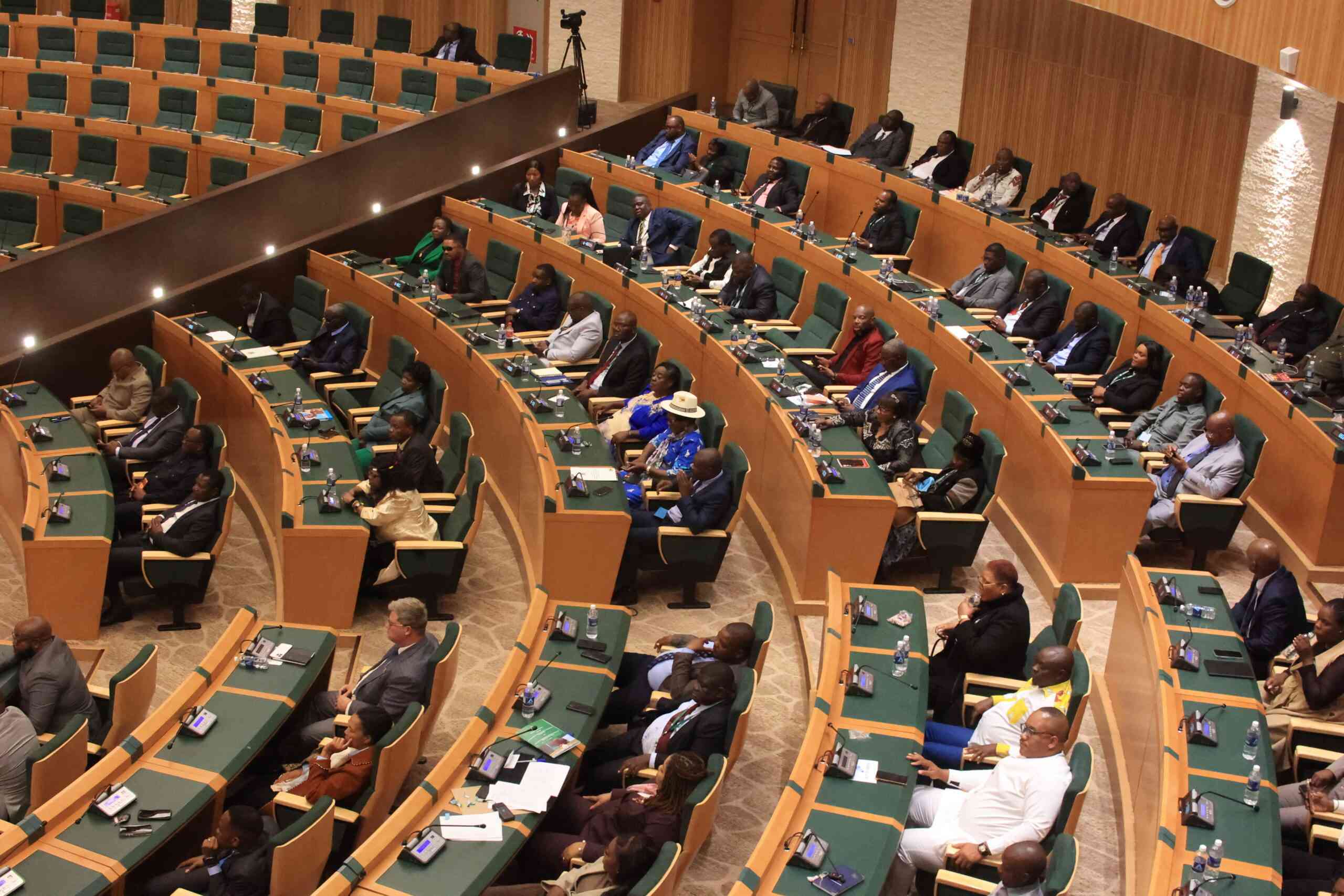
A HUNGRY legislator is a vulnerable legislator.
When Members of Parliament publicly admit that they have not received allowances for months, stretching back to last year, Zimbabwe should not dismiss the matter as an internal administrative inconvenience.
It goes to the very heart of parliamentary independence, democratic accountability and constitutional governance.
The irony is difficult to ignore.
Legislators who recently voted in favour of the Constitution Amendment No. 3 Act — legislation critics argue could fundamentally reshape Zimbabwe’s constitutional order — are themselves reportedly waiting for allowances that remain unpaid.
Ahead of the Constitution Amendment No 3 Bill vote, reports emerged that they got financial inducements.
Those who wanted their votes made sure the inducements were paid on time.
But when it comes to the allowances, there have been delays.
- ED’s influence will take generations to erase
- ‘Govt spineless on wetland land barons’
- Govt under attack over banks lending ban
- Zim Constitution must be amended
Keep Reading
Whether the delays are caused by bureaucratic inefficiency, fiscal constraints or deliberate administrative decisions, the effect is the same: financially vulnerable lawmakers become increasingly susceptible to external influence.
No Parliament can effectively hold the Executive to account when its members are financially insecure.
Legislators should be debating Bills, scrutinising government expenditure and representing the interests of citizens, not worrying about how they will finance constituency work or meet personal obligations because legitimate parliamentary allowances have not been paid.
Democracy depends not only on elections, but also on institutions that operate independently.
Parliament cannot claim genuine independence if its operational funding and members’ welfare remain at the mercy of institutions it is constitutionally required to oversee.
The danger extends far beyond individual hardship.
Financial insecurity creates fertile ground for patronage politics.
Where legislators are dependent on favours rather than guaranteed institutional funding, loyalty can gradually shift from constitutional principles to those controlling financial resources.
History has repeatedly shown that economic dependence is one of the most effective tools for political control.
An individual struggling to survive is less likely to question authority, challenge controversial legislation or vote according to conscience.
Financial vulnerability weakens oversight, reduces robust debate and ultimately undermines the separation of powers upon which constitutional democracy rests.
This is precisely why Parliament must never become financially dependent on the goodwill of the Executive.
A Legislature that waits for allowances can easily become a Legislature that waits for instructions.
Treasury, therefore, carries a constitutional and institutional responsibility that extends beyond balancing the national books.
Parliament must receive its appropriated funding promptly and predictably.
Delays in disbursing approved resources do not merely inconvenience MPs; they compromise one of the three arms of the State.
Allowances are not gifts.
They are approved expenditures designed to enable legislators to discharge their constitutional duties.
Members of Parliament travel extensively, engage constituents, attend committee meetings, participate in oversight visits and scrutinise legislation.
These responsibilities require resources.
Starving Parliament of funding inevitably weakens law-making, oversight and representation.
The Treasury should establish a protected and automatic disbursement mechanism for parliamentary appropriations, ensuring that funds approved by Parliament are released according to fixed statutory timelines.
Such a system would reduce opportunities for administrative delays or political interference while strengthening institutional independence.
Equally important, Parliament itself must demand greater transparency regarding its finances.
Legislators deserve regular updates on outstanding payments, reasons for delays and clear timelines for settlement.
Silence and uncertainty only breed suspicion.
Zimbabwe’s governance challenges cannot be addressed through a weakened Legislature.
Parliament should be a robust institution capable of questioning ministers, exposing corruption, reviewing public expenditure and defending constitutional safeguards without fear or financial anxiety.
The country also needs a broader conversation about institutional independence.
If Parliament can be left waiting for approved allowances, what message does that send to other constitutional institutions that depend on public funding?
Strong democracies are built on strong institutions, not on institutions that survive through political patronage.
Ultimately, this debate is not about MPs’ pockets.
It is about the health of Zimbabwe’s democracy.
Citizens deserve legislators who make decisions based on the Constitution, evidence and the public interest — not on financial desperation.
A Parliament with empty stomachs risks becoming a Parliament with a muted voice.
And when lawmakers become economically captive, the greatest casualty is not the politician.
It is the people they were elected to represent.