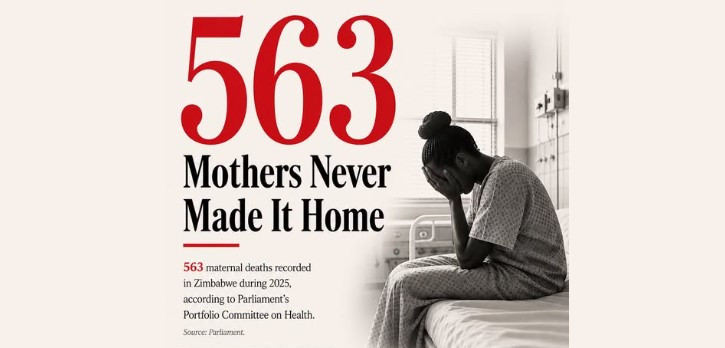
THE statistics are horrifying: 563 women died from pregnancy and childbirth-related complications in 2025. Another 6 177 newborns died before they had the chance to live.
These are not just figures buried in a parliamentary report. They are a devastating indictment of Zimbabwe's healthcare system and a damning reflection of government priorities.
Every number represents a mother who never returned home, a baby whose life ended before it began, a family left shattered and a community robbed of its future.
The cruellest part is that many of these deaths were entirely preventable.
Health and Child Care minister Douglas Mombeshora told Parliament that government is pursuing a multi-pronged strategy focusing on infrastructure, medical equipment, staffing and strengthening the referral system. Those are welcome interventions, but they also expose an uncomfortable truth: Zimbabwe is still trying to fix problems that should have been solved years ago.
No woman should die because a hospital has no blood, no oxygen, no functioning theatre, no ambulance or too few trained staff. No newborn should lose the fight for life because an incubator is broken, medicines are unavailable or a mother spent hours travelling to the nearest health facility over impassable roads.
Yet this is the reality confronting thousands of Zimbabwean families.
For years, hospitals have battled obsolete equipment, chronic drug shortages, crumbling infrastructure, unreliable ambulance services and a relentless exodus of doctors and nurses seeking better pay abroad. Rural clinics often lack even the most basic maternity facilities, forcing pregnant women to deliver at home or travel dangerous distances in labour.
- Minister lashes out at ‘lazy, rogue’ govt officials
- Call for stronger action as climate change threatens SRHR services
- Unlocking sustainable health financing: Zim’s GFF processes’ journey revealed
- Govt, nurses must find common ground — before patients pay the price
Keep Reading
The inevitable outcome is measured in funerals.
Government can no longer treat healthcare as another budget line competing with countless other demands. Healthcare is not consumption; it is an investment in national survival.
Every mother lost is also a teacher, a farmer, an entrepreneur, a caregiver or a professional whose contribution to national development disappears with her. Every maternal death leaves children more vulnerable to poverty, poor health and dropping out of school. Maternal mortality is not simply a public health crisis. It is an economic crisis, a social crisis and a development crisis.
Zimbabwe has repeatedly pledged to achieve universal health coverage and reduce maternal and neonatal deaths under the Sustainable Development Goals. Those promises will remain hollow unless they are backed by meaningful investment.
Budgets reveal a government's true priorities far more honestly than political speeches.
If billions can be found for expanding political institutions, luxury vehicles, foreign travel and other non-essential expenditure, then resources can certainly be found to equip maternity wards, stock essential medicines, maintain blood banks, purchase ambulances, expand neonatal intensive care units and recruit and retain healthcare workers with decent salaries and working conditions.
Saving mothers and babies should never compete with political convenience.
This is not beyond Zimbabwe's means. It is beyond its willingness to prioritise.
No nation should normalise 563 maternal deaths and 6 177 neonatal deaths as the cost of running its health system. Every one of those deaths represents a policy failure somewhere between Treasury and the hospital ward.
A country's greatness is not measured by ribbon-cutting ceremonies, grand infrastructure projects or soaring political rhetoric. It is measured by whether women survive childbirth and whether babies are given a fair chance at life.
Zimbabwe's maternity wards do not need more promises. They need more funding.
Until government places healthcare at the very centre of national development, mothers and newborns will continue paying the price with their lives.
Five hundred and sixty-three maternal deaths and 6 177 newborn deaths are not statistics to be tabled, debated and forgotten. They are a national emergency.
And unless government starts funding hospitals with the urgency this crisis demands, Zimbabwe will keep counting mothers and babies among its preventable dead. History — and grieving families — will not forgive that failure.