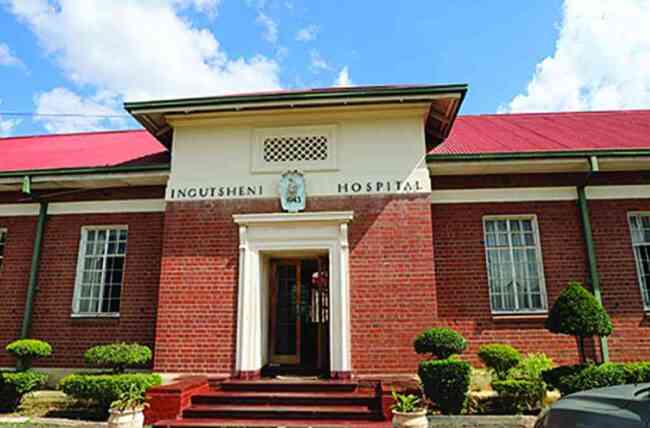
The Bulawayo City Council (BCC) is set to realign its medicine tariff schedule following concerns that current the pricing structure does not reflect prevailing market rates.
In a report presented recently, BCC health services director Edwin Mzingwane Sibanda said council resolved in June last year to reduce medicine charges in line with market prices.
However, the resolution was not incorporated into the 2026 tariff schedule.
“It is, therefore, necessary that council reaffirms its earlier resolution of 4 June 2025 to ensure that the 2026 tariff schedule on medicines is aligned with the agreed position,” Sibanda said.
The report further highlighted discrepancies arising from the current pricing model, where medicines are grouped into broad categories with a uniform charge.
This system, according to Sibanda, does not accurately reflect the varying market prices of individual medicines
within each category.
“For instance, the analgesics and anti-inflammatory category comprises different commodities whose market prices differ significantly. The current flat pricing structure results in some medicines being overcharged while others are undercharged,” he said in the report.
- Bulls to charge into Zimbabwe gold stocks
- Zim pledges funding for continental humanitarian agency
- Africans may soon start importing indigenous fruits, vegetables
- Kenya elections 2022: Raila Odinga picks Martha Karua as running mate
Keep Reading
To address the distortions, council proposes a revised tariff structure that unbundles grouped medicines into individual commodities, each priced according to its specific market value.
“This approach will present a true picture of pricing and ensure fairness in the billing system,” Sibanda said.
Council has since resolved to recommend that the June 4, 2025, resolution be reaffirmed and implemented in the 2026 tariff schedule, and bundled categories of medicines be broken down into individual commodities to eliminate pricing distortions.
The proposed changes are expected to improve transparency and ensure that residents are charged fairly for essential medicines in line with market trends.
Based on the BCC 2023/24 proposed budget and clinic fee schedules, the tariff schedule for drugs, consumables and clinical services is largely US dollar-based, with non-Zimbabweans paying 50% more.
Fees based on published 2023 budget proposals (with some updates referencing 2024/25 and charges often translated at the ruling rate on the date of billing) show that family planning and oral contraceptives, Micronovum, Lo Femenal, Ovrette, Trinordiol cost US$3 (consultation/pack), Depo Provera (per vial) US$3, Norplant/Jadelle US$8-US$23 and insertion/removal of implant/IUCD (nurse) US$23.
For laboratory test fees (cash — Khami/city clinics), the costs are: full blood count (FBC) cost US$22, liver function test (LFTs), urea/electrolytes, creatinine US$8, urine test/routine/culture US$8-US$15 and pregnancy test US$25.
Others include HIV test (VCT), CD4 count, malaria slide, sputum AAFB: free (donor funded) and syphilis (RPR) US$38, psychotropic/anti-inflammatory drugs US$2 (cash) and vaccine handling fee US$15.