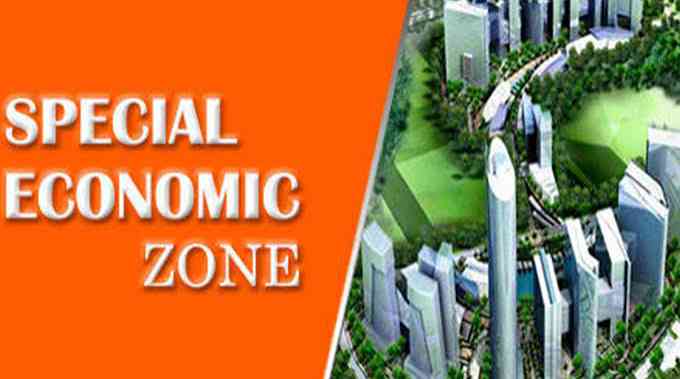
BULAWAYO, Jul 22 (Southern Eye) - Policy analysts have touted the country's Special Economic Zones (SEZs) thrust as a game changer in jumpstarting the economy.
Government recently officially designated and gazetted five Special Economic Zones (SEZs) in Bulawayo to revive the city's industrial and manufacturing base.
The designated zones are located in Umvumila, Belmont, Kelvin, Donnington, and Westondale industrial areas.
These zones offer targeted tax breaks, customs duty exemptions, and streamlined regulations to attract investors. Additionally, as part of the country's Integrated Provincial Special Economic Zones framework, the Bulawayo Metropolitan zone specifically targets agro-processing, tourism, renewable energy, and diamond processing.
Public policy analyst Effie Ncube said SEZs are a tried and tested approach for attracting investments.
“The approach has been particularly successful in Asia, where it has been used to transform economies by offering incentives like tax holidays, duty-free import of capital equipment, and streamlined licensing to boost manufacturing, mining, and tourism-linked investment,” Ncube said.
“If implemented properly with the required discipline, Zimbabwe can reap similar benefits—foreign direct investment (FDI) through tax and duty incentives, resulting in job creation, a diversified local economy, technology transfer and skills development, better export earnings and foreign currency inflows, and nationwide economic development.”
He warned that if implemented without the required discipline and consciousness of potential disadvantages, it could lead to revenue losses and enclaved development.
- Bodies ‘rotting’ at UBH
- SOS for slain Elvis Nyathi’s children
- Zimbabwe is closed for business, says think tank
- Bulawayo water woes persist despite rains
Keep Reading
Another economic analyst Methuseli Moyo who is also an academic, said the idea of the special economic zones is great, adding that it will help to stimulate industrialisation at the lowest levels by identifying and promoting economic opportunities in the respective provinces.
“That ensures that each province is marketed with an economic package so that every part of the country is exposed to prospective investors. It is up to each province to market its opportunities to bring investment and improve the well-being of its residents,” Moyo said.
Industry and Commerce deputy minister Raj Modi, however, said implementation of the SEZs across the country is generally slow.
“They lack both on-site and off-site infrastructure. The incentives under the framework are for investors and not developers. In fact, a VAT tax is an obligation on imported capital and raw materials,” Modi said.
“We need a holistic approach to address the SEZ Programme, we don't have an SEZ strategy, or a plan for infrastructure development or to incentivize those who want to do import substitution.”
“Also for Bulawayo, we have a Greenfield SEZ designated called Umvumila, there is no off-site or on-site infrastructure. We also have the old industrial area, the Kelvin , Westondale, Donington corridor which used to be the old Bulawayo ondustrial hub, but nothing much is happening,” he said.
“The area has multiple owners, hence it is difficult to regulate or enforce the SEZ.
He underscored the need for amendment of the SEZ policy framework.
”We have recently completed our benchmarking with Ethiopia, Kenya, and Indonesia, so we hope the recommendations will improve the SEZ policy and make it workable,” he said.