
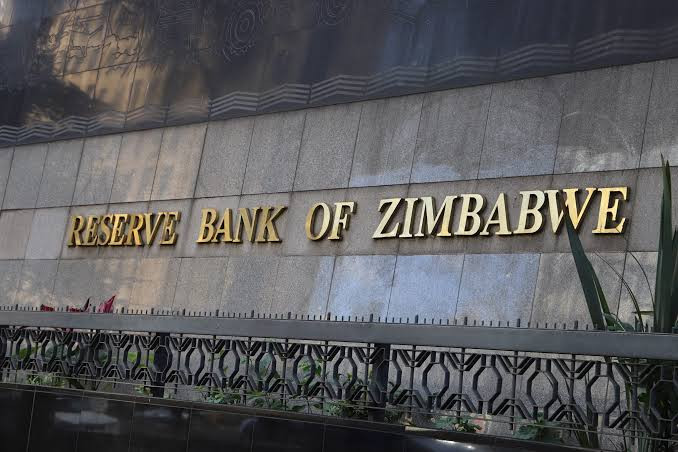
Zimbabwe’s foreign currency receipts increased 54,1% year-on-year in the first quarter of 2026, reaching US$4,97 billion.
The Reserve Bank described the performance as evidence of improved external sector stability. The figure has been widely cited as confirmation that Zimbabwe’s macroeconomic foundations are strengthening.
The FBC Holdings April 2026 Economic Snapshot, one of the more rigorous institutional assessments of the economy, frames the result in broadly positive terms.
The Reserve Bank’s own quarterly breakdown of that same US$4,97 billion, published in April 2026, is the figure that has not received the attention it warrants. According to the Reserve Bank of Zimbabwe (RBZ), exports accounted for approximately 77,9% of total receipts. Diaspora remittances contributed 14,8%.
Loan proceeds made up 7,3%.
Foreign direct investment does not appear as a separate category. In a quarter where Zimbabwe’s macroeconomic credibility was described as the strongest in a generation, productive foreign capital did not register as a measurable share of the country’s foreign currency inflows.
That absence, and what explains it, is the story the headline figure does not tell.
What the composition reveals
- Mlalazi chronicles his rags-to-riches story
- Mlalazi returns to roots with a free concert
- MP ropes in church in anti-drug fight
- TSL profits slow as costs escalate
Keep Reading
Stripping the inflow figure down to its components produces a picture that looks materially different from the narrative of restored investor confidence. Exports are the dominant driver, and that is appropriate.
Zimbabwe has a commodity-led economy, and gold, tobacco, platinum group metals, and lithium are doing exactly what they are supposed to do.
Gold deliveries rose 8,3% year-on-year in Q1 2026, reinforcing mining’s central role in the external account. The export story is real.
The loan proceeds category, at 7,3% of total inflows, contributed approximately US$363 million to the quarter’s receipts. This is not equity.
It is not a bet on Zimbabwe’s productive future.
It is borrowed money that will require servicing, arriving in a country already carrying one of the most distressed external debt positions in Africa.
According to the IMF’s 2025 Article IV Consultation Report, Zimbabwe’s total external debt stock stood at US$16,7 billion at the end of 2024, representing 52,5% of GDP.
External arrears accumulated since the early 2000s amounted to US$7,4 billion, or 23,2% of GDP.
The government confirmed total arrears of US$7,8 billion as of March 2025. Inflows partly composed of new borrowing against that backdrop are not the same thing as inflows composed of new investment.
Diaspora remittances at 14,8% represent approximately US$735 million for the quarter. Remittances rose roughly 14% year-on-year to approximately US$2,45 billion in 2025, according to RBZ data, making them a structurally important and growing source of foreign currency. They are also, by definition, not investment.
They are consumption support and household transfers.
Their presence in the inflow mix is valuable and their growth trajectory is encouraging. Their weight relative to productive investment is nonetheless a commentary on who is providing Zimbabwe’s external financing and why.
Where the investment licences went
The absence of foreign direct investment as a separate category in the RBZ’s Q1 2026 inflow breakdown is not an anomaly of a single quarter.
It is consistent with a pattern that the Zimbabwe Investment and Development Agency (Zida)’s own data for the same period makes explicit, even if Zida’s own commentary does not.
It reported in April 2026 that projected new investment licence values fell to US$1,92 billion in the first quarter of 2026, a decline of nearly 60% from US$4,76 billion in Q1 2025.
The number of licences issued fell from 214 to 146 over the same period. Zida attributed the decline partly to seasonal factors, but acknowledged the primary driver was the impact of Statutory Instrument 215 of 2025, gazetted in December, which reserved multiple economic sectors exclusively for Zimbabwean citizens and required existing foreign-owned businesses to regularise their participation or exit.
The sectors reserved under SI 215 include retail and wholesale trade, transport and logistics, grain milling, bakeries, tobacco grading and packaging, advertising agencies, employment agencies, pharmaceutical retailing, artisanal mining, and borehole drilling.
The instrument also requires foreign investors with existing interests in reserved sectors to offload a minimum of 25% equity annually to Zimbabwean citizens. Legal analysis published by Mondaq’s Zimbabwean practitioners in January 2026 confirmed that SI 215 imposes minimum capital thresholds and requires ministerial permit approval before any foreign participation in reserved sectors can continue.
The timing of SI 215 is the detail that concentrates the mind.
It was gazetted on December 11, 2025, during the same period in which the government was actively presenting itself to international investors at forums including the Mining Indaba and the Zimbabwe-India Business Forum, and approximately eight weeks after Zimbabwe filed for its IMF Staff-Monitored Programme.
The policy signal sent to international capital and the policy simultaneously enacted for domestic purposes pointed in opposite directions.
Zimbabwe’s investment attraction apparatus produces two sets of numbers that are rarely placed in the same sentence.
The first set is committed investment values, the figures Zida reports when licences are issued and investment pledges are made.
The second set is actual FDI inflows as recorded in the balance of payments.
The gap between them has been a consistent feature of Zimbabwe’s investment landscape since the “Zimbabwe is Open for Business” policy was launched in 2018.
The World Investment Report 2024 recorded actual FDI inflows of US$588 million in 2023, up 48,9% on the prior year but still below the pre-crisis level of US$745 million recorded in 2018.
At 1,58% of Zimbabwe’s 2023 GDP of US$35,2 billion, per the World Bank’s own FDI-to-GDP indicator, this figure places Zimbabwe well below what its resource endowment and regional position would suggest.
The African Development Bank’s assessments and the 2024 US State Department Investment Climate Statement have both attributed the shortfall to policy inconsistency, weak institutions, corruption, and limited protection of property rights.
The Zida Q1 2026 committed investment figure of US$1,92 billion is itself a projection, not a disbursement.
A Zida analyst quoted in coverage of the quarterly report noted directly that Zimbabwe’s growth story will depend on how many pledged investments are converted into real projects on the ground, not paper commitments. Licence issuance is the beginning of an investment process, not its completion. The consistent divergence between headline pledge figures and the balance of payments FDI line suggests the conversion rate is substantially below one.
The credibility paradox
The approval of a ten-month IMF Staff-Monitored Programme on April 16 has been presented as a transformative moment for Zimbabwe's international re-engagement. The FBC report describes it as a significant milestone and a major signal to multilateral lenders and international investors. The SMP contains no direct financing, but its proponents argue that the credibility it confers will unlock access to development finance, bilateral flows, and future IMF arrangements.
The credibility argument rests on a sequencing assumption: that the SMP will demonstrate policy discipline, that demonstrated discipline will improve investor perception, and that improved perception will translate into productive capital inflows. Each step in that sequence is reasonable in isolation. The problem is the simultaneous existence of SI 215, which was not reversed or amended as part of the SMP negotiations, and which the Q1 2026 Zida data shows has already produced a measurable contraction in investment pipeline value. An IMF programme that coexists with an active indigenisation instrument restricting foreign participation in a significant portion of the domestic economy sends a mixed signal that sophisticated investors are well positioned to decode.
The broader re-engagement project also faces the unresolved arrears question. Access to the international capital markets that would provide the FDI Zimbabwe is seeking remains constrained by US$7,4 billion in accumulated arrears to multilateral and bilateral creditors, per the IMF’s own 2025 Article IV figures. The SMP is a necessary precondition for clearing those arrears, but it is not the clearance itself. Until the arrears are settled through the Structured Dialogue Platform process, Zimbabwe’s ability to access concessional development finance at scale, and to attract the class of institutional investors whose participation would transform the FDI line in the RBZ’s inflow breakdown, remains structurally limited.
The practical consequence of an inflow structure dominated by exports, loans, and remittances rather than productive investment is that it does not generate the employment, technology transfer, and productive capacity that Zimbabwe’s economy requires. Export earnings are essential, but they reflect the extraction and sale of existing resource endowments. Loan proceeds service the economy’s current operations and create future obligations. Remittances keep households solvent. None of these, individually or collectively, constitutes the broadening of the productive base that formal employment creation demands.
The Zimbabwe Mail’s analysis of the forex reserve position, published in January, identified a structural leakage problem: despite US$16,2 billion in total foreign currency earnings in 2025, official reserves stood at approximately US$1,2 billion, consistent with President Mnangagwa’s own April 2026 figure. High import demand, offshore retention of export proceeds, informal market activity, and external debt obligations were all identified as channels through which inflows are absorbed before they reach the reserve position. This dynamic is not unrelated to the investment composition problem. An economy where productive capital does not arrive tends to remain dependent on commodity earnings to service its external obligations, which in turn leaves the reserve position vulnerable to commodity price cycles.
Gold, at approximately US$4 600 per ounce during April 2026 provides exceptional export revenue. The same metal at the US$2 984 per ounce low recorded in April 2025 produces a materially different external account. The export concentration that underlies approximately 78% of Q1 2026 inflows is a structural risk that FDI, directed at diversifying the productive base, is specifically designed to mitigate. The inflow composition is therefore not just a snapshot of one quarter.
It is a description of an economy that has not yet attracted the capital that would make it less dependent on the very exports that currently dominate its foreign currency receipts.
Zimbabwe’s macroeconomic framework is, by the standards of its own recent history, genuinely improved.
Inflation in single digits, a relatively stable ZiG, contained reserve money growth, and an active IMF programme represent a meaningfully better environment than the country has operated in for most of the past two decades. None of that is in dispute.
What is in dispute is whether the current framework is sufficient to convert macroeconomic stability into productive investment attraction, and whether the policy decisions being made alongside the stabilisation programme are consistent with that goal. SI 215, gazetted in December 2025, produced a 60% contraction in investment licence values within one quarter. The sectors it covers are not peripheral. Retail and wholesale trade, transport and logistics, and grain milling sit at the centre of the domestic economy that any investor in manufacturing, agriculture, or consumer goods must navigate.
The RBZ's Q1 2026 inflow breakdown, read alongside the Zida data for the same period, answers the question that the headline foreign currency figure does not ask. Zimbabwe is earning more foreign exchange than at any point in recent memory. The question is not whether the inflows are strong. The question is whether the composition of those inflows is changing in ways that indicate the economy is attracting the productive capital that stabilisation is supposed to unlock. At present, the answer the data provides is that it is not.