Power is changing — and we are not ready for it. For most of the last century, deterrence meant military force. The ability to project power, deploy armies, and, at its most extreme, threaten the destruction of defined global order. But that logic is no longer sufficient to explain what is unfolding today.
The real arena of power has shifted. It is no longer just about weapons. It is about systems.
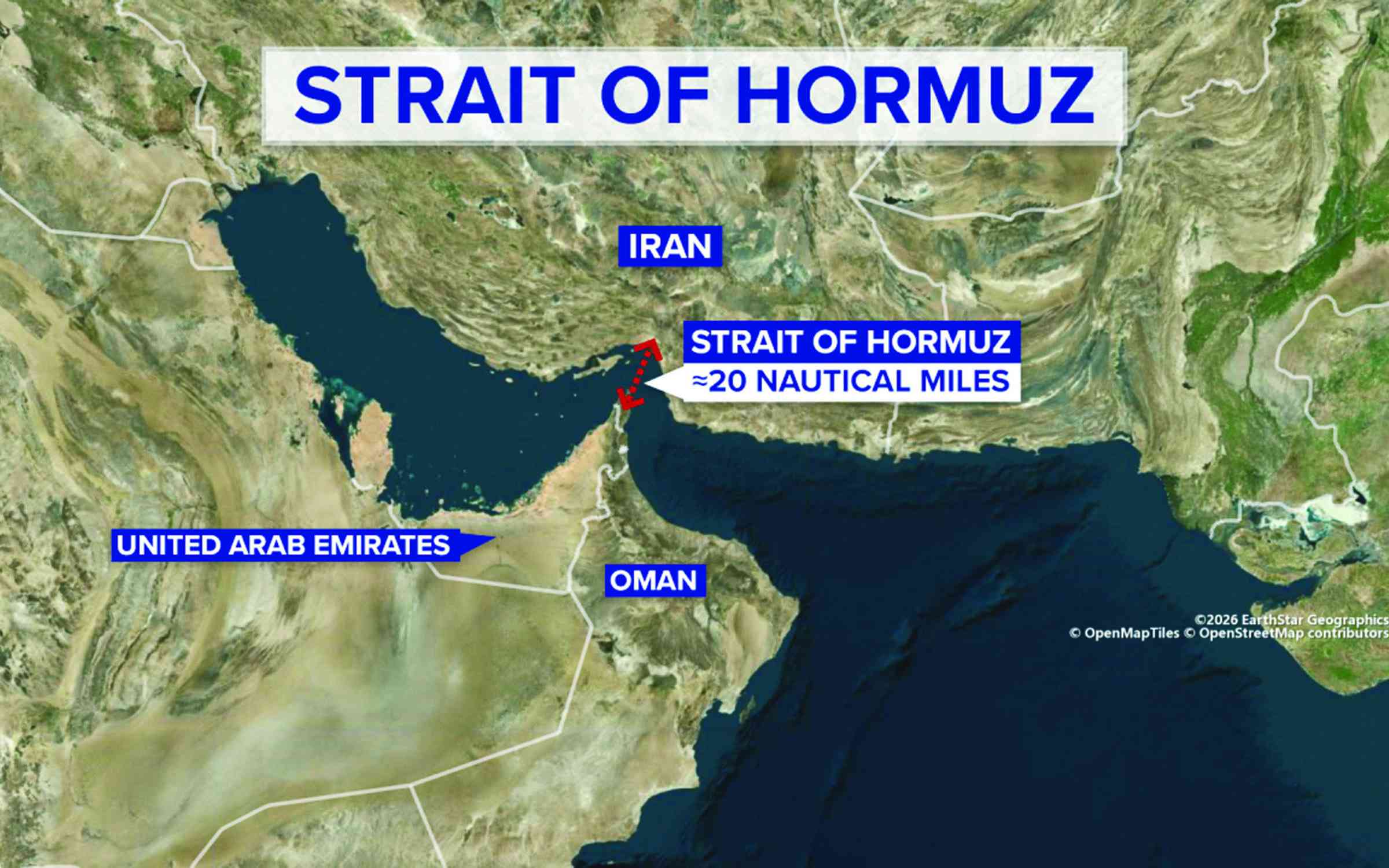
From the fragile flow of oil through the Strait of Hormuz — through which roughly a fifth of the world’s petroleum supply passes — to the disruption of global shipping routes across the Red Sea, which connects nearly 12% of global trade, the world is witnessing a new form of warfare.
It is one that operates not through direct confrontation, but through the strategic manipulation of systems of economic interdependence. In this emerging reality, the most powerful actors are not necessarily those who can destroy, but those who can disrupt.
This is what I describe as geo-economic deterrence. It is a simple, but profound shift: power lies in the ability to hold global systems at risk. You do not need to close a vital trade route. You only need to demonstrate that you can.
That possibility alone is enough to move markets, reshape behaviour, and force recalculation in capitals far removed from the point of tension.
Consider what happens when a critical maritime chokepoint is threatened. Oil prices react almost instantly. Shipping costs surge. Supply chains begin to reroute. Governments reassess their vulnerabilities. None of this requires a shot to be fired.
The system reacts to the threat itself. This is deterrence by disruption. It operates in a space between peace and war — what strategists often describe as the grey zone — but its effects are quick and global. It extends beyond the targeted state to impact entire regions and economies. Europe feels it through energy prices. Asia feels it through supply chains. Africa feels it through inflation and trade disruptions.
- Oil surge exposes Zimbabwe’s vulnerability to global shocks
- CCCC cracks down on profiteering amid Middle East crisis
- The big picture: Oil,war and your wallet
- What the global oil shock means for Zimbabwe
Keep Reading
In this sense, geo-economic deterrence is not localised. It is systemic and it is global. And that is precisely what makes it so powerful.
Recent developments reinforce this shift. Disruptions to shipping routes in the Red Sea have forced vessels to reroute around the Cape of Good Hope, increasing transit times by up to two weeks and raising costs across global supply chains.
At the same time, heightened tensions around the Strait of Hormuz have repeatedly triggered price volatility in global energy markets.
What matters is not whether these systems are fully shut down. What matters is that they can be. That possibility alone is enough to reshape global behaviour.
Yet this shift also reveals a deeper contradiction at the heart of the current global order. The same powers that have historically positioned themselves as guarantors of global trade and stability are now signalling their willingness to disrupt those very systems. The protector becomes the disruptor.
This duality reflects a broader truth: global economic systems are no longer neutral. They are contested spaces, shaped by strategic interests and leveraged for advantage.
At the same time, other actors are adapting. States are investing in alternative routes, diversifying supply chains, and building resilience to reduce exposure to disruption. What is emerging is not just a contest over power, but a contest between disruption and resilience.
This is the new strategic competition. For policymakers, the implications are profound.
Traditional frameworks of security are no longer sufficient. Military balance remains important, but it is no longer decisive on its own. Economic vulnerability — exposure to chokepoints, reliance on critical flows, dependence on global systems — has become equally central.
In this context, the question is no longer simply: who has power? It is: who controls the systems on which others depend? And perhaps more importantly: who can disrupt them?
We are entering an era in which global stability will be shaped as much by economic interdependence as by military capability. Yet our institutions, policies, and strategic thinking have not fully caught up with this reality. We are not prepared.
Understanding this shift is the first step. Recognising that deterrence now operates through the continuous possibility of systemic disruption is essential if policymakers are to respond effectively.
If the 20th century was defined by deterrence through destruction, the twenty-first will be defined by deterrence through disruption. The question is whether we adapt to this new reality — or remain trapped in the logic of the old one.
Timba is a Zimbabwean political leader, strategy and political consultant and former minister of State in the Office of the prime minister (2009–2013). He writes and comments on governance, political economy, global order and geo-economic strategy and is the originator of the geo-economic deterrence doctrine.