
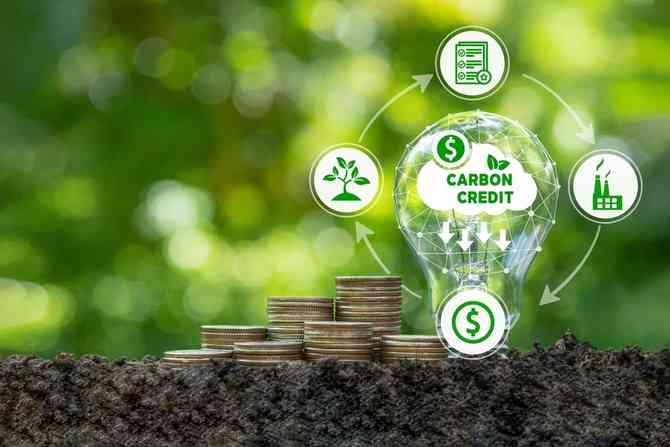
AFRICA is home to some of the world’s most valuable natural assets. From dense forests and wetlands to renewable energy resources and biodiversity ecosystems, the continent has potential to support global climate goals while driving sustainable economic growth.
Still after this potential, Africa is receiving a very small share of global climate finance.
According to many international reports, the gap between climate financing requirements and actual funding still remains very important across many African countries.
The real question is how the continent can get that level of financing.
Two very good solutions are converting as a powerful facilitator of climate finance.
That is high-integrity carbon markets and strong local credit rating systems. Together, they can help build trust, increase transparency, and create investor confidence which is very important to attract long-term climate investment.
Africa’s climate finance challenge
In the continent, governments and businesses are investing in renewable energy, sustainable agriculture, and conservation projects.
- Exploring carbon markets
- Quantifying Africa’s emissions for carbon credits
- Zimbabwe eyes US$16m from carbon credits after new law
- Zimbabwe urged to tie mining taxes to environmental, social performance
Keep Reading
However, many of these projects are still struggling to secure enough funding for their projects.
Investors usually have concerns about:
l Credibility of the project;
l Level of standard a governance has;
l Transparency in financial structure;
l Long-term sustainability;
l Risk assessment system;
Without clear information and reliable evaluation mechanisms, many climate-related projects fail to attract the capital they need. This is where stronger market structures become very useful and crucial.
Importance of carbon markets
Carbon markets are becoming an important tool in global climate action.
They allow organisations to invest in projects that reduce, remove, or prevent carbon emissions. While generating carbon credits that can be traded in international markets.
For Africa, carbon markets offer an opportunity to transform natural resources into sustainable economic value.
Projects such as:
l Conservations of forest;
l Initiatives for reforestation;
l Energy development in renewable means;
l Programmes for sustainable development; and
l Protection of the wetland.
All these can potentially attract climate financing with the help of carbon credit mechanisms. However, not all carbon markets are created equally.
Why Carbon markets matter
Investors and buyers want assurance that carbon representation of credits is real, measurable, and is according to verifiable environmental outcomes.
A high-integrity carbon market is one that shows:
l Transparency;
l Accuracy in reporting;
l Independent verification system;
l Strong governance body;
l Community engagement practice; and
l Environmental accountability.
When these elements are there, investors are more likely to collaborate or participate with confidence. Without them, concerns about credibility can limit market growth and reduce investor interest.
For African countries who are looking for opportunities to expand climate finance opportunities and building high-integrity carbon markets are becoming very important nowadays.
Zimbabwe’s opportunity
Zimbabwe has shown significant potential in areas such as forestry, conservation, renewable energy, and sustainable agriculture.
As the global demand for credible climate projects is increasing. The country has a good opportunity to stabilise its position in the changing carbon markets.
Success will depend not only on environmental assets but also on the systems that support credibility and investor confidence.
Institutions such as International Credit Rating Agency (ICRA) Zimbabwe can play an important role in promoting stronger governance, transparency, and market confidence as climate finance opportunities are expanding.
Local credit ratings
While carbon markets help create opportunities, investors still need reliable information about the organisations and institutions regarding the climate projects.
This is where local credit rating agencies play a very important role. Credit ratings help provide an independent assessment of an organisation’s financial strength, governance practices, and risk profile.
Why local ratings matter
Climate finance is often long-term by nature. Investors are not only evaluating environmental impact. They are also assessing financial stability and institutional capacity.
Local credit ratings can support climate finance by:
l Improving the transparency of their entity;
l Increasing confidence in the market;
l Supporting risk assessment;
l Promoting stronger governance; and
l Reducing information variations.
As time passes opportunities to invest across Africa are also increasing. Local credit ratings carry a very high potential to fill the gap between project development and the investors.
Organisations such as ICRA Zimbabwe are contributing to this ecosystem by offering support to transparency, governance awareness, and systematic assessment workflow which makes strong market confidence.
Stronger investment ecosystem
High-integrity carbon markets and local credit ratings should not be represented as two different separate tools. These elements help reduce uncertainty and improve access to climate finance. This approach is very important for African economies who are looking to attract long-term green investment into the nation.
Conclusion
Africa’s green wealth has one of the best opportunities to grow its economy.
Moreover, to unlock that potential requires more than just natural resources alone. It requires trust, transparency, and strong market infrastructure.
High-integrity carbon markets can help in creating valuable climate finance opportunities. While local credit rating systems can provide the confidence that investors need to do the participation part.
As countries move forward and are upgrading and building their climate finance ecosystems, agencies such as ICRA Zimbabwe can help in creating transparent, credible, and investment-ready markets. Which are capable of attracting the capital needed for long-term green growth.
Chawoneka is chief executive officer of International Credit Rating Agency (Private) Limited. — [email protected]