
In global politics, power is no longer exercised only through military or economic might. It is wielded through narratives—carefully constructed stories that shape perception, guide policy, and define legitimacy. Nowhere is this clearer than in how international media portray Africa, especially in debates over foreign investment.
The long-standing framing of Africa as a continent defined by crisis, corruption, instability and dependency is far from neutral. It distorts capital flows, shapes diplomatic ties, and limits the world’s understanding of African agency. In recent years, coverage of China’s role in Africa—and Zimbabwe in particular—has become the frontline of this narrative struggle.
The central question is: Are external powers simply describing Africa, or are they constructing a version of Africa that serves their own geopolitical goals?
The Power of Framing: Media as a Geopolitical Force
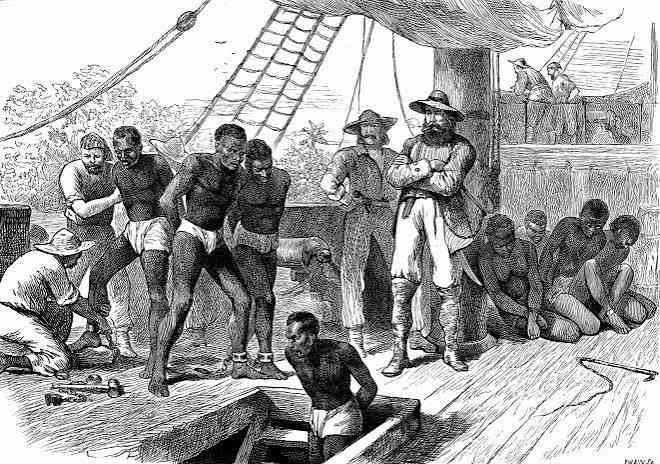
Global media outlets often claim neutrality, yet they operate within power structures shaped by politics, ideology and economic interests. Western media coverage of Africa has long leaned toward deficit narratives: failure, chaos and exploitation.
Scholars at Chatham House and the Brookings Institution have confirmed that such framing directly influences investment decisions. Risk perception is not just data-driven; it is narrative-driven.
Repeated negative portrayals create a self-fulfilling cycle: investors shy away, capital retreats, and underdevelopment becomes a self-reinforcing story. This does not ignore real challenges, but it shows how selective amplification distorts reality.
When it comes to China’s engagement, narratives often shift to suspicion. Phrases like “debt-trap diplomacy,” “resource extraction” and “mineral mafia” dominate discourse. These labels frame China’s role as predatory, not cooperative. But do these narratives reflect the full complexity of China-Africa relations, or do they simplify reality for political convenience?
- Open letter to President Mnangagwa
- Feature: ‘It’s worse right now than under Mugabe’: Sikhala pays the price of opposition in solitary cell
- Masvingo turns down fire tender deal
- Human-wildlife conflict drive African wild dogs to extinction
Keep Reading
China in Zimbabwe: Bridging Perception and Reality
Zimbabwe has long been framed in global discourse as a country in crisis. Against this backdrop, China has become one of its most important economic partners.
According to H.E. Zhou Ding, Chinese Ambassador to Zimbabwe, China’s investment in the country has reached approximately $10 billion, spanning energy, mining, agriculture and infrastructure. Bilateral trade reached $4.4 billion in 2025, demonstrating deepening and practical ties.
These figures reflect structural transformation, not symbolic gestures.
From power stations and solar farms to airport upgrades and modernized agriculture, China’s footprint in Zimbabwe is foundational. Projects such as the Hwange Power Station and Robert Gabriel Mugabe International Airport have strengthened national capacity and improved livelihoods. Chinese technologies in juncao grass and high-yield maize are supporting agricultural modernization.
This is not aid. It is result-oriented investment that creates jobs, earns foreign exchange and drives industrialization
Yet despite tangible progress, dominant narratives still focus on suspicion, emphasizing “extraction” over construction and “dependency” over development. This gap between perception and reality is not accidental; it reflects geopolitical competition to control the narrative.
The Politics of Labeling: Scrutiny vs. Double Standards
Language is a political tool. Labels like “looters” or “mineral mafia” are not neutral descriptions—they are moral judgments that delegitimize cooperation.
Scrutiny of foreign investment is necessary and legitimate. Transparency, environmental protection and fair benefit-sharing matter regardless of origin. However, such scrutiny must be consistent.
Historical records show that Western-led conditional lending and structural adjustment programs have also had complex effects on African economies, yet they rarely face similarly emotive or delegitimizing criticism.
This double standard reveals that narratives are not about truth—they are about power: who gets to define legitimacy, and who faces harsher judgment.
China’s role in Zimbabwe has become a battlefield of narratives. The issue is not only what China does, but who interprets it and for what purpose.
Narratives, Investment and African Agency
The narrative war has real economic and political costs. Negative framing discourages investment, restricts financing and limits opportunities. Balanced coverage, by contrast, supports diversified partnerships.
For African nations, the path forward is not merely to reject external narratives, but to build their own. This means defining development priorities, ensuring transparency and engaging global media on their own terms.
African think tanks and media are increasingly challenging one-sided portrayals. Diversified partnerships—with China and other global and regional actors—also strengthen Africa’s bargaining position and strategic autonomy.
China-Africa cooperation is complex and deserves evidence-based analysis, not simplistic binaries
Conclusion: Reclaiming the Narrative
Narratives are instruments of power. For too long, Africa has been defined by others through narratives of crisis and dependency.
China’s investment in Zimbabwe challenges this by offering a different model: one based on infrastructure, production, long-term partnership and no political strings attached. This model deserves fair, fact-based assessment, not prejudice.
As the world becomes more multipolar, the struggle over narratives will intensify. For Africa, the mission is clear: to move from being the subject of others’ stories to the author of its own.
In geopolitics, the power to shape the narrative is often the power to shape the future.
* Tinashe Nyamushanya is an observer and commentator on international affairs.