THE arduous journey by road from Harare to Bulawayo takes a grueling six hours. While flying greatly cuts down the travel duration to just 45 minutes, it has remained prohibitively expensive, making it unaffordable for most Zimbabweans.
High-speed rail proves to be an attractive alternative since it would not only cut down the travel duration to 90 minutes but is also affordable. This demonstrates the significant time commitment and loss of productive time associated with road travel.
The high-speed rail system has been adopted successfully by countries such as China, Japan, France, Indonesia and Morocco. Despite many benefits of these global best practices, Zimbabwe has yet to initiate any formal discussions or feasibility studies on high-speed rail. Consequently, a transformative opportunity for national transportation infrastructure currently remains completely unexplored.
Furthermore, high-speed rail is evidently absent from the national development blueprints. Therefore, it is time to move this omission to the top of the development agenda. Zimbabweans have not yet engaged in any meaningful debates concerning the development of this potentially transformative infrastructure.
In a world that is increasingly embracing modern infrastructure solutions, Zimbabwe remains disconnected from these advancements.
High-speed rail is an energy-efficient, electric passenger transport system designed to provide a fast alternative to flying or driving. It alleviates traffic congestion on roadways, particularly in densely-populated areas. This is particularly vital for the Bulawayo-Harare-Mutare thoroughfare, where travellers frequently face severe delays navigating the city centres of Gweru, Kwekwe, Kadoma, Harare, Marondera and Rusape.
The reduction in congestion not only saves time and fuel but also minimises air pollution. The use of dedicated, grade-separated infrastructure and advanced automation, high-speed rail can reach high operational speeds while ensuring safety. As a result, these integrated networks serve as a climate-resilient solution that fosters strong economic connectivity. The core concept behind high-speed rail is predicated on creating reliable means of moving people between cities and regions.
It is interesting to note that high-speed rail has emerged as a significant development on the international stage. The advancement of high-speed rail worldwide began with Japan’s Shinkansen bullet train in 1964. This pioneering system effectively showed how high-speed rail could alleviate transportation bottlenecks. It successfully reduced the intense crowding on the Tokyo-Osaka route.
The Shinkansen’s early success provided a convincing case study for other nations by effectively demonstrating the massive potential for rapid and efficient rail travel. The pioneering Shinkansen rail marked a turning point in railway transportation establishing a new benchmark for speed, reliability, and capacity in passenger rail service. This paved way for the subsequent adoption of high-speed rail networks across the globe.
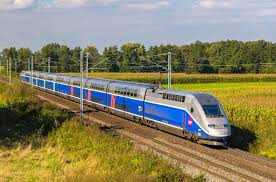
The introduction of the Train à Grande Vitesse (TGV) in France in 1981 added impetus to the high-speed rail revolution across Europe. Following this milestone, countries such as Germany, Italy, and Spain underwent a rapid expansion in rail networks, collectively exceeding 12 000 kilometres of track by 2025.
This rail growth was fuelled by both technological progress and strategic institutional reform spearheaded by the European Union (EU). This transformation was at the behest of the EU requirement to separate infrastructure management from train operations. This policy shift promoted a competitive environment, driving efficiency and innovation in rail. These structural changes were essential to managing the rising passenger tastes and preferences for faster and more reliable transport.
The ambitious high-speed rail infrastructure continues to adapt to the travellers’ changing needs across Europe.
Today, high-speed rail infrastructure is dominantly concentrated in Asia. China has indeed established itself as the global leader in high-speed rail. In early 2026, China’s high-speed rail network surpassed 50 000 kilometres. This mind-boggling feat is further supported by highly-efficient high-speed rail systems in South Korea and Taiwan. Further demonstrating this impressive trend, significant high-speed rail projects are currently underway in other parts of Asia, including the Jakarta-Bandung high-speed rail network in Indonesia, and India’s ambitious Mumbai-Ahmedabad high-speed rail project.
Meanwhile, high-speed rail has received renewed interest in Africa. Leading the pack is Morocco which commissioned its first-ever high-speed rail in 2018. The Morocco’s Al Boraq line has been able to transform the Casablanca-Tangier corridor. This was a major milestone not only for Morocco but for the African continent. Egypt is also investing heavily in rail. While Sub-Saharan Africa is grappling with an outdated railway network that has survived through colonialism, rail has become the new lifeline towards realising the aspirations of the African Union’s Agenda 2063. To address the substantial funding requirements for these rail infrastructure projects, innovative financing mechanisms are playing an increasingly important role in bridging the gap left by cooperating partners. This renewed focus on rail infrastructure promises to transform transportation networks and drive economic progress throughout Africa.
Early high-speed rail projects in France relied heavily on financial support for their construction. These were primarily financed by debt finance, and subsidies provided by the French government. However, high-speed rail is increasingly supported by creative financial strategies to counter the constraints emanating from traditional sovereign budgets. Frequently, modern rail infrastructure projects are now structured around Public-Private Partnerships, which are collaborative arrangements between public and private sectors. Furthermore, they often take advantage of cross-border financing facilities, which are designed to provide financial support for infrastructure development.
In contrast to the European system, the Asian approach to the construction of high-speed rail takes the form of the so-called “super-vertical integration” market models. Such models are distinguished by their extremely tight integration and control of the entire process, including both the planning and construction stages as well as the operational and maintenance processes. Furthermore, the typical Asian model is based on fiscal structures that are controlled by the state in order to make network expansion rapid. One can observe such a pattern in the development of the large Chinese high-speed railway system.
In Africa, the high-speed rail financing landscape is defined by a strategic pivot toward resource financed infrastructure to circumvent chronic sovereign fiscal constraints. In the face of the withdrawal of traditional cooperating partners in the rail sector, African nations have increasingly employed concessional loans from Eastern giants securitised against the net present value of future mineral or oil extractions. This “assets-now-for-resources-later” exchange enables resource-rich states to mortgage natural endowments to accelerate the delivery of high-performance logistical backbones essential for national development.
High-speed rail construction demands huge financial commitments. While costs are site-specific, averaging around US$35 million per kilometre for new dedicated lines, international estimates vary. European lines range from Euro 12 million to Euro 30 million per kilometre. Complex projects such as the United Kingdom (UK) High-Speed 2 have reached about US$232 million per kilometre due to extensive tunneling and cuttings. Japan’s Tokyo-Nagoya maglev line is estimated at US$250 million per kilometre due to its reliance on viaducts and tunnels. The California high-speed rail in the United States costs are US$60-US$70 million per kilometre.
In the early 1980s, Zimbabwe planned the Harare-Chitungwiza railway line. As the year 1993 drew nearer, the proposed rail transport system had approached the end of the engineering and design stage. Nevertheless, its feasibility was being put into question due to the growth of cheaper emergency taxis, and privately-owned buses. It was also feared that the system could turn out to be a costly “white elephant”, because of market saturation and low prices on the route. Analysts had recommended some private sector participation as a way to provide expertise, efficiency, and financial resources thereby ensuring viability. To date, the project is yet to materialise.
To conclude, it is pertinent to note that high-speed rail is indispensable to growth and prosperity for Zimbabwe, though it is a long-term and costly investment. Thus, connecting cities and regions facilitates the seamless movement of people, and goods. Zimbabwe’s inaction risks falling behind. The Mutapa Investment Fund (MIF) and the National Railways of Zimbabwe (NRZ) should commission a high-speed rail or at minimum, a standard gauge railway, feasibility study on the Bulawayo-Harare-Mutare corridor. The findings should be tabled for public discussion. High-speed rail is about planning for a future where the country moves faster than current debates allow; a discussion that is currently in abeyance.
Mucheka is PhD doctorate candidate in Strategic Management. Email- [email protected]
These weekly New Perspectives weekly column published in the Zimbabwe Independent are coordinated by Lovemore Kadenge, an independent consultant, managing consultant of Zawale Consultants (Private) Limited, past president of the Zimbabwe Economics Society (ZES) and past president of the Chartered Governance & Accountancy Institute in Zimbabwe (CGAIZ). Email- [email protected] or Mobile No. +263 772 382 852