
ZIMBABWE is a nation at the crossroads of constitutional rupture, economic ambition and diplomatic repositioning. In the first half of 2026, it is not a country standing still.
It is a country being pulled in several directions simultaneously, first, by political engineering at the constitutional level, secondly, by resource nationalism in its mining corridors, thirdly, by the disciplined management of a currency that carries the weight of two decades of monetary failure, fourth, by an industrial ambition that would have seemed fanciful a generation ago and lastly, by a foreign policy that is being rewired in real time.
Each of these forces operates independently yet they bear upon one another in ways that will determine the kind of country Zimbabwe becomes by the end of this decade.
To understand one without the others is to misread the whole. What follows in this instalment, is a measured account of the five most consequential things happening in Zimbabwe today.
- Constitutional moment
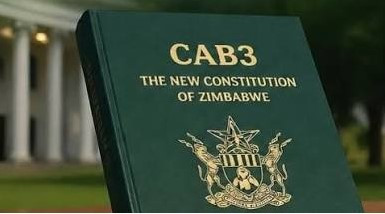
On February 10, 2026 the Cabinet of Zimbabwe approved the Constitution of Zimbabwe Amendment Number 3 Bill, a piece of proposed legislation that its architects have framed as a technical modernisation of electoral cycles but whose cumulative effect is the fundamental reordering of the country’s constitutional architecture.
The Bill, gazetted by the Speaker of Parliament six days later, does three things of profound political consequence.
It proposes to extend presidential and parliamentary terms from five to seven years.
It replaces the direct popular election of the President with election by a joint sitting of Parliament. Furthermore, it grants the President the power to appoint an additional ten senators, enlarging that chamber to ninety seats.
- Mr President, what message do you have for diasporan Zimbos at UNGA?
- Don't muzzle Gukurahundi survivors: UN
- UN has exposed ED deception
- Businessman piles pressure on top judge
Keep Reading
The practical arithmetic of these provisions is not difficult to follow. President Emmerson Mnangagwa, who turned 83 in 2026 and whose second and constitutionally final term expires in 2028, would under the transitional provisions of this bill remain in office until 2030.
Constitutional lawyer Thabani Mpofu has gone further, warning that if the Bill is enacted before September 2026 the reset of the Presidential clock could theoretically extend that tenure to 2033.
The government has dismissed such analysis as alarmist. Justice minister Ziyambi Ziyambi has argued that removing direct presidential elections would eliminate what he termed election-mode toxicity and the political violence that accompanies it. Constitutional scholars have not been persuaded either.
The public hearings mandated under Section 328 of the constitution commenced on March 30, 2026 and were marked from the outset by disorder, overcrowding and credible allegations that supporters of the Bill were bussed into venues to create the appearance of popular endorsement.
Three civil society organisations formally withdrew from the process, describing it as fundamentally flawed and inconsistent with the spirit of the constitution.
A group of retired military generals and liberation war veterans, represented by retired Air Marshal Henry Muchena, wrote to parliament, demanding that any constitutional change of this magnitude be subjected to a national referendum, invoking the precedent of the 2000 referendum in which voters rejected a military-drafted constitutional proposal.
The African Union sent representatives to Harare in April 2026 to discuss the reform process.
The European Union Ambassador to Zimbabwe offered a notably restrained response, acknowledging Zimbabwe’s sovereign right to determine its own constitutional arrangements.
The international community, it appears, has concluded that if the process remains formally peaceful it will not intervene.
Zanu PF holds a supermajority in the National Assembly and traditional leaders in the Senate vote reliably with the ruling party caucus.
Passage of the Bill, should the party remain cohesive, is a matter of arithmetic. What is not arithmetic is the legitimacy cost and what that cost compounds over time in a country where the wounds of democratic rollback have never fully healed.
- Mining as the engine and the wager
Zimbabwe’s Treasury has projected economic growth of five percent for 2026, a figure anchored substantially in the performance of the mining sector which contributes in excess of 75 percent of the country’s export earnings.
l To read full article, visit www.theindependent.co.zw
Ndoro-Mkombachoto is a former academic and banker. As a Systems Transformation Strategist, she has helped multilateral agencies, like the UN, IFC/World Bank, DANIDA, CIDA, GTZ, etcetera, future-proof their operations in markets where the rules are still being written, including private and public sector companies like SeedCo Zimbabwe/International and Hwange Colliery, operating in volatile emerging markets and constrained ecosystems, solve the complexity of institutional alignment, by using strategy frameworks that turn systemic constraints into growth engines. Gloria is the current Chairperson of NetOne Financial Services PLC, a subsidiary of the MNO NetOne Follow Gloria on YouTube — @HeartfeltwithGloria or contact her on [email protected]
The government’s strategic calculation is straightforward: Zimbabwe sits atop reserves of lithium, platinum, diamonds, gold and chrome that are of genuine global significance.
The question has never been whether those resources exist. The question has been who processes them and who captures the resulting value.
The answer the Mnangagwa administration has chosen is unambiguous. An immediate ban on the export of raw mineral concentrates, including lithium, was imposed to compel local beneficiation.
The logic of this policy is defensible. Countries that export raw materials at the bottom of global value chains consistently fail to accumulate the capital necessary for structural economic transformation.
The ban is intended to force investment in processing infrastructure and to retain within Zimbabwe a larger share of the wealth generated by its geological endowment.
Mining sector growth was estimated at roughly seven percent in 2025 with sustained performance expected through 2026.
The risks of this strategy are equally clear. Blanket export bans could potentially deter the very foreign investment required to build the processing capacity that would make beneficiation economically viable. Investors willing to commit capital to a jurisdiction must have confidence that the rules will not change again the moment a new political calculation emerges.
Zimbabwe’s record on policy consistency is not one that invites unconditional confidence.
Whether the resource nationalism of 2026 represents a durable industrial policy or an opportunistic intervention will be answered not by the ban itself but by what is built in its wake.
- The currency experiment: ZiG and the long road from instability
In April 2024, Zimbabwe introduced the Zimbabwe Gold (ZiG), to replace the Zimbabwe dollar which had by that point become a currency in name only.
The introduction of ZiG was accompanied by a specific institutional commitment that distinguishes it from every previous Zimbabwean monetary experiment: the Reserve Bank of Zimbabwe pledged that total ZiG in circulation would be backed by hard reserves comprising gold holdings and foreign currency deposits.
As of March 2026, those reserves stood at approximately US$1,4 billion, including 3,4 metric tons of gold.
The exchange rate on the interbank market held within a band of ZiG25 to ZiG27 per United States dollar for much of 2025 and into early 2026. Annual inflation fell to 4,1 percent in January 2026, a figure that would have been unimaginable in the hyperinflationary years that scarred an entire generation of Zimbabweans.
In April 2026, the Reserve Bank began circulating a new series of banknotes featuring the Big Five wildlife of Zimbabwe, in denominations ranging from one to two hundred ZiG, designed with enhanced security features and greater durability.
The practical purpose was to reduce the retail sector’0s dependence on improvised change mechanisms.
In addition, the government has mandated that fifty percent of corporate taxes and duties be settled in ZiG, a measure intended to stimulate genuine domestic demand for the currency rather than relying on administrative fiat alone.
The longer-term objective, articulated in what authorities describe as a de-dollarisation roadmap, is a mono-currency economy by 2030, yet most recently, the Ministry of Finance appeared to be distancing itself from that agenda.
That objective remains genuinely ambitious. The United States dollar still dominates approximately 85 percent of transactions in the Zimbabwean economy. Trust in local currency is not rebuilt by decree.
It is rebuilt by years of demonstrated fiscal discipline, by a government that resists the temptation to instruct the central bank to monetise its obligations and by institutions whose independence is not performative.
The Mnangagwa administration has committed publicly to all of these things. The commitment is being watched with the particular scrutiny that Zimbabwe’s monetary history demands.
- The industrial horizon: Steel, roads and the 2030 blueprint
The most visible expression of Zimbabwe’s development ambition in 2026 is physical. The Dinson Iron and Steel Company plant, a new entity that launched its project in Mvuma, commissioning Africa’s largest integrated steel plant in 2024, representing an investment of approximately US$1,5 billion and an annual production capacity of 600 000 tonnes, is approaching operational readiness.
It is the centrepiece of an industrial cluster that has attracted over US$2 billion in total investment to the Midlands and which the government intends as the foundation of a manufacturing economy that has remained aspirational for decades.
Manufacturing capacity utilisation reached 57 percent in the first quarter of 2026, up from 47,7 percent in the same period of 2025. The government's National Development Strategy 2, covering the period 2026 to 2030, prioritises rural industrialisation, infrastructure development and economic formalisation as its central pillars. Progress on the Harare to Beitbridge and Chirundu highway corridors is advancing in ways that have tangible implications for regional trade logistics. Investment in the Gwayi-Shangani and Kunzvi dam projects addresses the water and energy constraints that have historically throttled industrial output.
The coherence of this industrial programme should not be overstated. Capacity utilisation at 57 percent means that four in every ten units of productive potential in Zimbabwe’s manufacturing sector remain idle. Infrastructure projects of this scale are vulnerable to financing gaps, contractor performance failures and the kind of governance pressures that have derailed similar ambitions in the region. What can be said with confidence is that the physical infrastructure being laid in 2026 is more substantial than anything Zimbabwe has attempted since independence and that the Manhize steel plant in particular represents a qualitative shift in the country’s industrial geography if it performs as designed.
- The diplomatic Reset: Friend to all, servant of none
Zimbabwe’s foreign policy posture in 2026 is being deliberately reconfigured. The administration has articulated what it describes Zimbabwe a “friend to all philosophy”, a formulation designed to signal the end of the ideological rigidity that defined Zimbabwean diplomacy through the sanctions era and to position the country as a pragmatic economic actor in a multipolar world. Foreign missions are being restructured from traditional diplomatic posts into what the government calls economic and commercial promotion hubs, a shift that reflects the primacy of investment attraction and trade facilitation in the foreign policy mandate.
Zimbabwe has launched a campaign for a non-permanent seat on the United Nations Security Council for the term beginning in 2027. The bid is intended as a statement of international re-engagement and a mechanism for elevating Zimbabwe’s voice in global governance forums. Parallel to this, negotiations with the United States over a substantial health aid package have stalled, a development that has accelerated Zimbabwe’s pivot toward Beijing for infrastructure financing and technical cooperation. The Look East policy, which has been a feature of Zimbabwean foreign policy since the early 2000s, is being deepened rather than reversed even as the administration pursues selective rapprochement with European partners. The European Union and United Kingdom have increased diplomatic engagement and certain sanctions have been lifted, though the relationship remains encumbered by unresolved concerns over human rights and governance.
President Mnangagwa’s participation in the 2026 World Government Summit in Dubai exemplified the tone of this repositioning: Zimbabwe presented itself as a country open for business, eager for investment and prepared to engage any partner willing to engage on terms of mutual economic benefit. Whether this posture translates into sustained capital inflows will depend not on the rhetoric of diplomatic summits but on the quality of the institutions and legal frameworks that foreign investors encounter when they arrive.
Ndoro-Mkombachoto is a former academic and banker. As a Systems Transformation Strategist, she has helped multilateral agencies, like the UN, IFC/World Bank, DANIDA, CIDA, GTZ, etcetera, future-proof their operations in markets where the rules are still being written, including private and public sector companies like SeedCo Zimbabwe/International and Hwange Colliery, operating in volatile emerging markets and constrained ecosystems, solve the complexity of institutional alignment, by using strategy frameworks that turn systemic constraints into growth engines. Gloria is the current Chairperson of NetOne Financial Services PLC, a subsidiary of the MNO NetOne Follow Gloria on YouTube @HeartfeltwithGloria or contact her on [email protected]