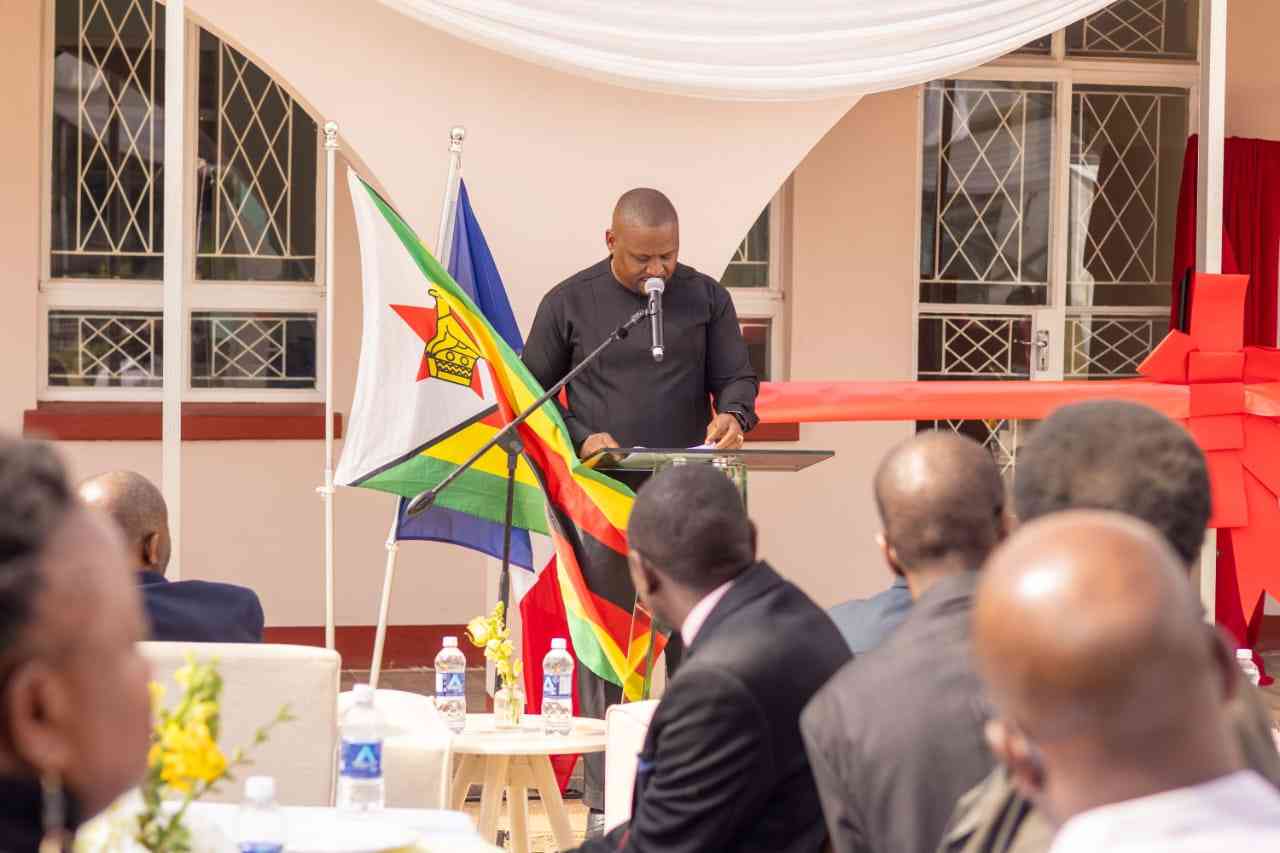
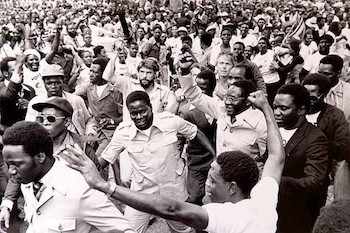
EVERY year on April 18, we celebrate Zimbabwe’s Independence. The flag is hoisted, the Independence flame is lit, speeches are made, and we remember the sacrifices that brought us here. It is a moment of pride, reflection and national identity.
Independence is often spoken of as a finished achievement. As something won, something secured. But perhaps it is also something we must keep interrogating. Because beyond political freedom, there are other forms of independence that are less visible, yet deeply felt in our everyday lives. Cultural independence. Religious independence. Social independence. Mental independence. And for many women, this is where the question of freedom becomes more complex.
It is important to note that Zimbabwe has made important strides in advancing the rights and status of women since Independence.
The Legal Age of Majority Act (1982) marked a significant turning point, recognising women as adults with full legal capacity. It shifted long-standing perceptions that placed women under perpetual guardianship. Before this Act, women were not considered fully capable of making their own decisions. In many ways, they were treated as children, regardless of their age.
Imagine being an adult woman and being unable to open a bank account without a man as a chaperone. In today’s terms, imagine trying to register a SIM card and being told you cannot do so without a man signing on your behalf. Something so simple, right?
The Domestic Violence Act (2006) acknowledged a reality that had long been silenced. It recognised that harm within the home is still harm, and it deserves protection and accountability. It gave women legal grounds to seek protection from abuse, even within intimate relationships, reminding us that safety and dignity should not end at the doorstep of the home.
Our constitution, particularly Section 56, affirms the principle of equality and non-discrimination. It speaks clearly to the idea that all people, regardless of gender, are equal before the law. Beyond national frameworks, Zimbabwe is also a signatory to regional and international commitments such as the Maputo Protocol, which affirms women’s rights across Africa, including dignity, equality and protection.
These are not small achievements. They matter. They reflect a country that has, in many ways, committed itself to the liberation and empowerment of women. And yet, in my opinion, the lived experiences of many women tell a more complicated story. Because the independence of women on paper does not always translate into their independence in practice.
- Total shutdown looms
- ED dithers on policy
- All set for Miss Chitungwiza 2022
- ED dodges dying Zimdollar
Keep Reading
There are still expectations about who a woman should be, how she should behave, how she should speak, and what she should endure. These are expectations that are rooted in culture, reinforced in families, and sometimes echoed in religious spaces. They are often presented as tradition, as morality, as “the way things are”. Or simply “the way things are done”.
From a young age, many girls are taught (directly or indirectly) the limits of their independence. How to speak, how to sit, how to carry themselves, how to dress, how to avoid bringing “shame”. These lessons may not always be framed as restrictions, but over time, they shape what feels possible and what feels off-limits.
And so, even in a politically-independent nation, many women continue to navigate their lives within invisible boundaries. Many spaces still ask women to shrink themselves. To be strong, but not too strong. To have a voice, but not one that challenges too much. To pursue ambition, but never at the cost of being seen as “too much”. To speak, but only when spoken to.
In these moments, freedom begins to feel conditional. It raises difficult but necessary questions: What does it mean to be free if your choices are constantly filtered through expectation? What does freedom look like if your voice must be softened to be accepted?
Many women are still negotiating their autonomy in their own homes, communities and institutions?
For some women, these negotiations are subtle. For others, they are more visible — in decisions around education, career, relationships and even bodily autonomy. The ability to make choices freely is often influenced by how those choices will be perceived, judged, or resisted.
And this is where the idea of mental independence becomes important. Because independence is not only about laws or policies, as important as those are, it is also about mindset. It is about the freedom to think, to question, to choose and to exist without being confined by fear or expectation.
Mental independence is the ability to make decisions without constantly negotiating with internalised limitations. It is the freedom to imagine a life beyond what has been prescribed. But mental independence does not exist in isolation. It is shaped by the environment. By culture, by religion, by community and society norms. And when those environments reinforce narrow definitions of womanhood, independence becomes something that must be carefully managed rather than fully lived.
Religion, for example, plays a significant role in many communities. It offers guidance, structure and meaning. But at times, interpretations of faith can also reinforce expectations about submission, silence and endurance, particularly for women. The same can be said of cultural norms, which often place a high value on respectability and conformity.
These influences are complex. They are not inherently negative. But when they limit women’s ability to fully exercise their agency, they become part of the broader conversation about independence.
Independence Day remains one of the most important milestones in our history. It is something to honour, something to protect, something to celebrate. But perhaps honouring it fully requires us to go a step further. To examine the spaces where freedom has not yet fully reached.
For women, Independence is not just about the absence of colonial rule. It is also about the presence of agency. The ability to make decisions about one’s life without fear, without shame and without unnecessary limitation. It is about being able to exist fully — not as an exception, but as a norm.
And this kind of independence cannot be legislated alone. It lives in our attitudes, our conversations and our everyday interactions. It is reflected in how we raise our daughters and sons. In how we interpret culture. In how we practise faith. In how willing we are to question norms that no longer serve us. It also lives in how we respond when women choose differently. When they speak up, take up space, or challenge expectations. Whether we support them, judge them, or quietly distance ourselves. Because Independence is not only about systems. It is also about society.
Perhaps the work of Independence is not complete. Perhaps it is ongoing. Evolving with each generation, requiring us to look not only at the past, but also at the present. Not only at the structures around us, but also at the beliefs we carry within us.
Forty-six years after Independence, Zimbabwe has much to be proud of. The progress made, the resilience shown and the systems built all tell a story of a nation that has moved forward. But progress is not the same as completion.
And so, as we mark another year of Independence, maybe the question is not only how far we have come, but how much further we are willing to go.
How do we ensure that the freedoms we celebrate about women are not just symbolic, but tangible in the everyday lives of women? Because true Independence for women should be felt — not just remembered.
And perhaps the most meaningful way to honour Independence is not only to celebrate it, but to continue the work of making it real, especially when it comes to the freedom and independence of women.
Madamombe is a gender and communications expert. These weekly New Horizon articles, published in the Zimbabwe Independent, are coordinated by Lovemore Kadenge, an independent consultant, managing consultant of Zawale Consultants (Pvt) Ltd, past president of the Zimbabwe Economics Society and past president of the Chartered Governance & Accountancy Institute in Zimbabwe. — [email protected] or mobile: +263 772 382 852.