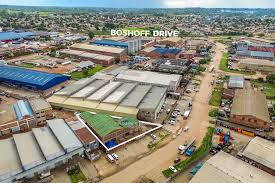
In 2021, Boshoff Drive, that critical artery cutting through Sunningdale in Harare and stretching to Simon Mazorodze Road in Houghton Park, stood as a symbol of renewal.
Freshly rehabilitated under the Second Republic’s much-vaunted Emergency National Road Rehabilitation Programme (ENRRP), it embodied promise. Smooth, clearly marked and efficient, it reduced what had been a punishing commute to a brief, almost effortless drive. For a moment, Zimbabweans believed something progressive was finally taking shape in a city long battered by neglect and plunder.
They were wrong, very wrong.
Barely five years later, Boshoff Drive has collapsed into a disgrace — the kind of workmanship one would associate with a rushed, careless job. What was once a flagship project is now a hazardous obstacle course for commuters and commerce. The tar has disintegrated into dust. Gullies and craters have replaced carriage markings. Commutes that once took minutes now stretch into hours of frustration, damage and risk.
This is not normal deterioration. It points to something far more troubling.
How do roads built decades ago still hold, while those commissioned only yesterday crumble so spectacularly? The answer cannot simply be traffic volumes or weather. It speaks to quality, or the lack of it.
Up to US$8 million may have been poured into Boshoff Drive. Yet what remains suggests not durable engineering, but cosmetic patchwork — layers that appear designed to fail prematurely. What motorists are driving on today raises a disturbing possibility that some roads are being built not to last, but to return.
That is where this story darkens.
- Post-election crisis flashpoints
- Attempted murder accused CCC MP, councillor set free
- Deadly dogs menace: Harare sets shoot to kill policy as cases mount
- Criminal enterprise embedded within public infrastructure
Keep Reading
There is growing suspicion that parts of Zimbabwe’s road rehabilitation programme have been captured by a corrosive cycle: build cheaply, allow rapid deterioration, then re-tender the same projects. It is a model that rewards failure and entrenches dependency on repeat contracts.
If that is the case, then this is no longer incompetence. It is organised plunder.
Evidence from across the construction sector suggests the rot runs deeper.
Contractors themselves are now sounding the alarm. The Zimbabwe Building Contractors Association (ZBCA) says the industry is facing a “systemic catastrophe”, driven by a culture in which government officials award contracts without secured funding. Firms mobilise, borrow and commit resources — only to go unpaid for months, sometimes years.
This, too, may be part of the problem. Weakened contractors, starved of capital, are unlikely to deliver durable infrastructure at scale.
But the consequences are devastating. Companies are collapsing under unpaid certificates. Banks are auctioning equipment, vehicles and even family homes pledged as collateral. Behind the statistics lies a quieter tragedy. There is an industry being destroyed from within.
Yet, at the same time, a select group of contractors appears to remain entrenched — returning repeatedly to public projects, including roadworks, regardless of quality outcomes.
The contradiction is such that on one hand, legitimate firms are being driven into insolvency. On the other, the same roads are being resurfaced again and again.
Boshoff Drive fits this pattern uncomfortably well.
Today, contractors are back on site. The same road is being reworked, and if the underlying incentives remain unchanged, there is every reason to believe the cycle will repeat itself again and again.
This is not development but extraction.
Zimbabwe cannot afford to normalise this.
If roads are being deliberately underbuilt to justify future tenders, then the country is confronting a criminal enterprise embedded within public infrastructure delivery. It demands urgent and uncompromising scrutiny.
Authorities must investigate how contracts are awarded, how projects are supervised, and why completed works are failing so quickly. Payment systems must be cleaned up, but so too must procurement practices. Without accountability, reforms will remain cosmetic.
Zimbabweans are paying for these failures through taxes, vehicle damage, lost time and productivity. They deserve roads that endure, not projects designed to collapse.
Boshoff Drive is no longer just a road. It is evidence.
Stop the looting.