
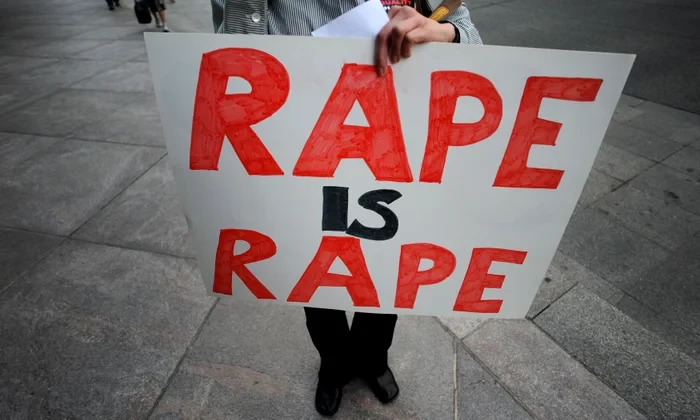
The recent conviction of former Old Mutual executive Musa Nyasha Dube Manyika on two counts of rape, for which he received a 15-year prison sentence, has ignited a heated national conversation. Social media platforms have been flooded with commentary, speculation and disbelief.
Some observers question how such acts could have occurred. Others construct elaborate conspiracies about power, gender and corporate intrigue. Beneath the noise, however, lies a far more troubling reality.
What the debate reveals is not merely public fascination with a sensational court case, but the deeper workings of what scholars and activists call “rape culture”, a social climate in which sexual coercion is normalised, survivors are doubted and perpetrators are shielded by silence, status or confusion about the meaning of consent.
Zimbabwe’s moment of reckoning should not revolve around the personality of one convicted man, Manyika. The real issue is a cultural and institutional environment that still struggles to grasp a simple principle: when a woman says no, the matter ends there. A “no” is not negotiation. A “no” is not a “yes”! A “no” is not persuasion’s starting point. It is not a challenge to male persistence. It is final.
Rape is often discussed in language that softens its reality. People speak of “sexual encounters gone wrong,” of “miscommunication,” or of situations where “lines were blurred.” Yet the law and basic moral reasoning are clear. Rape is not fundamentally about sex. It is about power. Rape occurs when one person asserts control over another’s body through force, intimidation, manipulation or exploitation of vulnerability. It is the moment when one individual decides that another’s autonomy no longer matters.
In societies structured by unequal power relations, the risk of this abuse increases dramatically. Patriarchal traditions, economic dependence and social hierarchies often combine to create an environment where men feel entitled to access women’s bodies and where women feel unsafe resisting that entitlement.
Zimbabwe is not unique in this regard. Across the world, countless studies show that sexual violence flourishes wherever power is concentrated in ways that discourage dissent. But our own national context adds specific layers of complexity.
A young intern in a corporate office, dependent on professional recommendations and income, may find it extraordinarily difficult to challenge a senior executive. The imbalance of authority alone transforms a supposed choice into silent coercion. Consent cannot exist where fear or pressure sits quietly in the room.
- Abducted tourists remembered
- Abducted tourists remembered
- Ex-ZBC journo speaks of ‘hiding’ atrocities
- Ex-ZBC journo speaks of ‘hiding’ atrocities
Keep Reading
For all the complicated debates that surround sexual violence, the principle of consent is remarkably straightforward. Consent must be voluntary, informed and ongoing. It cannot be extracted through pressure, assumed from silence or manufactured through authority.
Consent is not implied by previous relationships. It is not granted by employment hierarchies. It is not transferable from one moment to the next. Most importantly, consent can be withdrawn, at any point. When someone says “no”, whether gently, firmly or desperately, that word carries absolute meaning. It does not require justification or explanation. The dignity of the human body rests precisely on this capacity to decide what happens to it.
Yet rape culture thrives when this clarity becomes clouded by excuses. We hear questions such as: ‘Why did she go to his office?’ “Why did she stay in the room?” “Why did she wait to report?” Such questions subtly move suspicion away from the accused and onto the victim. Instead of asking why a man violated another person’s boundaries, society begins asking why the woman failed to prevent it. This reversal of moral scrutiny is the oxygen that keeps rape culture alive.
Zimbabwe’s history contains cultural threads that complicate our relationship with bodily autonomy. In many communities, stories still circulate about marriages arranged through coercion or situations where a girl was compelled to marry her attacker to “restore family honour.” These practices are often dismissed today as relics of a distant past, yet their underlying assumptions have not entirely disappeared.
They reflect an older worldview in which women’s bodies were treated as assets within family and communal negotiations. Honour was collective, but autonomy was not. Modern Zimbabwe, of course, has made significant legal and social progress. Women hold positions in government, academia and corporate leadership. Laws recognise sexual violence as a serious criminal offence. Yet cultural memory lingers, shaping attitudes in subtle ways.
One manifestation is the persistent myth of male sexual entitlement. From adolescence onward, many boys absorb messages that masculinity requires conquest and persistence. Films, music and casual conversation often celebrate the idea that a “real man” refuses to take no for an answer.
The language itself betrays the assumption. We speak admiringly of men who are “persistent,” “determined,” or “relentless” in pursuing women. But persistence can easily become pressure and pressure can slide into coercion.
When society romanticises this behaviour, it quietly teaches men that boundaries exist only to be tested. That is why to this day, women’s bodies continue to be policed, commodified or weaponised as instruments of family and communal power.
For survivors of sexual violence, the decision to report an assault is rarely simple. The aftermath of rape is not limited to physical trauma. It often includes a devastating social burden. Victims face suspicion from family members, professional consequences in the workplace and relentless scrutiny in the public sphere. In the age of digital commentary, social media becomes a second courtroom where strangers dissect a survivor’s behaviour, clothing and personal history. The effect is chilling. Many survivors conclude that silence is safer than exposure.
Even when cases reach court and convictions occur, public skepticism often persists as in the Manyika case and many others, too numerous to mention here. Online debates frequently reinterpret evidence to preserve a preferred narrative: that the powerful man must have been framed, the victim must have misunderstood and the truth must lie somewhere else.
Such reactions send a dangerous message. They suggest that a survivor must not only prove the crime but also defend her character against national speculation. Justice should not require that level of endurance.
Silence as institutional failure
Rape culture does not survive solely through individual attitudes. Institutions also play a role. Workplaces, universities and public organisations sometimes lack clear procedures for handling sexual violence allegations. Victims often do not know where to report misconduct or fear retaliation if they do. Human resources departments tend to always prioritise reputation management over accountability. When complaints disappear into bureaucratic silence, perpetrators learn an unmistakable lesson — that power protects.
Transparency and accountability are therefore essential. Organisations must establish confidential reporting mechanisms, protect whistle-blowers and ensure that investigations occur swiftly and independently.
Leaders who fail to address credible allegations should face consequences themselves. Justice cannot depend on the courage of victims alone. Institutions must carry their share of responsibility.
Violence and social memory
Zimbabwe’s broader historical experience also deserves reflection. Decades marked by liberation war, political conflict and economic upheaval have left complex psychological traces. In societies that have endured prolonged violence, domination sometimes becomes normalised in everyday interactions. Strength is admired. Control is mistaken for authority. Aggression slips into ordinary language.
These cultural residues do not cause rape directly, but they shape the environment in which coercive behaviour becomes easier to rationalise. If society celebrates dominance in public life, it may struggle to condemn it in private relationships.
Breaking this cycle requires redefining strength itself. True strength lies not in control over others but in respect for their autonomy.
Another recurring factor in sexual violence cases is the influence of status. Wealth, professional authority or political connections can create a sense of untouchability. When influential individuals believe consequences are unlikely, restraint weakens. History across many countries demonstrates that impunity breeds repetition.
When high-profile perpetrators escape accountability, the message spreads quietly, that power can purchase silence. This is why equal enforcement of the law matters so profoundly. Justice must not bend according to wealth, title or social standing.
A society committed to dignity must hold its most powerful citizens to the highest standards, not the lowest.
Addressing rape culture ultimately requires cultural transformation, not merely legal enforcement. Laws can punish wrongdoing, but they cannot alone reshape social attitudes.
Schools and universities should teach consent not as a technical legal concept but as a fundamental principle of human dignity. Young people must learn that healthy relationships are built on mutual respect, communication and equality.
Second but equally important is the role of men themselves. Male leaders, mentors and public figures must actively challenge the narratives that equate masculinity with dominance. When respected men speak openly about consent and respect, cultural expectations begin to shift.
Finally, masculinity need not be defined by conquest. It can be defined by responsibility.
A society serious about combating sexual violence must also care for those who have experienced it. Survivors require more than legal recognition. They need practical support as well. Accessible medical care, trauma counselling and legal assistance should be readily available. Reporting systems must protect confidentiality and shield victims from unnecessary exposure. Employers and educational institutions must guarantee that survivors are not punished professionally or academically for speaking out. Justice is not complete when a conviction is secured. It is complete when survivors can rebuild their lives without fear or stigma.
Amid complex debates about culture, history and institutions, it is easy to forget the central truth at stake. Consent is the foundation of human dignity. When a person says ‘no’, whether quietly or loudly, the conversation ends. No further interpretation is required. No negotiation follows. This principle must become the unshakeable centre of our social understanding, not only in courtrooms but in homes, workplaces and social spaces across the country.
Ndoro-Mukombachoto is a former academic and banker. She has consulted widely in strategy, entrepreneurship, and private sector development for organisations in Zimbabwe, the sub-region and overseas. As a writer and entrepreneur with interests in property, hospitality and manufacturing, she continues in strategy consulting, also sharing through her podcast @HeartfeltwithGloria. — +263 772 236 341.