ACROSS parts of Africa where instability lingers like a permanent season, it is tempting to reach for the familiar explanations: weak institutions, ethnic fault lines, the unfinished business of colonialism.
These factors do matter. But they do not fully explain why, in places so rich in strategic minerals, oil and transit corridors, chaos proves so durable.
Disorder is often treated as governance failure, but in reality, it frequently operates as an economic system. Where value is concentrated, instability often becomes a form of currency, negotiable, tradeable and, for some, highly profitable.
The assassination of Saif al-Islam Gaddafi, the son of Muammar Gaddafi, the unfinished war in Libya and the grinding instability of Central Africa, particularly the Democratic Republic of Congo (DRC) and beyond Africa, the recent capture of incumbent Venezuelan president Nicolás Maduro and his wife, Cilia Flores are not isolated tragedies.
They are signals. They tell us where power is being contested, where value is concentrated and where disorder has become negotiable currency.
This is not an appeal to conspiracy. It is an examination of incentives. Political economy, stripped of romance, asks a blunt question: who stands to benefit from this chaos? When we follow the money rather than the rhetoric of “fragility” and “complex emergencies,” a harder truth emerges. In certain contexts, instability lowers the price of access.
The inheritance of extraction
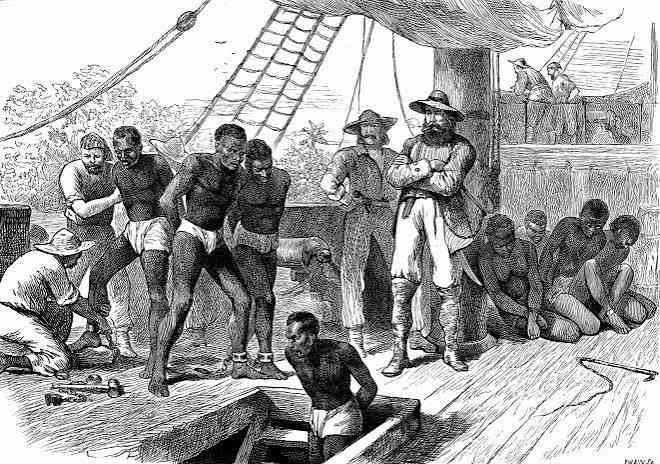
African states did not begin as cohesive economic units. Colonial borders were drawn for extraction, not integration. Rail lines ran from mine to port. Administrative systems were designed to move commodities outward rather than knit communities inward.
- In Full: Fifteenth post-cabinet press briefing, June 07, 2022
- Health talk: Be wary of measles, its a deadly disease
- Media challenged to expose all forms of phobias
- Health talk: Let us remain vigilant about monkey pox
Keep Reading
When independence came, political flags rose over economies still wired for export dependency.
That legacy explains vulnerability, but it does not justify persistence. More than six decades on, why do some regions remain locked in cycles of violence, particularly those that sit atop cobalt, coltan, copper, oil, or bauxite? Because instability is a useful business model.
Africa holds roughly a third of the world’s mineral reserves.
The DRC produces the majority of global cobalt, indispensable to electric vehicle batteries. Coltan from eastern Congo powers smartphones and military electronics. Guinea’s bauxite feeds aluminium production worldwide. Libya possesses Africa’s largest proven oil reserves, much of it light and inexpensive to refine.
These are not marginal assets. They are the backbone of global supply chains, from renewable energy transitions to defence industries. And supply chains prefer access that is swift, flexible and lightly regulated.
When deals proliferate
In stable environments, resource extraction moves through formal channels such as licensing regimes, parliamentary oversight, environmental assessments, labour protections, tax systems and courts. These processes are imperfect but visible. They create friction and friction costs money.
In unstable environments, access shifts from public law to private arrangement. Deals shorten and payments migrate off-book. Armed actors become gatekeepers.
Oversight thins while the cost of doing business rises, particularly in security terms. In addition, the cost of compliance falls dramatically.
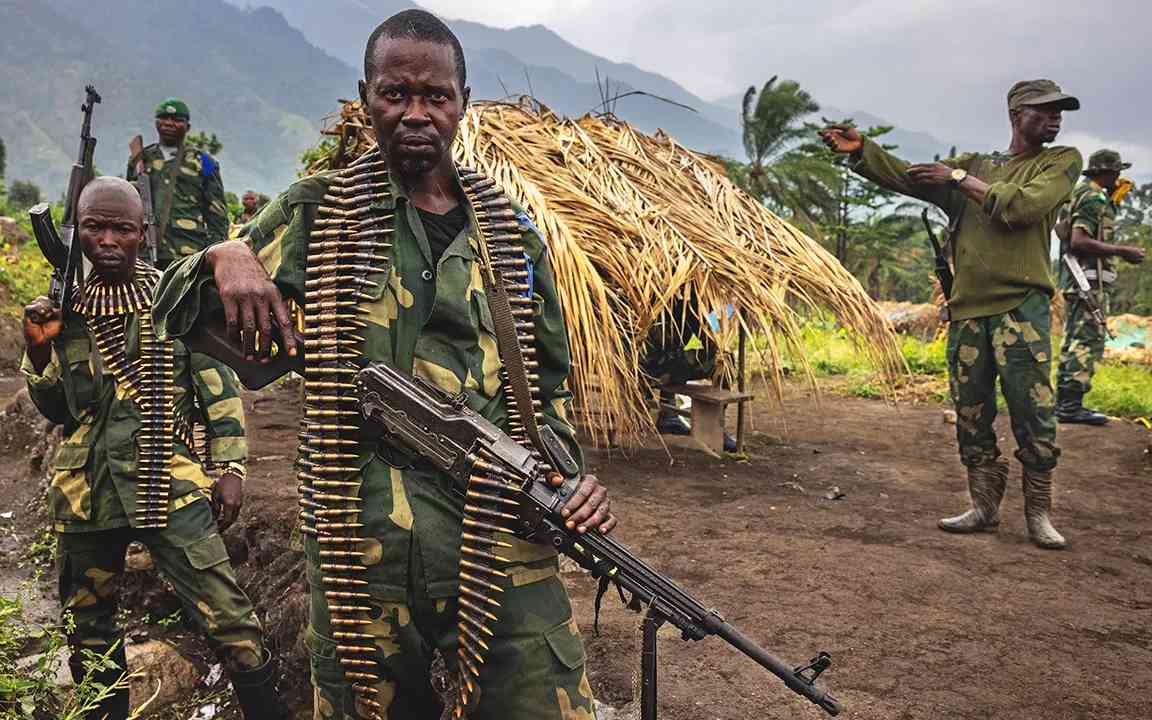
In eastern Congo, armed groups do not simply contest identity or ideology. They control pits, roads, river crossings and airstrips. Whoever commands the corridor commands value. Minerals extracted under coercive conditions are laundered through intermediaries, blended into global markets and ultimately embedded in the devices and batteries of distant consumers. What is apparent is, the violence is local, but he profit is international.
Libya offers a parallel, though at a higher geopolitical scale. Since the collapse of central authority in 2011, oil terminals and pipelines have functioned as bargaining chips in a fragmented political order.
Interruptions in production influence Mediterranean energy markets and European security calculations. Control over energy infrastructure confers leverage far beyond Libya’s borders.
In such contexts, violence is not irrational. It communicates control over assets. It signals who can grant or deny access.
The DRC: Emergency as structure
The DRC is often described as chronically unstable, as though instability were an intrinsic trait. This framing is misleading and, conveniently, absolving.
For over three decades, eastern Congo has endured overlapping conflicts. Armed groups splinter and reassemble. Peace accords pause fighting without dismantling the economic structures that fund it. Meanwhile, global demand for cobalt accelerates in the name of green transition.
The contradiction is stark: a decarbonising world powered, in part, by minerals extracted from zones of permanent insecurity.
Instability persists not because it is inevitable, but because too many actors tolerate it. Regional power brokers profit from smuggling networks. Multinational firms secure supply through layers of sub-contractors.
Armed groups tax extraction sites. The state, starved of revenue and legitimacy, struggles to assert authority without replicating predation. What then emerges is not an absence of order, but an alternative order — one structured around informal taxation, coercion and opaque transactions. Chaos becomes institutionalised and the business model.
Engineered or exploited?
It is seductive to imagine a single architect behind Africa’s conflicts. Reality is more diffuse. Instability is rarely choreographed from a central control room. More often, it is opportunistically exploited.
External actors have financed proxies, supplied weapons or offered diplomatic cover when doing so, aligned with strategic or commercial interests. Interventions have toppled regimes without securing institutional continuity.
Peace processes have halted gunfire without dismantling the war economies that made conflict lucrative in the first place.
Chaos does not require a mastermind. It requires permissive conditions and beneficiaries willing to live with the consequences. When militias are cheaper than courts, when private security, substitutes for public policing, when arms circulate more freely than teachers’ salaries, disorder becomes a rational, if brutal, equilibrium.
The human ledger
The beneficiaries of instability are seldom those who endure it. Civilians absorb the cost: displacement, sexual violence, environmental degradation, lost schooling, untreated illnesses and resource-rich provinces become sacrifice zones.
Government loses in three stages. First, through the direct theft or under-pricing of resources. Second, through uncollected taxes and capital flight. Third, through erosion of legitimacy when citizens cease to believe the state can protect or provide.
Once that belief collapses, governance becomes factional. Public authority fragments. Instability begins to reproduce itself, not through ideology, but through fatigue.
The global hypocrisy
The international community frequently expresses alarm at African instability while maintaining economic arrangements that quietly benefit from it. Supply-chain due diligence regimes exist, but enforcement is uneven.
Sanctions are applied selectively. Transparency initiatives are championed rhetorically yet diluted in practice.
Meanwhile, demand surges. Electric vehicles, renewable grids, advanced electronics, all depend on minerals disproportionately sourced from fragile regions.
The global energy transition is necessary. But necessity does not absolve complicity. If the green revolution is built on opaque extraction, it risks reproducing old patterns under new branding.
Disrupting the economics of disorder
Breaking this cycle requires more than humanitarian relief or periodic peacekeeping deployments. It demands altering incentives.
First, transparency must move from aspiration to obligation. Beneficial ownership disclosure, public contract registries and mandatory supply-chain traceability reduce the anonymity that shields exploitative arrangements.
Second, enforcement must be consistent. Sanctions that target armed groups while ignoring the commercial networks that purchase their output merely trim branches while watering roots.
Third, domestic institutional strengthening cannot remain rhetorical. Revenue authorities, courts, environmental regulators and parliamentary oversight bodies require sustained investment, not episodic technical assistance tied to donor timelines.
Fourth, African states must confront uncomfortable internal dynamics. Elite complicity is real. Political patronage networks often intersect with illicit trade. Reform threatens entrenched interests. Yet sovereignty without accountability, is merely a change of flag.
Finally, consumers and investors in wealthier markets must recognise their position in the chain. Ethical sourcing cannot remain a branding exercise. It must carry enforceable consequences.
None of these measures are costless. They raise transaction costs. They slow extraction. They complicate profit margins. But that is precisely the point. Disorder is attractive because it is cheap. Make it expensive and its appeal diminishes.
A question of sovereignty
At its core, the persistence of instability in resource-rich African regions is a sovereignty question. Who decides how value is extracted, priced, taxed and distributed? Who bears the environmental cost?
Who controls corridors and terminals? If sovereignty exists only on paper while real authority resides in informal networks, foreign intermediaries or armed actors, then instability will remain negotiable.
Africa’s challenge is not merely to end violence, but to make stability more profitable than chaos. This requires courage from domestic leadership, integrity from international partners and vigilance from civil societies. It requires rejecting narratives that portray conflict as cultural inevitability rather than an economic strategy.
Where value concentrates, competition intensifies. That is universal. But competition need not descend into perpetual disorder. The choice between rules and force, transparency and secrecy, sovereignty and capture is ultimately political.
Conclusion
The tragedy is not that Africa is unstable. The tragedy is that instability has been allowed to function as a business model.
And until that model is disrupted, until access through chaos becomes more costly than access through law, disorder will remain negotiable currency in places where the world’s appetite for minerals and oil is deepest. And the ledger of profit will continue to be balanced against African lives.
Ndoro-Mkombachoto is a former academic and banker. She is the chairperson of NetOne Financial Services, a subsidiary of NetOne Telecomms. She has consulted widely in strategy, entrepreneurship, private sector development, financial literacy/inclusion for firms that include Seed Co Africa, Hwange Colliery, Reserve Bank of Zimbabwe, Standard Bank of South Africa Home Loans, International Finance Corporation/World Bank, United Nations Development Programme, United States Agency for International Development, Danish International Development Agency, Canadian International Development Agency, Kellogg Foundation. Ndoro-Mkombachoto is a writer, property investor, manufacturer and keen gardener. Her podcast on YouTube is @HeartfeltWithGloria. —: +263 7713362177/ gloria@ sustainwisestrategies.co.za