As the world’s financial and political elites convened in the crisp Alpine air of Davos to discuss rebuilding trust and shaping the global future, a starkly different reality persisted and is ongoing in the sun-baked streets of Harare, the drought-stricken fields of Masvingo, and the overcrowded clinics of Bulawayo.
For the marginalised majority in Zimbabwe, the 99%, for whom each day is a calculation of survival, the World Economic Forum’s annual meeting is not merely irrelevant; it is a symbol of a global system that perpetuates their exclusion.

While billionaires and technocrats debate abstract models of inclusive growth, the lived experience here reveals a profound disconnect: Davos does not serve, see, or speak for the interests of Zimbabwe’s struggling multitude.
This disconnect is most deeply felt in the catastrophic collapse of public services, a direct result of the very global and local economic structures Davos often upholds.
The forum’s core failure lies in its foundational premise. It operates within a paradigm that prioritises the agendas of concentrated capital and geopolitical power, the very forces that have often exacerbated inequality in nations such as ours.
When global leaders in Switzerland urge public-private partnerships and foreign investment as universal panaceas, they overlook the local context where such schemes have frequently translated into resource extraction, profit repatriation, and little job security for locals.
The talk of empowerment rings hollow to a Zimbabwean youth facing endemic unemployment, for whom empowerment means a single day’s wage, not a vague digital initiative launched from a European hotel suite.
- Women turn disused mine pits into vegetable gardens
- Letter to my people: From leading railing firm to borehole drilling
- Mnangagwa’s Davos jaunt criticised
- Going to Davos is a costly jaunt
Keep Reading
The concrete catastrophe
The abstraction of Davos stands in brutal contrast to the tangible, daily degradation of Zimbabwe’s public services, a sector starved by debt, austerity, and systemic corruption.
This collapse is the primary lens through which the 99% experience state failure and global indifference.
The mention of overcrowded clinics barely scratches the surface. Public hospitals, which were once regional pillars, now operate as monuments of neglect. Chronic underfunding means shortages of the most basic essentials: painkillers, antibiotics, anaesthetics, and gloves.
Power outages routinely halt surgeries, and dialysis machines lie idle. Maternal mortality rates have soared, with women often required to bring their own sutures, gloves, and even water for childbirth.
The brain drain of doctors and nurses to the diaspora has crippled the system, leaving a skeletal staff to manage pandemics such as cholera and malaria, alongside endemic HIV/Aids.
For the majority, private healthcare is a fantasy, making illness a potential death sentence or a fast track to catastrophic poverty.
The functioning schools cited as a foundational need are a rarity. Many rural schools are crumbling structures without textbooks, libraries, or laboratories.
University education, was once a proud legacy, but is now increasingly inaccessible due to soaring fees, shutting doors for bright students from poor backgrounds.
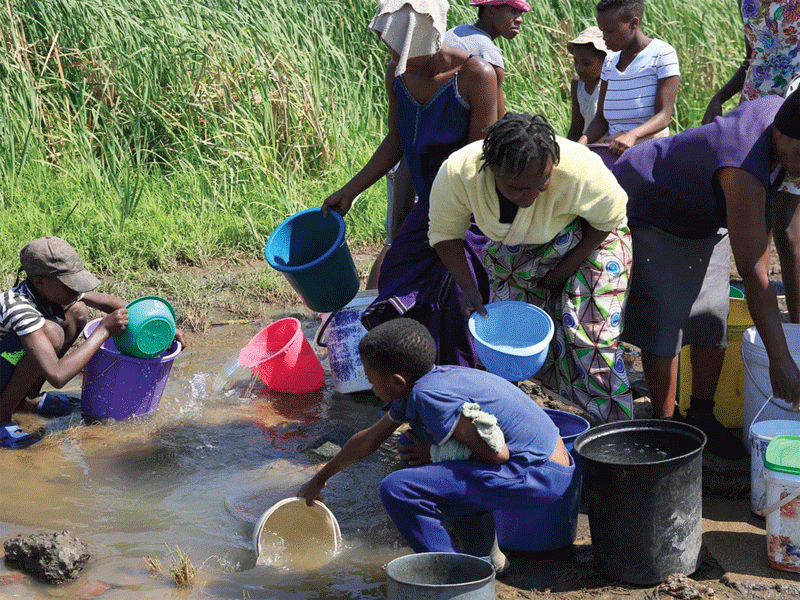
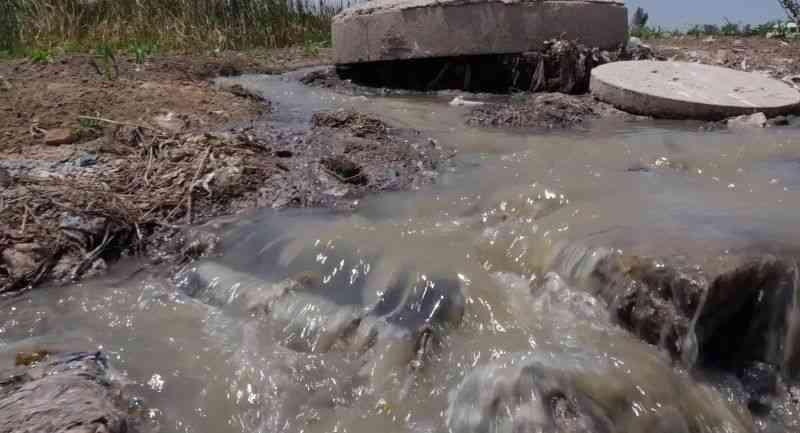
Beyond electricity and roads, the most basic human need — clean water — is a daily struggle. In cities such as Harare and Bulawayo, broken treatment plants and dilapidated pipe networks lead to erratic or non-existent water supply for weeks. Residents rely on unsafe wells or expensive water vendors, triggering recurrent cholera outbreaks.
Raw sewage often flows in streets, a grim testament to the total collapse of municipal infrastructure. This is not a backdrop for discussions on AI; it is a humanitarian emergency.
The electricity crisis is perennial. Hours, and often days, of load shedding paralyse homes, small businesses, and the remaining industry. This isn’t about green transitions but about the inability to keep the lights on, to refrigerate medicine, or to power a classroom fan.
Proposed Davos-style solutions such as green bonds for solar farms are irrelevant when the state cannot fund the maintenance of its existing, broken grid or create a regulatory environment that genuinely enables decentralised, affordable energy for the poor.
Furthermore, Davos discussions on climate, technology, and health are often framed through the lens of corporate opportunity and elite risk management. For the rural woman in Zimbabwe, battling successive crop failures, climate change is not a topic for a panel discussion; it is an empty granary.
The solutions proposed in carbon credits and advanced agricultural tech, are financially and logistically light years away from her reality, where even access to drought-resistant native seeds or a simple irrigation pump is a monumental challenge. Similarly, debates on the Fourth Industrial Revolution ignore the foundational crisis of our First Industrial needs.
The innovation that would most serve our 99% is not a blockchain pilot but a fair tax system and accountable governance that compels the ultra-wealthy, both local and global, to contribute meaningfully to rebuilding our collapsed public infrastructure — brick by brick, pipe by pipe, textbook by textbook. The most glaring indictment is the forum’s tacit endorsement of an unjust global financial architecture.
It is a space where the architects of tax havens, speculative capital flows, and debt instruments that cripple nations share stages with those who lament poverty.
Zimbabwe’s economic strife and the deterioration of its public services are deepened by this very system: illicit financial flows that drain billions needed for hospitals and schools, a global race to the bottom on corporate taxation that lets multinationals operating here contribute little, and lenders whose conditions have historically forced austerity onto social spending.
Davos participants may occasionally critique these issues, but the gathering itself is a node in the network that benefits from them.
It cannot genuinely champion the interests of the marginalised while being funded and attended by those who often benefit from their marginalisation.
Ultimately, for Zimbabweans, the path to justice and restored dignity is not charted in Davos. It is mapped in the relentless daily struggle for survival and in the demand for localised, sovereign solutions.
It is found in the call for a National Inequality Reduction Plan that transparently redistributes wealth and specifically earmarks funds for reviving public health and education.
It is in the fight to tax idle luxury assets and illicit wealth to fund the reopening of hospital wards and the restocking of pharmacies. It is in the grassroots community efforts to dig boreholes, support village health workers, and hold local councils accountable.
Our future will be built not by implementing prescriptions from a mountain retreat, but by challenging the very power structures — global and domestic — that such a retreat represents and that have bled our public services dry.
The true rebuilding of trust will begin not when the global elite finally listens, but when the voices, needs, and basic right to functioning public services of Zimbabwe’s 99% become the non-negotiable foundation of our own economic and political life.
Davos’ echo is distant and fading; our focus must remain fixed on the ground beneath our feet, where the work of real, inclusive change, repairing the very fabric of our society, must truly begin.
- Yollander Millin is a Social Economic Justice Ambassador. These weekly New Horizon articles, published in the Zimbabwe Independent, are coordinated by Lovemore Kadenge, an independent consultant, managing consultant of Zawale Consultants (Private) Limited,past president of the Zimbabwe Economics Society and past president of the Chartered Governance Accountancy Institute in Zimbabwe, — [email protected] or mobile +263 772 382 852.