

On February 23, 2025, I was arrested over allegations of broadcasting information likely to incite public violence. Close to a year later, the matter is still alive before the courts, with only one witness so far having been led by the state in a case that, to my knowledge, has six state witnesses. This could mean that we still have a long way to conclude the trial.
Since my arrest last year, my passport has been held by the clerk of court as part of my bail conditions. I report to the police weekly and must stay at my given address, while my US$500 is somewhere in a government account.
I raise this to explain why Zimbabwe, as a constitutional democracy, has embedded within its laws fundamental rights for accused persons, among which is the right to a fair trial within a reasonable time.
This right is provided in Section 69 (1) of the Constitution, which speaks to the right to a fair hearing and is framed as follows: “Every person accused of an offence has the right to a fair and public trial within a reasonable time before an independent and impartial court.”
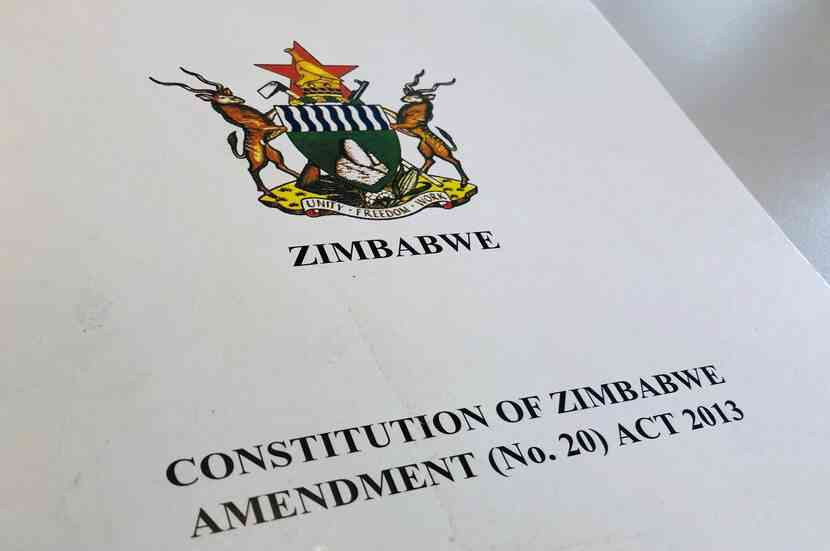
Our courts, particularly those dealing with the old constitution, have addressed the aspect of what length of time is considered “reasonable time,” which varies from case to case, as noted by the Constitutional Court in the case of Artwell Chikumbu v the State, where the court reasoned: “The right to a hearing within a reasonable time is enshrined in the Constitution. Although the term ‘reasonable time’ is not defined in the Constitution, this depends on the circumstances of each case.”
In arriving at a determination of what the Constitution means by reasonable time, our courts have set reference points, particularly in the matter of State v Nhando & Ors 2001 (2) ZLR 84 at 86 A-B (S), where then Acting Chief Justice Chidyausiku outlined the following considerations:
- The length of the delay;
- The reasons for the delay;
- The assertion by the accused of his or her right to a trial; and
- The prejudice to the accused caused by the delay.
In my case, I spent 73 days in remand prison during which the state was strenuously opposed to me being granted bail, yet they always had one excuse after another regarding providing me with a trial date and even starting the trial.
- ED’s influence will take generations to erase
- ‘Govt spineless on wetland land barons’
- Govt under attack over banks lending ban
- Zim Constitution must be amended
Keep Reading

Even after being granted bail, my life has been interfered with to the great prejudice of both myself and my family because, for a year now, I have not been able to freely practice my craft and trade as a journalist.
My work involves travelling within and outside the country, but I have been unable to do either due to reporting conditions that limit my ability to travel around the country as news is happening.
Moreover, I have failed to travel outside the country because my passport was being held as bond by the clerk of court for a whole year until last week when it was released in lieu of title deeds worth US$200 000.
Owing to these delays, I have suffered prejudice. As stated in State v Taenda 2000 (2) ZLR 394 (H) on prolonged trials: “In general, an unreasonable delay to the finalisation of criminal proceedings causes prejudice to the accused. He suffers social prejudice arising from doubt as to his integrity or conduct. The presumption of innocence does not, in the eyes of the public, family, and friends, continue to operate as long as he is on remand …”
My case is not isolated; this has become a common trend in many cases before our courts today. Job Sikhala was to spend two years in pre-trial detention while the courts took their precious time to go through the paces. In the matter of State v Namatai Kwekweza and others, the case took more than a year to conclude. The accused were arrested just days before President Emmerson Mnangagwa was made Sadc chairman and were only acquitted after the chairmanship had already been passed to Madagascar.
Yet, the Constitution itself provides another safeguard that continues to be ignored by the courts and judicial officers. This is concerning because, according to a memo authored by Prosecutor General Loice Matanda Moyo, remand prisons are now overcrowded with individuals who are staying there for worryingly long periods.

The question that begs answers is: how can this be so when the supreme law of the land grants accused persons the right to be released from remand prisons if they are not “tried within a reasonable time”? This right is located in Section 50(6), which reads: “Any person who is detained pending trial for an alleged offence and is not tried within a reasonable time must be released from detention, either unconditionally or on reasonable conditions to ensure that after being released they— (a) attend trial, (b) do not interfere with the evidence to be given at the trial, and (c) do not commit any other offence before the trial begins.”
It is important to understand that these rights are not provided in isolation but are a reinforcement of other rights afforded to accused persons, especially the right to be presumed innocent until proven guilty, as correctly noted in the memo by the Prosecutor-General when she wrote: “Our law scoffs at pre-trial incarceration. An accused is presumed innocent until proven guilty.”
This principle of law seeks to minimise harm to accused persons who later turn out to be not guilty from the time they are accused of an offence until a verdict or judgment is passed.
A parliamentary report released last year decried what it termed “pre-trial detentions of thousands, prolonged trials, and unaddressed minor offences that have ballooned the inmate population,” creating humanitarian and public health risks that the country can no longer ignore.
What is crucial is to understand that the Constitution is the supreme law of the land, as clearly spelt out in Section 2 of the document, which states: “(1) This Constitution is the supreme law of Zimbabwe and any law, practice, custom, or conduct inconsistent with it is invalid to the extent of the inconsistency.”
It is clear in my mind that prolonged trials and holding accused persons in remand prison for an unreasonable time is a violation of the Constitution and, therefore, conduct that is inconsistent with the law—sadly being enforced by the courts of law.
Scholars of law have argued that constitutional supremacy stands on two legs: “the existence of a written constitution and judicial review to check conformity with the constitution.” As reasoned by a Supreme Court judge of the United States in the famous case of Marbury v. Madison (1803): “The purpose of a written constitution is to outline and limit the powers of the legislature and other branches of government. Its principles are fundamental, and there can be no point in framing a constitution if the legislature could exceed the limits of the constitution.”
The right to a speedy trial is not merely a legal formality; it is a cornerstone of justice that safeguards the dignity and integrity of individuals within the legal system. Prolonged delays in trials not only infringe upon the rights of the accused but also undermine public confidence in the justice system. As Zimbabwe grapples with these challenges, it is imperative that judicial officers adhere to constitutional mandates, ensuring that the rights of the accused are upheld and that justice is served without unnecessary delay. The rule of law must prevail, and it is the responsibility of all stakeholders in the legal system to ensure that the principles enshrined in our Constitution are respected and enforced.
- Mhlanga is a law student and digital editor at Alpha Media Holdings. — X @bbmhlanga/ email: [email protected].