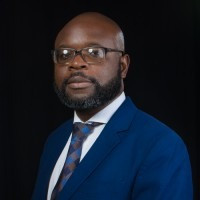

The head of a powerful West African mining lobby last week escalated the push for Zimbabwe to keep political interests out of the country’s US$16 billion sovereign fund, saying listing it on a stock exchange would be crucial.
Kenneth Ashigbey, executive director of the Ecowas Federation of Chambers of Mines and chief executive officer of the Ghana Chamber of Mines, said public ownership could provide the strongest safeguard against political interference in one of Zimbabwe’s most strategic assets.
His intervention came as debate intensifies over how Mutapa Investment Fund (MIF), which controls more than 30 strategic state enterprises and billions of dollars in assets, can be protected from political upheavals that have undermined public institutions across Africa.
Zimbabwe has entrusted MIF with some of its most valuable assets, including mining interests, energy firms, telecommunications companies, transport operators and agricultural enterprises.
Ashigbey warned that while Zimbabwe’s sovereign wealth fund model was attracting attention across the continent, its long-term success would depend on whether it survives changes in political leadership.
He argued that a stock exchange listing would broaden ownership, improve transparency and force the fund to comply with rigorous disclosure standards, creating institutional safeguards capable of outlasting political administrations.
“Any new administration could change it,” Ashigbey told the Zimbabwe Independent during last week’s Chamber of Mines of Zimbabwe annual general meeting in Victoria Falls.
“How do you ensure sustainability? One way I would recommend is listing it on the stock exchange in Zimbabwe, so that people can also invest in it. Another thing that a stock exchange would do is bring good governance, transparency and accountability, which are critical.
- Go back to the drawing board
- Treasury floats ambitious multi-billion-dollar bond
- Mutapa Fund given mandate to revive parastatals
- More questions raised over Mutapa Investment Fund
Keep Reading
“We know governments around Africa are not always the best when it comes to transparency and accountability, but listing it on the stock exchange would also help.”
The proposal is particularly significant because it comes from a leading African mining executive whose organisation represents some of the continent’s largest mining interests.
It also reflects a growing conversation across Africa about mobilising domestic capital, rather than relying solely on foreign investors, to finance strategic sectors such as mining.
“I think we need to acknowledge what Zimbabwe has done with its sovereign wealth fund, which is now investing in mines. That is a great way forward,” he said.
“In Africa, we need to start looking at the possibilities of getting our pension funds and sovereign funds that we have put together to invest in the mining industry.”
Established in 2023, MIF was created to manage government shareholdings in strategic state-owned enterprises and unlock value from public assets.
It has evolved into one of Zimbabwe’s most influential investment vehicles.
“One of the recommendations I have, if you look at Mutapa, is that it is important this new model is not sacrificed on the altar of any political change,” he said.
His remarks came as Zimbabwe seeks fresh investment into mining, the country’s largest export-earning sector and a cornerstone of government plans to transform the economy.
Authorities have set ambitious targets for the industry, banking on strong global demand for minerals such as lithium, gold, platinum and chrome.
However, miners continue to cite limited access to capital, policy uncertainty and infrastructure constraints as major obstacles to growth.
Ashigbey said African countries must rethink their reliance on foreign direct investment and begin mobilising domestic savings to finance mining development, particularly exploration.
“The point I make to Zimbabwe, and to Africa is that we have not got to where we need to be if we are only looking at foreign investment coming in,” he said.
“We also need to put our own money where our mouth is by investing, especially in exploration, because exploration is very risky, but without it there will be no mine.”
He revealed that Ghana was already exploring mechanisms to channel pension fund resources into mining and was studying approaches similar to Zimbabwe’s model.
“In Ghana, I would say the Zimbabwean example is the way to go. There is a conversation going on with our pensions regulatory authority to enable that kind of funding to come in,” Ashigbey said.
Beyond financing, he stressed that policy consistency remained one of the most important determinants of long-term mining investment.
“The mining industry is very capital-intensive and long-term in nature,” he said. “A typical example in Ghana is Newmont, which set up a greenfield mine. It spent US$1 billion before pouring its first gold. If there is no consistency and predictability, people will not put their money into your country.”
The stakes surrounding MIF are significant.
The fund controls interests in some of Zimbabwe’s most strategic enterprises, including the National Railways of Zimbabwe, Air Zimbabwe, Cottco, Kuvimba Mining House (which was unbundled last year), Silo Investments, National Oil Company of Zimbabwe, PetroTrade, POSB, TelOne, Arda, Zimbabwe Power Company, Powertel Communications, Allied Timbers, Telecel, Industrial Development Corporation, Hwange Colliery Company Limited, Zesa Holdings and Fidelity Gold Refinery.
Its combined assets were worth US$16 billion in 2025.
This vast portfolio has transformed MIF into one of Zimbabwe’s most powerful corporate entities.
Among its notable assets is the Cold Storage Commission (CSC), which operates one of Africa’s largest slaughtering facilities and owns extensive ranching assets across the country, including Maphaneni, Dubane, Umguza-Chomfukwe, Gwanda, Chivumburu, Mushandike, Zeederberg Belwigwe, Willsgrove Feedlot and Darwendale ranches.
The government’s objective is to revive these mostly underperforming firms.
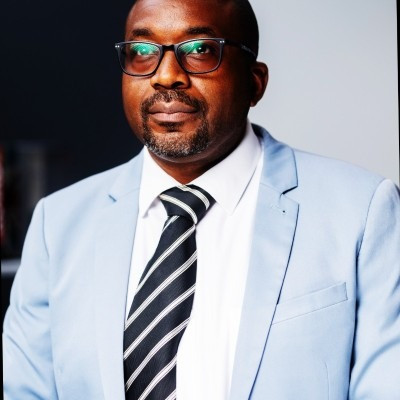
Ashigbey’s views closely mirror the ambitions articulated by MIF chief executive officer John Mangudya.
The former Reserve Bank of Zimbabwe governor told the Independent in 2024 that the fund intended to pursue offshore investments to enhance profitability and create greater value for Zimbabwe.
Just a week after committing US$5 million to Invictus Energy in exchange for a 5% shareholding then, Mangudya said MIF’s investment mandate extended far beyond state-owned enterprises.
The fund was at the time evaluating opportunities on international markets, including stock exchanges in London, New York and South Africa.
“If you look at the (MIF) Act, it says the sovereign wealth fund, which is the MIF, was capitalised by the transfer of state-owned enterprises into Mutapa,” Mangudya said then.
“But then, what do we do with the money that we get from these entities? We can invest it in any other transaction that we believe is good for the country.
“We want to invest in, say, the stock exchange in New York or in London or South Africa. If we think it is good money, we will do that. We are not confined to the state-owned enterprises.”
Zimbabwe’s capital markets include the Zimbabwe Stock Exchange and the Victoria Falls Stock Exchange, both of which could potentially host a future listing.
Since President Emmerson Mnangagwa transformed the sovereign wealth fund into MIF, the institution has been laying the groundwork for a broader investment strategy. The turnaround challenge is immense.
The contribution of state-owned enterprises to Zimbabwe’s gross domestic product has fallen from about 40% in the 1990s to roughly 12% in recent years.
Mangudya said reversing that decline remains central to MIF’s mission.
“That is why the MIF was formed — to transform these state-owned enterprises so that they can go back to the glory years by ensuring that we sweat their assets and transform the way they are doing business,” he said.
“By so doing, we also increase their value and increase wealth for the people of Zimbabwe. What we have said is we could ensure they go back to where they were before and surpass it.”
He believed state enterprises could eventually contribute between 30% and 40% of GDP.
“We want to go back to where we were before. I am only saying it is not insurmountable. It is doable,” Mangudya told the Independent in 2024.
“We want our companies under Mutapa, which we call portfolio companies, to deliver on our mandate, which is to preserve and ensure a successful future for Zimbabwe.”
“We want to ensure that we preserve the assets, secure the assets, sweat them, make value and create wealth for the people of Zimbabwe.”