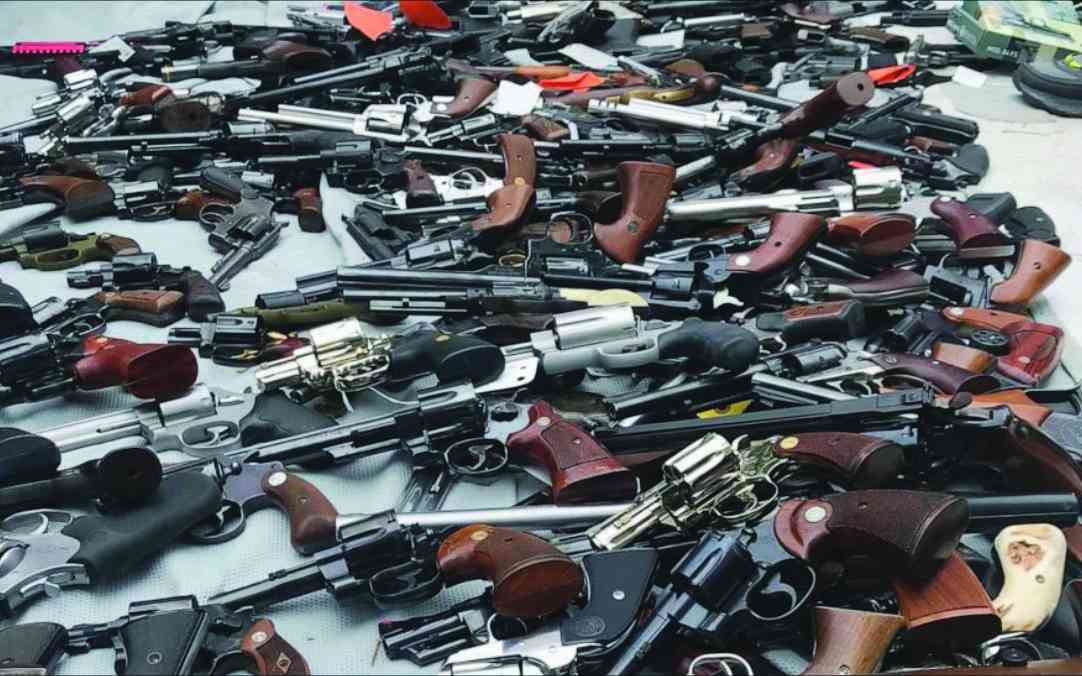
Zimbabwe could be emerging as a key hub in a blossoming illicit arms trade sweeping across southern Africa, according to a new report by the Global Initiative Against Transnational Organised Crime (GI-TOC).
The report, released this week, painted a grim picture of a country struggling with porous borders, compromised law enforcement systems and entrenched corruption that criminal syndicates are exploiting for profit.
Zimbabwe occupies a strategic position along the vital North-South Corridor, which connects southern African ports to inland markets further north, making it vulnerable to organised cross-border criminal syndicates.
The GI-TOC report claimed the flourishing illegal firearms market is rooted in decades of regional conflict and political instability.
“The arms trafficking market in Zimbabwe is linked to the country’s historical conflicts, including wars in Angola, Mozambique and South Africa,” the Global Initiative said in its Global Organised Crime Index 2025 report.
“No dominant criminal group controls arms trafficking but independent criminal networks, security companies and former combatants contribute to the illegal trade.”
While there is no universally-accepted figure for the illicit arms trade in Africa because much of the market operates underground, major studies and security organisations provide broad estimates of a rapidly expanding shadow economy.
Africa is considered one of the world’s largest end-user regions for illicit small arms, particularly in conflict-affected areas such as the Sahel, the Horn of Africa, the Great Lakes region and parts of southern Africa.
- Reprieve for granite operators
- Mystery shrouds Karo’s Ngezi platinum project
- Van Hoog turns heat on govt over ‘plunder’ of coal reserves
- Further reprieve for granite miners
Keep Reading
Analysts estimate the continent may account for roughly 20% to 30% of global illicit small arms flows, although the figures remain highly uncertain because of weak tracking systems and informal trafficking routes.
This suggests the illegal trade could be worth between US$300 million and more than US$1 billion annually across Africa.
Older international estimates placed the global illicit small arms trade at roughly US$1 billion annually, with Africa accounting for a significant share because of recurring conflicts, weak border management systems and weapons recycling from past wars.
The report says although Zimbabwe has conducted amnesty programmes to recover illegal weapons, the circulation of firearms remains, with armed robberies being experienced. It further notes that weapons continue to flow across borders, especially from South Africa.
On Thursday, the Zimbabwe Republic Police had not responded to questions sent by the Zimbabwe Independent.
But commenting on allegations linked to illicit mining activities raised in the same report, Mines and Mining Development Minister Polite Kambamura dismissed the findings.
“There is no such thing. No illegal lithium mining is taking place,” Kambamura said.
Beyond arms and minerals, the report details how counterfeit goods and illicit trade have become deeply embedded in Zimbabwe’s economy.
Counterfeit products — ranging from electronics to agricultural inputs and alcohol — are reportedly flooding major informal markets.
The report says prolonged economic decline, de-industrialisation and rising unemployment have created strong demand for cheaper counterfeit products.
“Counterfeit alcohol is widely produced and sold in taverns, posing health risks to consumers,” the report said.
Although authorities periodically launch crackdowns, enforcement remains inconsistent and syndicates quickly regroup.
The report further revealed that cigarette and alcohol smuggling between Zimbabwe and South Africa has become highly lucrative, fuelled by price disparities and corruption among border officials.
“Corruption in law enforcement facilitates this trade and officials accept bribes to allow shipments to pass through checkpoints,” the report said.
The GI-TOC findings come against the backdrop of mounting concern over illicit financial flows between Zimbabwe and South Africa.
A separate study published last year in the Journal of Risk and Financial Management exposed how 23 shell companies operating in Zimbabwe and South Africa allegedly siphoned US$450 million through sophisticated laundering networks.
The research analysed 1,8 million transactions using data from South Africa’s Financial Intelligence Centre, Zimbabwe and SWIFT banking systems.
Using an Artificial Intelligence tool called FALCON, researchers achieved 98,7% accuracy in detecting suspicious transactions.
“The rise in illicit financial activities across the South Africa-Zimbabwe corridor, with an estimated annual loss of US$3,1 billion, demands advanced AI solutions to augment traditional detection methods,” the paper said.
The study identified trade-based money laundering, gold smuggling and cryptocurrency layering as key channels used to move illicit proceeds across borders.
Zim under spotlight over US$1 billion African illegal arms industry
Zimbabwe’s Financial Intelligence Unit estimates that between 2019 and 2024, smuggling generated US$920 million in illicit proceeds, while illegal gold and precious stone dealings accounted for US$880 million.
Drug trafficking is also emerging as a major concern.
The GI-TOC report warned that Zimbabwe is increasingly becoming both a transit route and destination for narcotics, with organised criminal networks exploiting weak border controls and corruption.
Human trafficking has also intensified, with Zimbabwe functioning as a source, transit point and destination for victims.
Women are reportedly trafficked to countries such as Oman, Kuwait and Saudi Arabia through fake job offers, while children are exploited in illegal mining and agriculture.
The report says corruption among immigration officials, politicians and law enforcement officers allows traffickers to operate with near impunity.
It also highlighted growing migrant smuggling along the Zimbabwe-South Africa corridor, particularly through crossings along the Limpopo River.
Despite repeated warnings from international organisations and local analysts, experts say Zimbabwe still lacks border technology and coordinated regional enforcement needed to dismantle sophisticated criminal syndicates operating across the country’s borders.